



Not every Fashion Week presentation requires a runway. Instead of inviting guests to a traditional show, Berlin-based designer Lou de Bètoly opened the doors to an intimate showroom exhibition, offering visitors the chance to experience her work at their own pace. As someone who usually experiences Fashion Week through runway shows, I was excited to experience a presentation in a different setting.
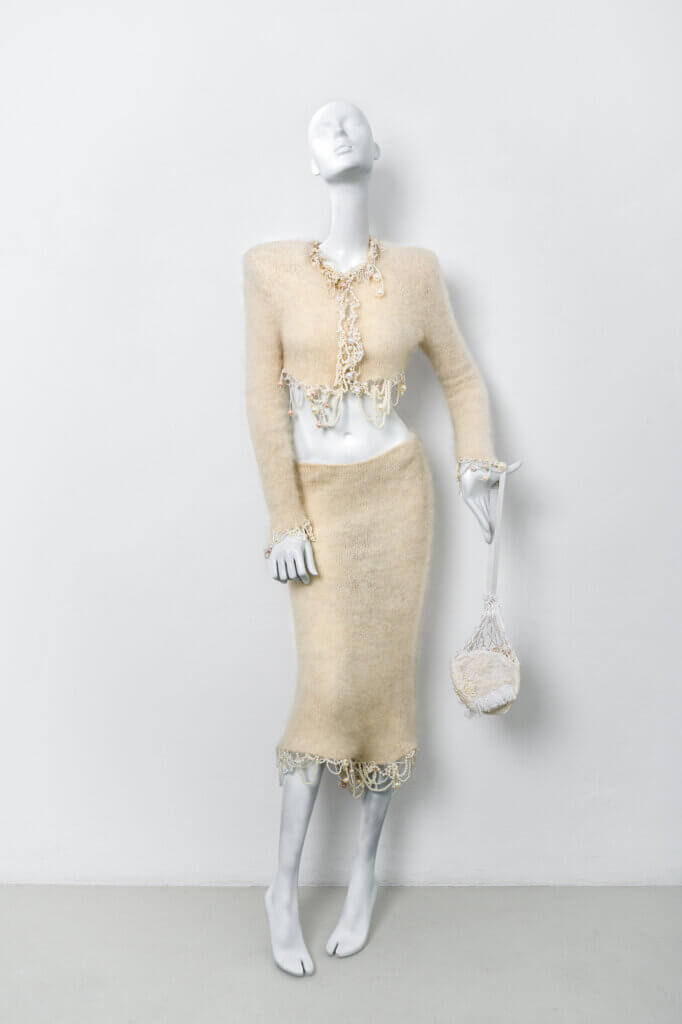
Known for transforming vintage textiles, found objects and reclaimed materials into garments and sculptural accessories, Lou de Bètoly has developed a unique design language rooted in craftsmanship, surrealism and experimentation.
Before speaking with Lou, I took some time to wander through the exhibition.
Soft piano music filled the room while vintage materials, transformed through intricate craftsmanship, invited visitors to take a closer look.
The space carried such a nostalgic calm that it stayed with me throughout the whole afternoon.
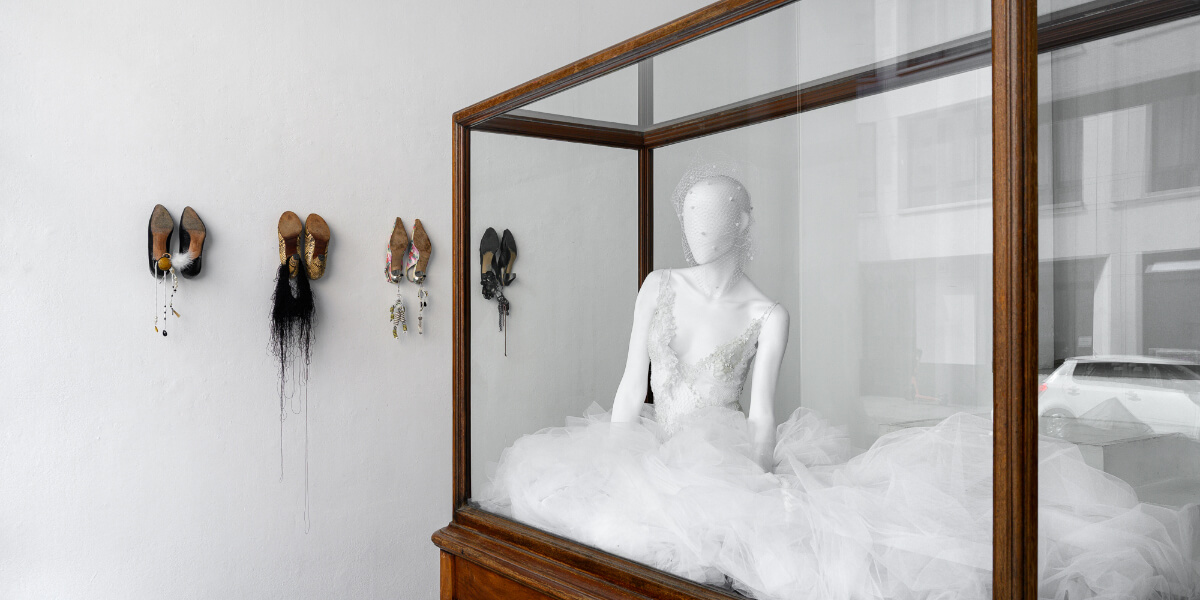
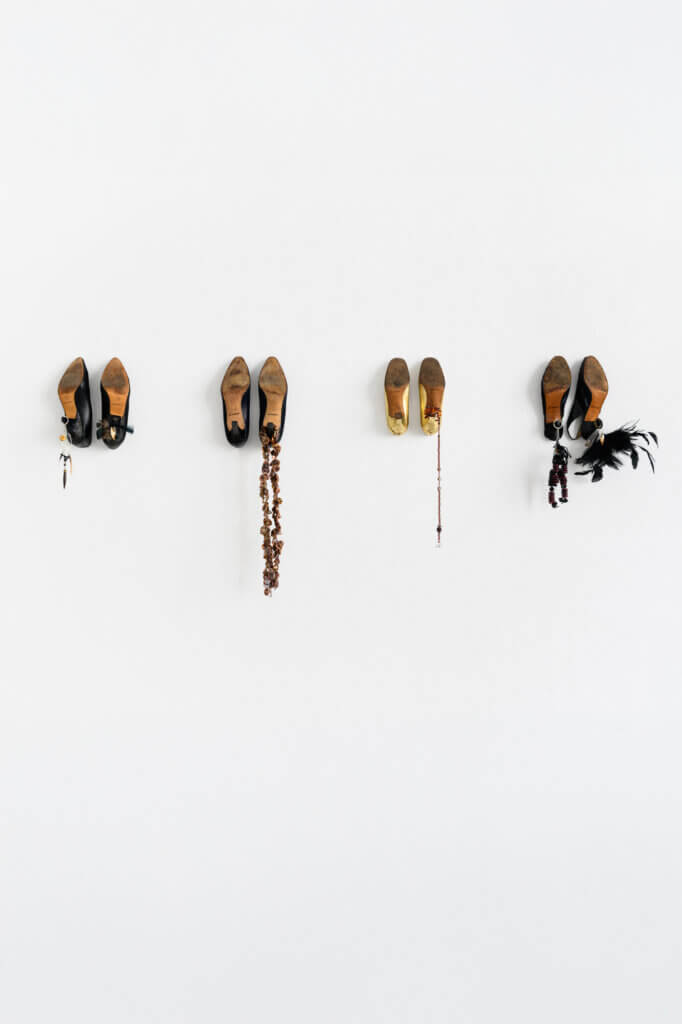
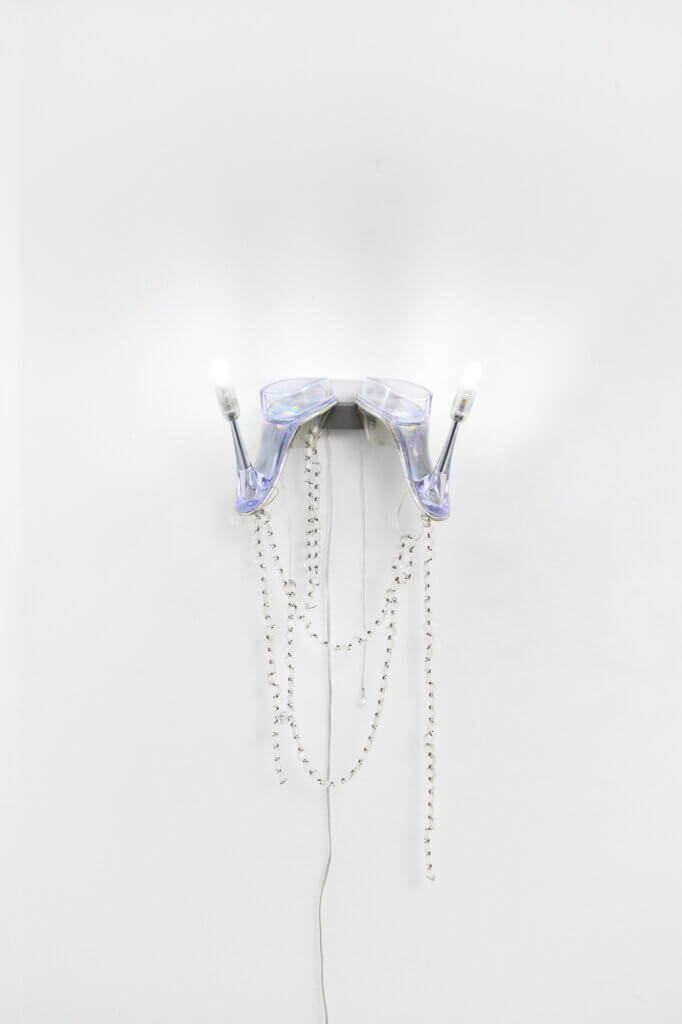
The first objects that caught my attention were the worn heels from previous collections. They were mounted on the wall like small sculptures and repurposed as jewelry displays. Further into the exhibition, one particular object caught my attention. It was a lamp assembled from transparent acrylic heels, chains, and glowing light bulbs.
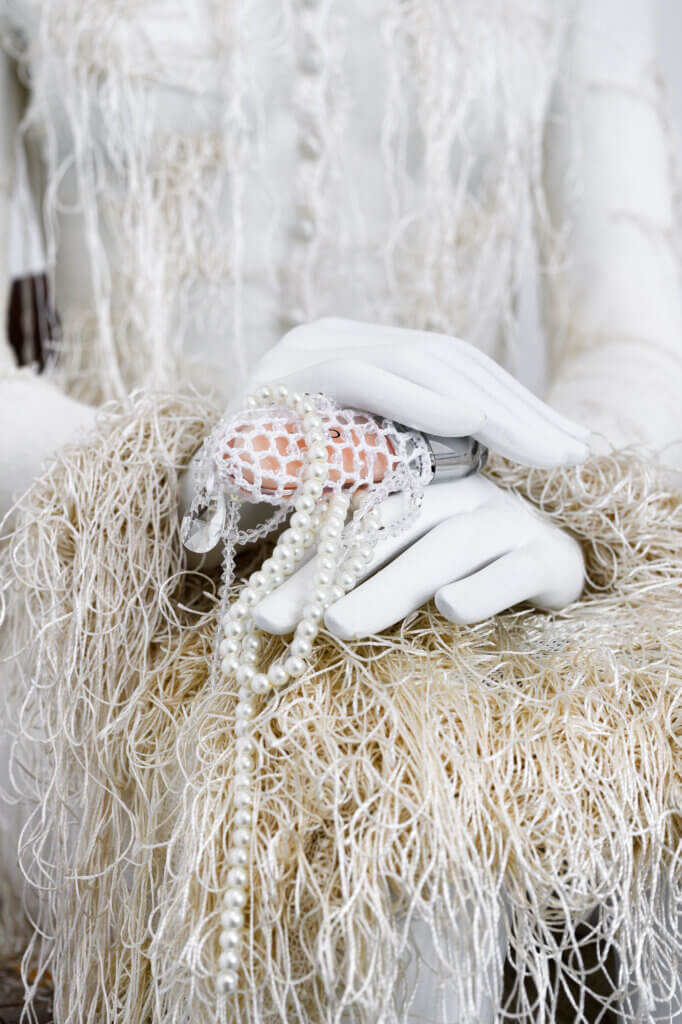
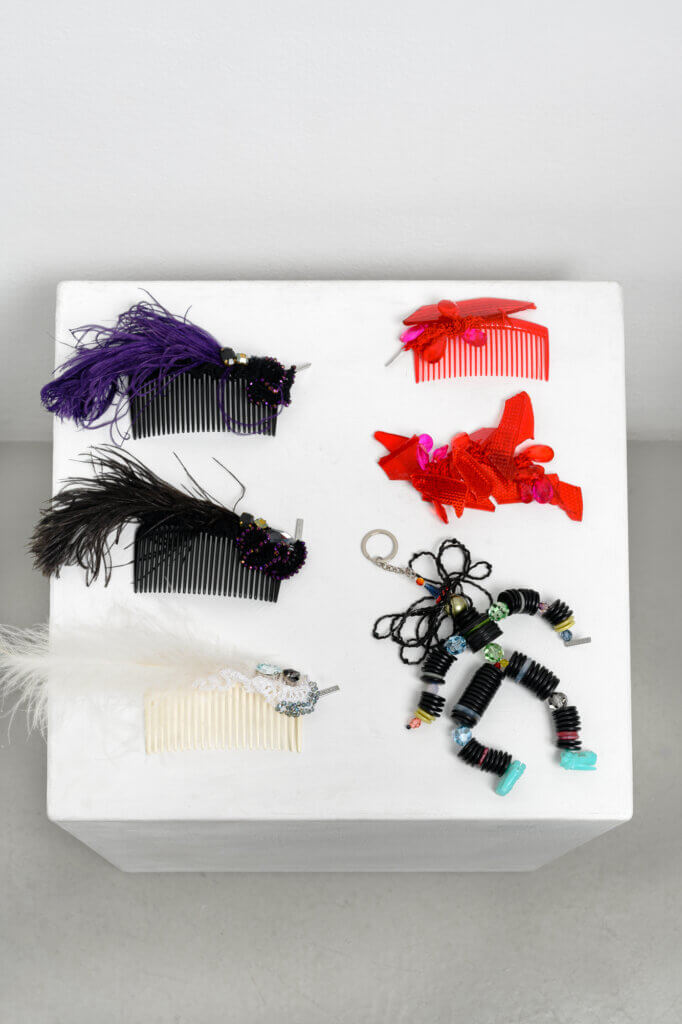
In addition to ready-to-wear pieces and various accessories, such as handbags and hair clips, the exhibition featured a dark wood-framed glass case. Inside sat a mannequin dressed in a bridal-inspired couture look made of sheer lace, embellished with pearls, floral details, and a net-like headpiece. It struck an elegant seated pose that appeared almost fragile and dramatic.
After exploring the exhibition, I asked Lou a few questions.
Your designs are instantly recognizable through their unique silhouettes, textures, and unexpected materials. Where does your design process usually start? Does it start with a single look, a material, or an overall concept?
Lou de Bètoly:
I usually start with the textile itself. Most of the time, there’s a material, an object or simply something I’ve been thinking about for a while. From there, I begin with sampling or draping and leave a lot of space for the unexpected.
Sometimes I have a concept, but rarely for an entire collection. More often, everything starts with one thing, and that one thing naturally leads to the next.
On your website, you describe your inspirations as chaos, surrealism, nostalgia, decadence, extravagance, and oneirism. Some of these almost seem contradictory. What fascinates you about that kind of duality?
I’m interested in opposites because they create a twist. Everything is complex, and I believe there’s beauty in nonsense. Things don’t always have to exist in the order we expect them to.
In past interviews, you mentioned that you see fashion as sociology. What exactly do you mean by that?
When I describe fashion as sociology, I mean that clothing is always a form of communication. What we wear expresses who we are and allows us to identify with different communities.
Your runway casts have included people of different ages, and your designs challenge conventional ideas of the body. What does beauty mean to you today?
I think it’s beautiful to embrace people for who they are. I’m much more interested in personality and character than in conventional ideas of perfection.
Your work is often associated with a punk spirit. Does music influence your creative process?
I’m inspired by many different things, but mostly in a subconscious way. It’s never a direct reference. Music definitely creates emotions that influence my work, but it’s more about a feeling than a specific artist or genre.
Each of your pieces starts with vintage or existing materials. How do you decide which materials are worth transforming?
Sometimes I collect materials for years before using them. Other times, I discover something and immediately know I want to work with it.
I leave a lot of space for spontaneity. The final design often emerges through experimentation rather than following a fixed plan.
If you could create your dream runway show without limitations, what would it look like?
Actually, I like limitations.
After my conversation with Lou, I walked out of the exhibition still thinking about the objects that had stayed with me. The lamp assembled from transparent heels. The vintage shoes displayed like sculptures. The bridal look enclosed in its display.
Details that might easily be overlooked during a fast-paced runway show were given the time to unfold. A reminder that the most memorable collections aren’t always the ones you see in a matter of minutes, but the ones you’re invited to return to.
Reflecting on Lou’s approach, I kept coming back to one idea in particular: leaving room for the unexpected. Rather than forcing every outcome, she allows materials, chance, and experimentation to become part of the creative process. After hearing her speak, seeing the exhibition again made me realize that this openness is evident not only in the finished pieces but also in how they came to be.
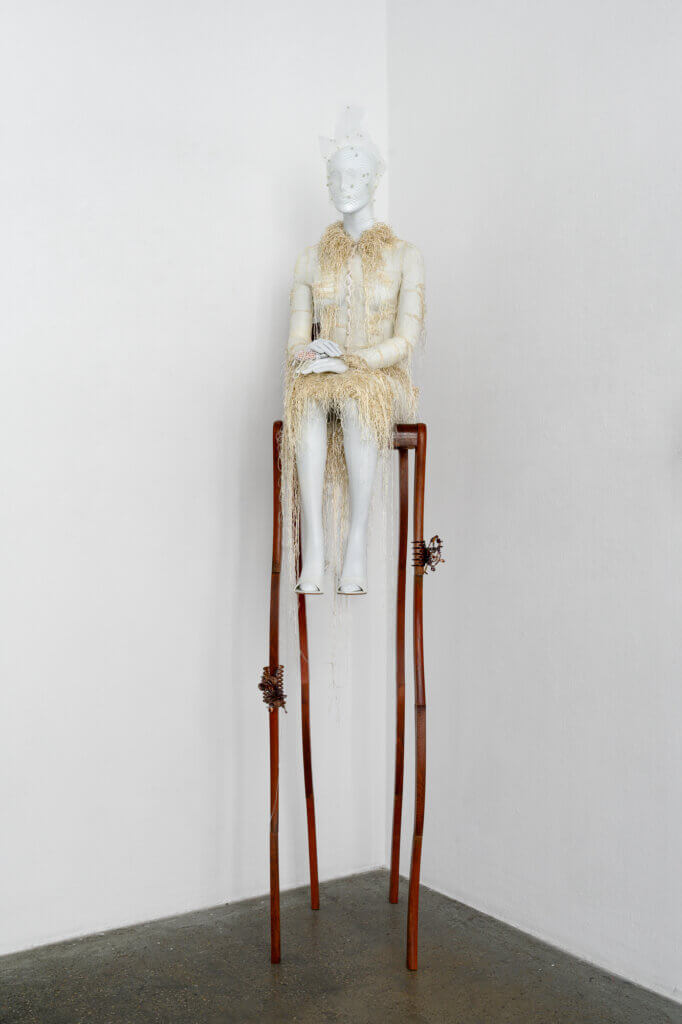
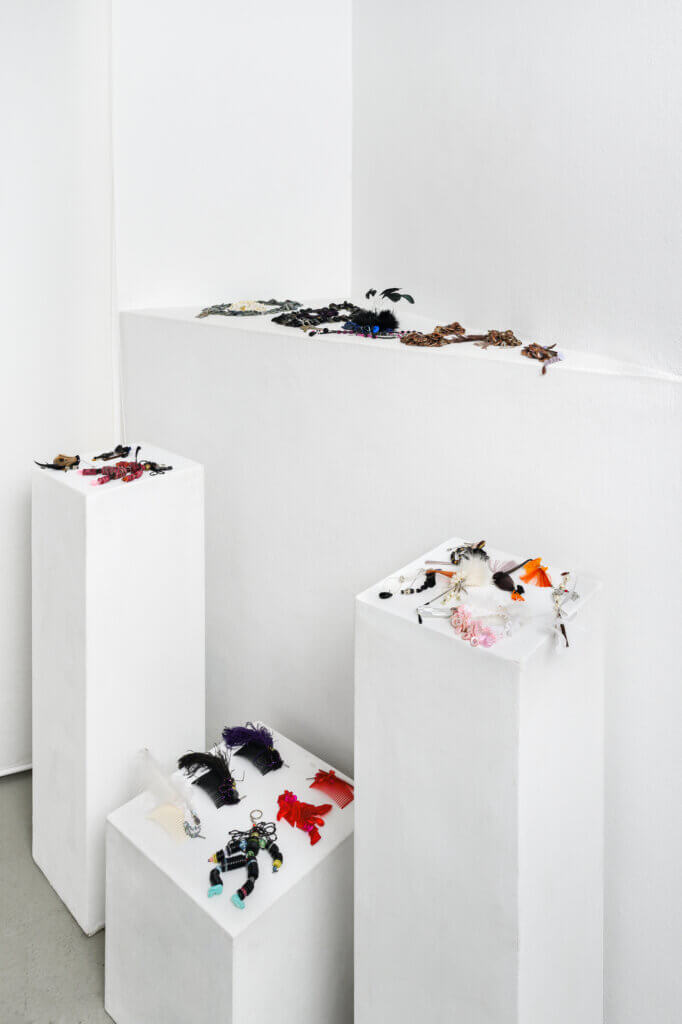
Image Credits: Jerzy Goliszewski