






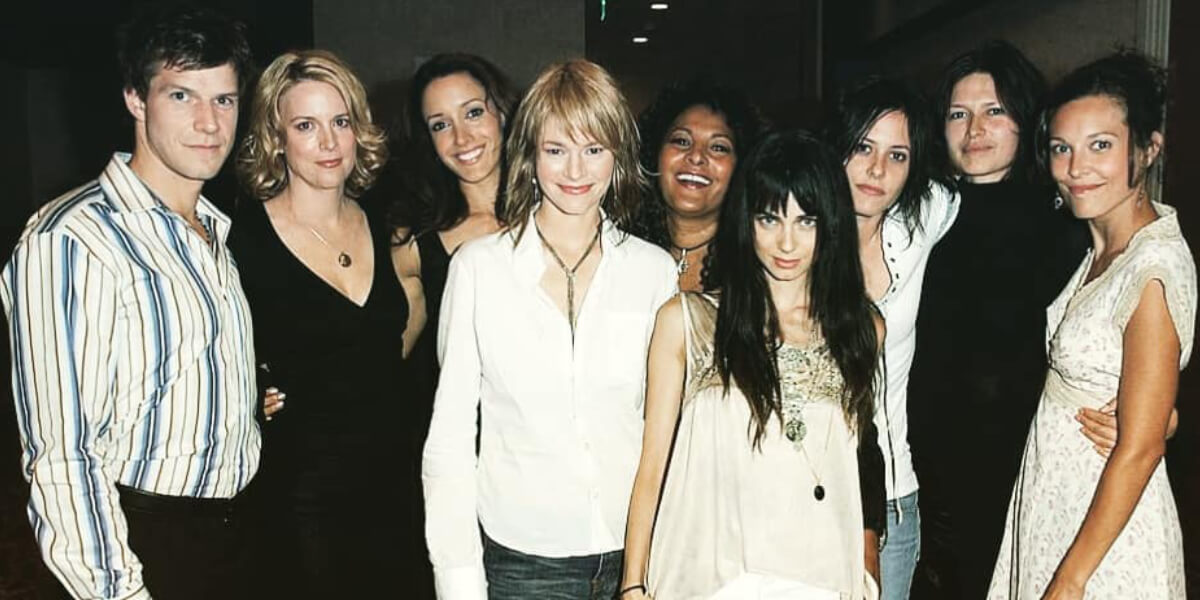
It’s a rainy summer evening in Berlin, and my best friend and I decide to rewatch one of our favorite TV shows, The L Word. Set in Los Angeles in the early 2000s, the show follows a group of lesbian and bisexual women navigating friendship, careers, and, of course, relationships. The entire show sets you up for unrealistic expectations, from the beautiful houses in West Hollywood to the fantasy of living within walking distance of your friends. Every morning, they meet for breakfast at their local café before heading off to their cool creative jobs wearing impeccably hot outfits. At the centre of the story are friendship, female pleasure and ambition.
My girlfriends and I gravitate towards queer romance stories, regardless of where each of us is on the sexuality spectrum, and it made me wonder why they resonate with us so much more than their mainstream heterosexual counterparts. And I realized that a lot of it has to do with the way queer love stories approach intimacy and relationships without the male gaze.
The L Word illustrates this perfectly. The main characters don’t have to appeal to, compete for, or even with men, but instead focus on their dream careers, community, and each other. It has also been described as Sex and the City set in Los Angeles, just without men. Another part of The L Word‘s appeal is the value it places on friendship. The same care and emotional investment that goes into its romances also goes into its platonic relationships. Community plays a vital role, with the women supporting each other through heartbreak, illness, and career crises. It’s something that runs through many queer series and films, including Orange Is the New Black, Bottoms and Pose. In contrast, mainstream heterosexual romance often treats romantic love as the final destination, while friendship becomes secondary.
On TikTok, there was a trend of girlfriends posting videos of going out to cute restaurants and concerts and getting each other things with the caption “a special date for a man is just an average day for female friendships.” For many queer women, watching The L Word became a formative experience, and many credited the show for their “gay awakening”. When it premiered in 2004, lesbian representation was very rare and often sexualized through the male gaze, making it a milestone.
One user on Reddit explained why her straight friends enjoy it:
“I have a lot of straight friends who love The L Word because it was one of the few shows on television at the time that spoke to us in so many ways: art, culture, music, lifestyle. The L word encompasses soo much. As the name of the show implies, it’s about love, loss, leaving, lust – all the L words.“
I think a big part for straight and bi women is also to see their bodies and pleasure being prioritized.
What we sadly still often downplay as “foreplay”, which heteronormative cinema likes to skip anyway, is often the best part for women. Around 80% of women require clitoral stimulation to orgasm, something lesbian TV shows put into practice. The shows allude to oral stimulation, vibrators and toys, to taking it slow and having sex for hours, and it being intertwined with romance. Emotional intimacy and effort become a big part of the romance itself.
Heteronormative sex often follows the familiar script of kissing, penetration and male orgasm, which doesn’t really cater to female arousal or pleasure or anatomy. Queer intimacy, on the other hand, leaves more time for exploration, vulnerability, and a wider range of sensual experiences. Penetration is not automatically the be-all and end-all of sex. Queer love stories aren’t restricted by traditional gender role dynamics or ideas about physical intimacy.
Another frequently watched category by women is gay porn. According to Pornhub, women make up nearly half of the audience for gay male pornography. But it’s not just about porn; women also love gay romance stories. The gay hockey romance Heated Rivalry was a huge success with audiences across all sexualities. A big part of its appeal for women is how equal the relationship itself feels. There are no inherited gender expectations or obvious power hierarchies. The tension comes from the fact that they are rivals having to hide their affection, not because one has more power over the other.
In most heterosexual on-screen dynamics, women are often positioned as the object of desire, rather than doing the desiring. Feminist film theorist Laura Mulvey said that ‘Unchallenged, mainstream film coded the erotic into the language of the dominant patriarchal order.’ Many queer love stories disrupt these patriarchal dynamics. Gay romance can therefore offer a restorative fantasy for many women. There is more room for fluidity, playfulness, and tenderness, without immediately identifying with a predetermined role in the relationship. Consent is also shown as a normal and sexy part of sex, rather than an interruption to it. In Heated Rivalry, Illya continuously checks in with Shane, especially knowing it’s his first time. Their intimacy is built on communication, trust, and mutual respect.
The hype around Heated Rivalry left many straight men confused. Reddit threads quickly filled with women explaining why they loved M/M romance and why this particular story resonated so deeply with them:
“I feel like it’s pretty simple: the show is passionate and not degrading to all parties involved.”
“For me, it’s really the fact that they have the same status. Ilya isn’t above Shane, and Shane isn’t above Ilya. In a straight relationship, a woman will always be seen as less.”
“It’s the mixture of tenderness and filthy hot sexiness for me.”
Additionally, queer sex therapist Dr. Emma Smith argues, without a female character on screen to compare themselves to or “perform through,” female viewers are able to focus more freely on desire, intimacy, and emotional connection. Perhaps that’s why so many women find themselves drawn to male gay romance. They can simply enjoy the relationship without constantly being confronted with traditional gender expectations or comparisons.
If pleasure is one important language of queer romance, longing is another. Perhaps that’s because, for much of cinema history, queer love couldn’t exist openly. Filmmakers had to communicate through long glances, almost touches, and words left unsaid.
Whether it’s Timothy Chalamet’s Elio and Oliver spending an entire summer aching for each other in Call Me By Your Name, or the decades prior to the reunion of the lovers in Moonlight, these stories are often built on anticipation, tension and yearning, rather than instant gratification. You see it in the lingering looks across a department store in Carol, or in the restraint that defines Portrait of a Lady on Fire. Sometimes the yearning becomes the core of the entire love story, making even a brief touch or glance all the more exciting.
Maybe that’s why so many women keep returning to The L Word, Heated Rivalry, Call Me By Your Name, and other queer romance stories. Not because the characters or relationships are perfect, but because they imagine love and desire more expansively. They offer something that is still missing from much of mainstream heterosexual romance on screen. Their popularity with audiences across sexualities suggests a wider cultural desire for stories that prioritize pleasure, communication and authenticity over rigid gender roles and tired scripts.
Two recommendations that are still on my watchlist are “And Then We Danced,” which my friend described as the Georgian Call Me By Your Name, as well as the classic Bound by the Wachowski sisters.
Whether you’re queer, questioning or simply curious, Pride Month is as good a time as any to revisit the stories that expand our understanding of love, intimacy and desire.