




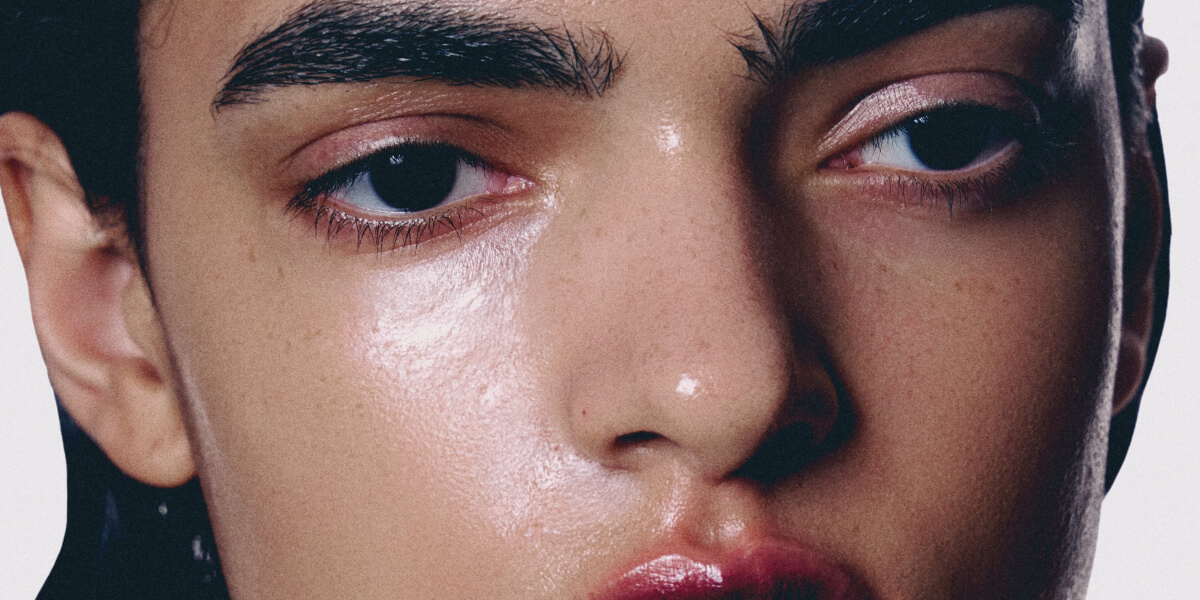
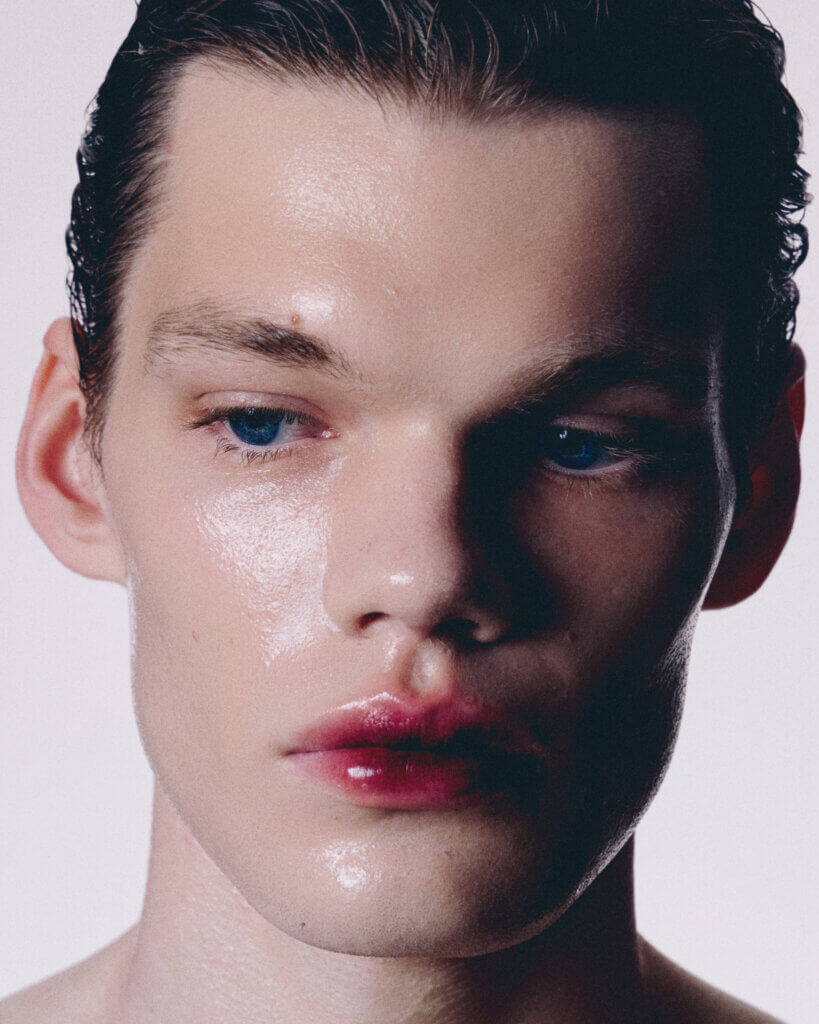
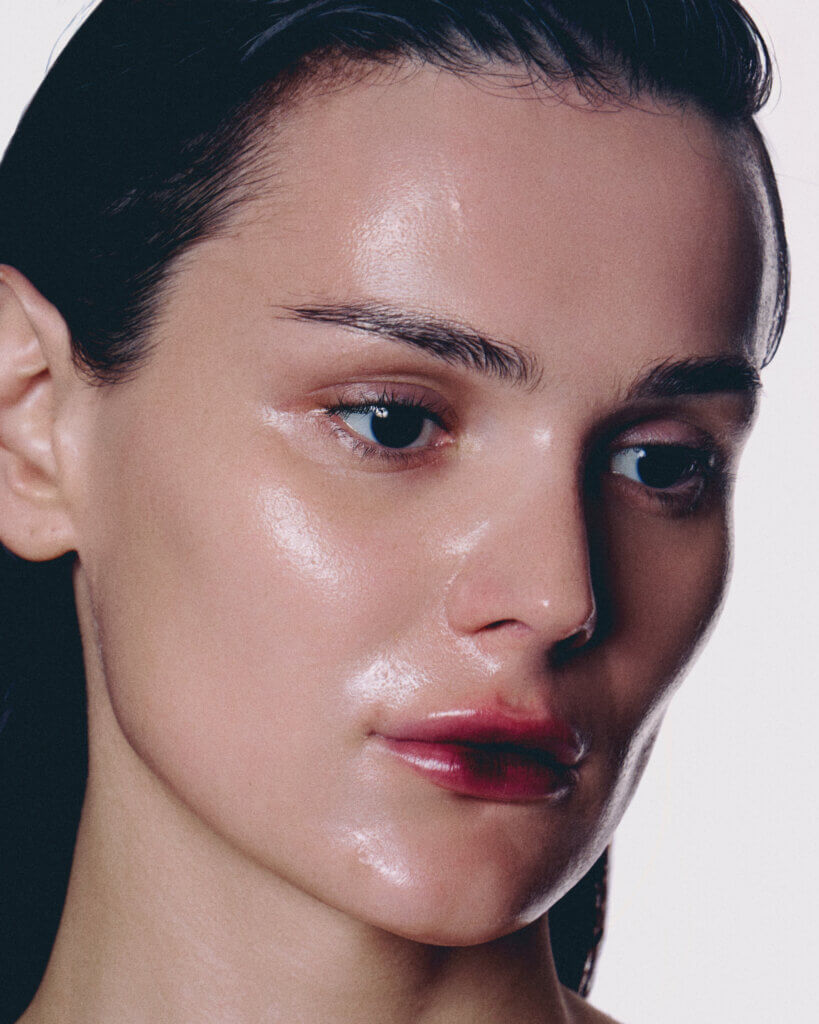
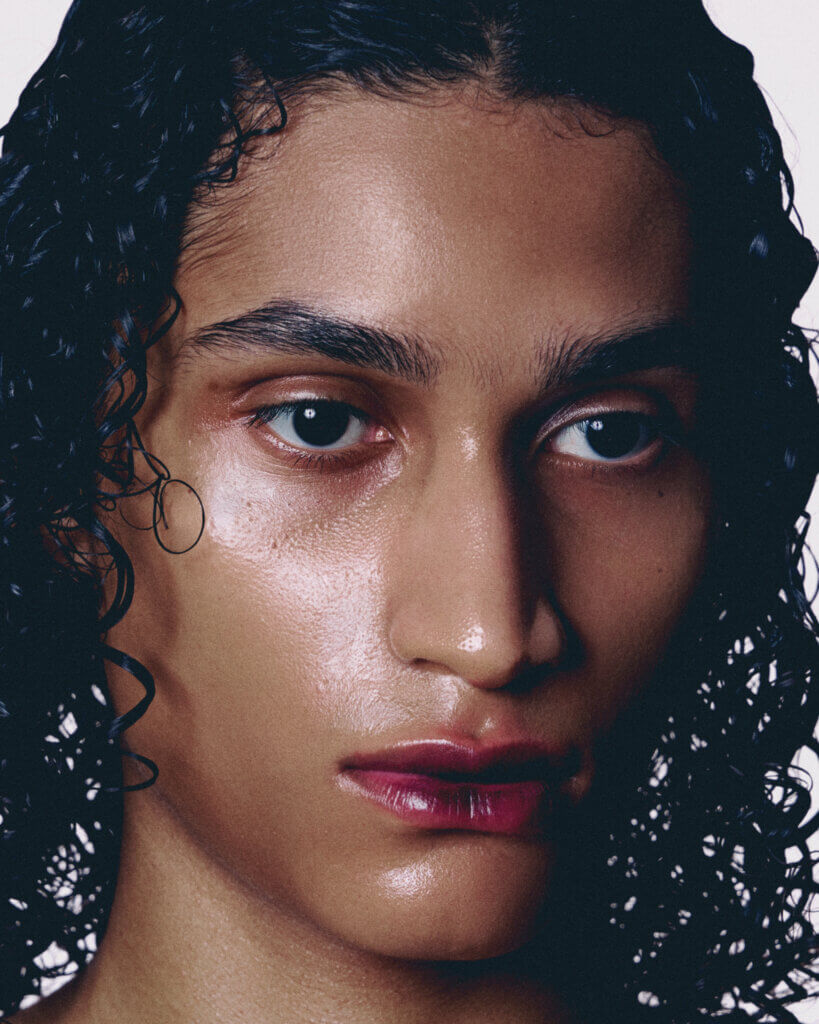
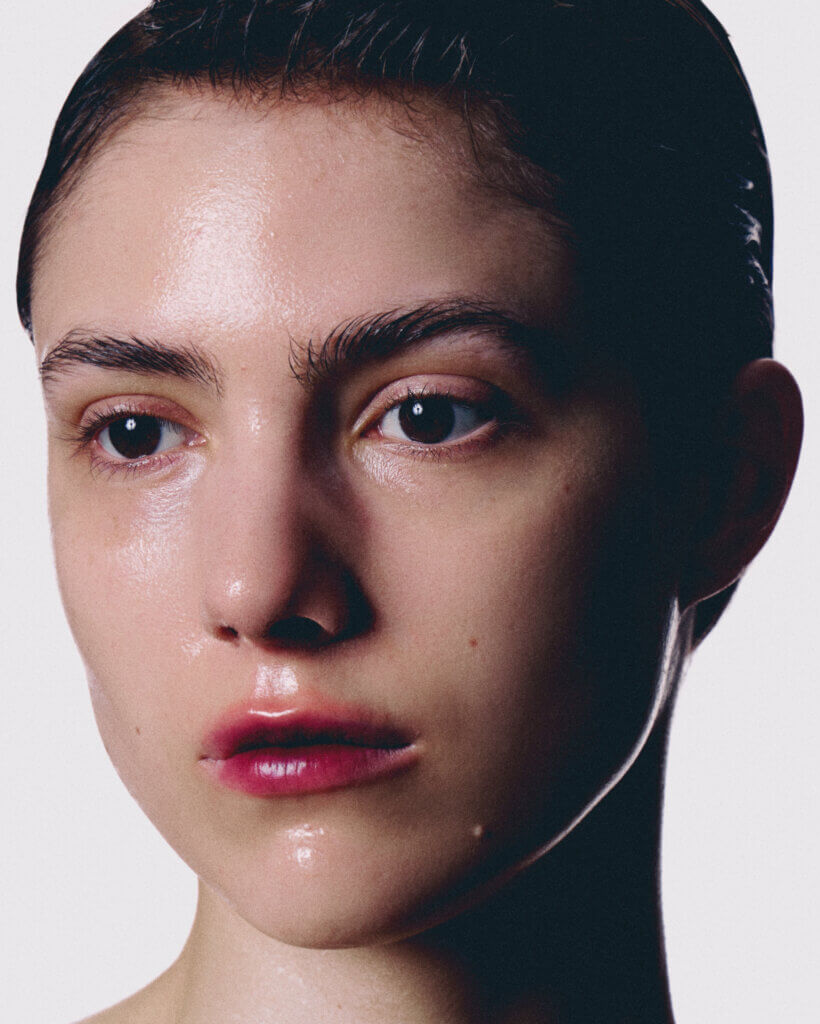
For Tobias Kruse, photography begins with an instinct. Long before it became his profession, that instinct first surfaced in childhood, beginning with a toy car imagined as a camera and later through photographs taken from the backseat of a car on a family vacation. What started as capturing moments through a window eventually became a practice shaped by intuition, taste, and an attentive eye. In this editorial titled Liminal, that instinct takes him into a world of rebirth and renewal, grasping the idea of a reset in visuals of glass-like skin, dreamy expressions, and an almost suffocating sense of stillness. Kruse creates portraits that feel suspended between states: awake and asleep, familiar and otherworldly, one beginning and the next.
Yet beneath the apparent simplicity of the images lies a considered process, from casting and beauty to the atmosphere created on set. The notion of beginning again is not only embedded in the images but also in Kruse’s own approach to photography: each project becomes a chance to leave the last behind and start with a fresh eye. We spoke with Berlin-based photographer Tobias Kruse about where his journey started, how he perceives a reset, and the complexities behind the simplicity that meets the eye.
Photography has been a significant part of your life for many years. Can you take us back to where it all began, and what first inspired you to pick up a camera?
The first time I consciously picked up a camera was on a family vacation roughly 12-13 years ago, although I feel like that number hasn’t changed for a couple of years when I tell this story. On that trip, I photographed everything that seemed interesting to me, mostly out of the backseat through the window. When I came back from that trip, I quickly bought my own camera with the money I had saved for my driver’s license. What motivated or inspired me to do it, I can’t say. It wasn’t a calculated decision—more of a gut feeling or an urge that still guides my work today. After all, that’s all that makes a photographer in the end, in my opinion. There are a thousand people taking great images, but it’s the gut feeling and taste—the unconscious decisions based on our visual understanding and our upbringing—that make a great image, as opposed to technical understanding. Of course, that’s important to have, but not the main point.
There is a funny story, though, which should be the main story for this answer. When I was a kid, probably 2–3 years old, I had a toy car, which I used as a camera. With a shutter sound, I closed the door of that little car. That was the real first time picking up a camera. Somehow, the car theme seems to play a kind of role in this…
What was the initial inspiration behind this editorial, and how did the concept of rebirth, reset, and new beginnings evolve into the visual language we see throughout the series?
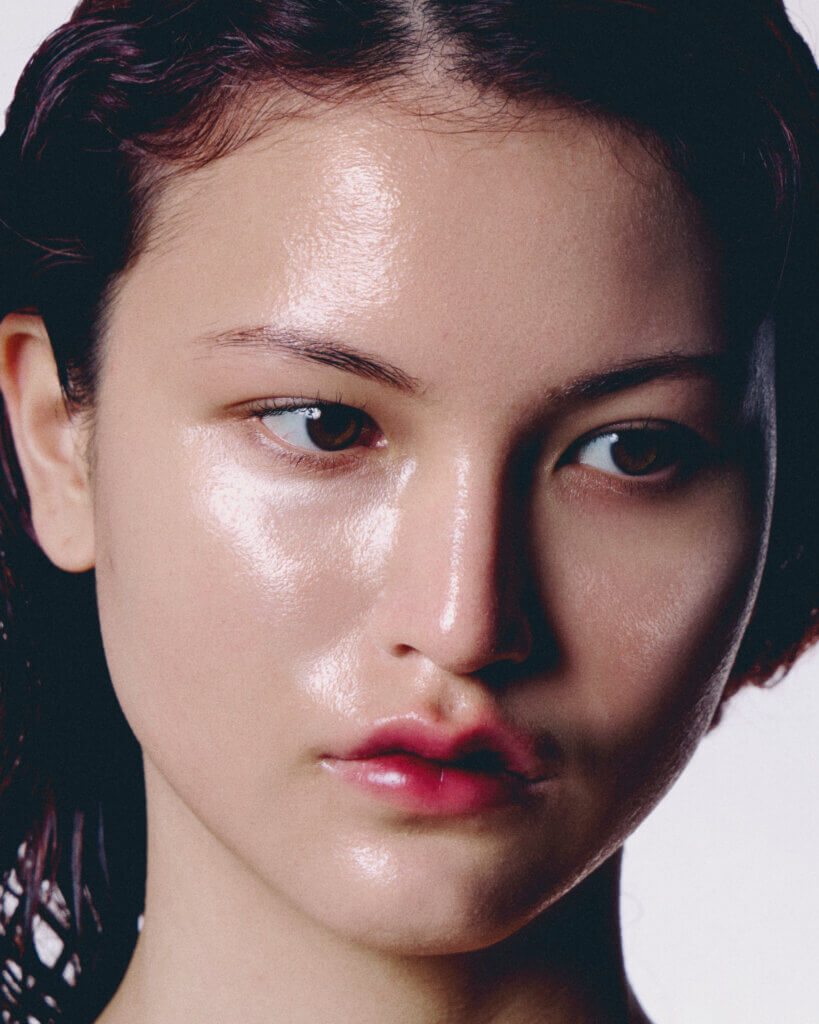
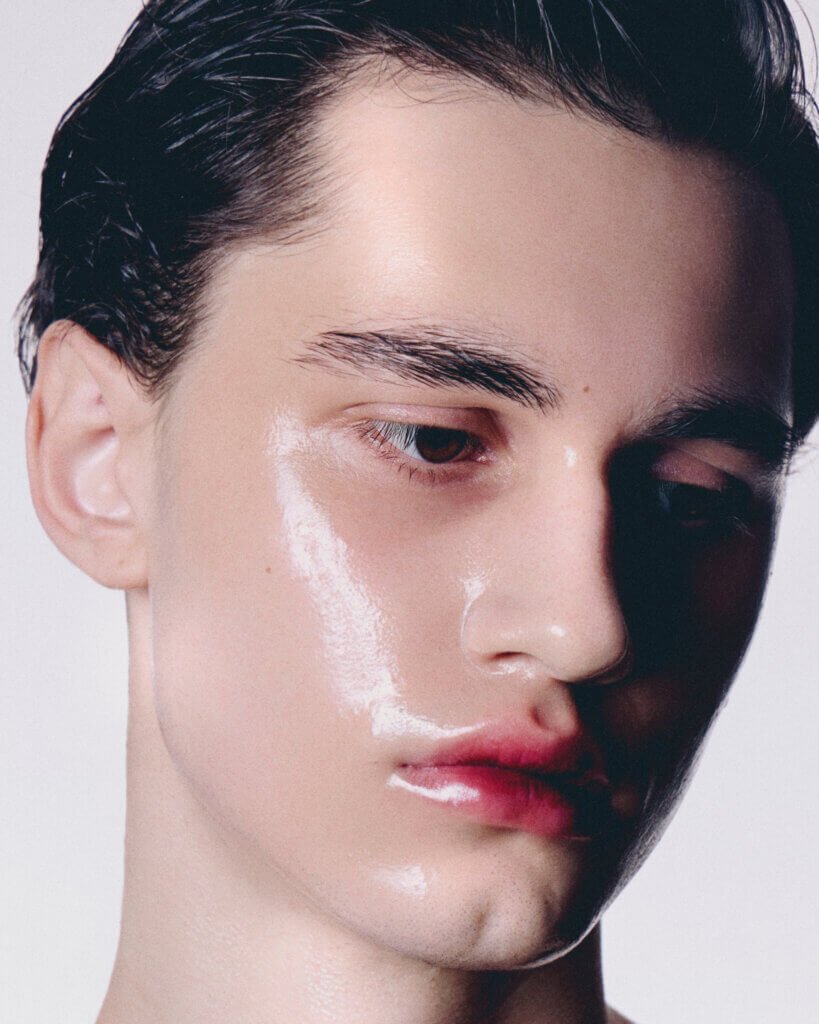
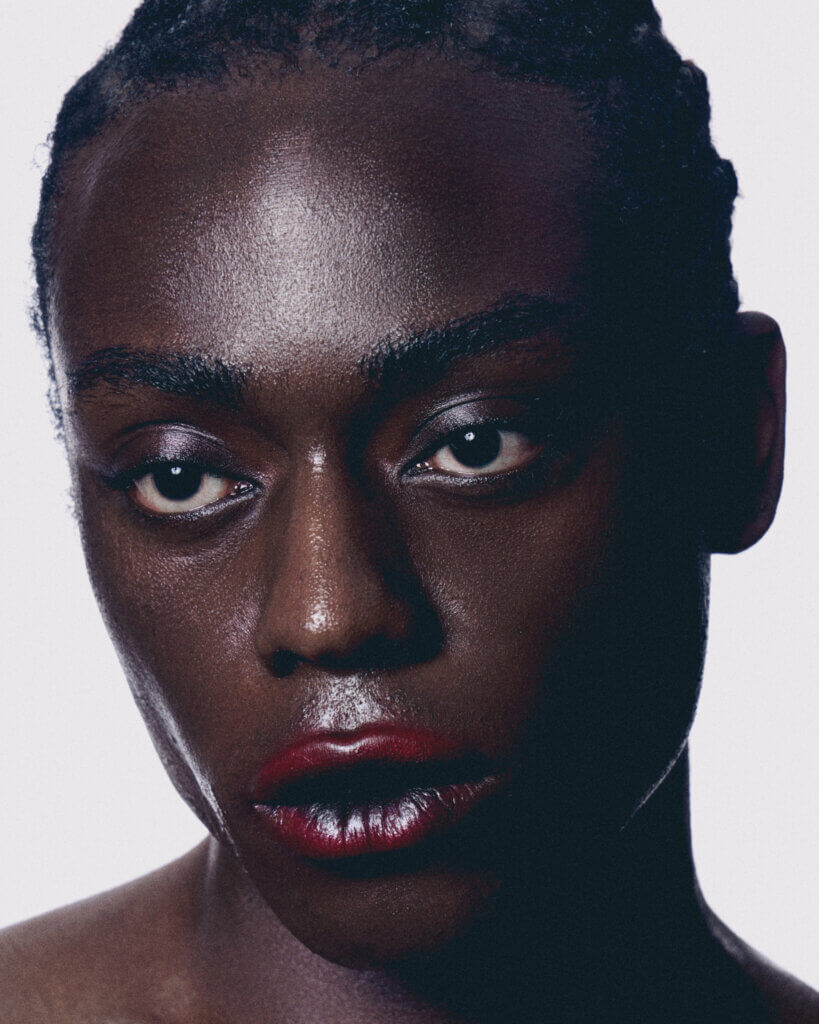
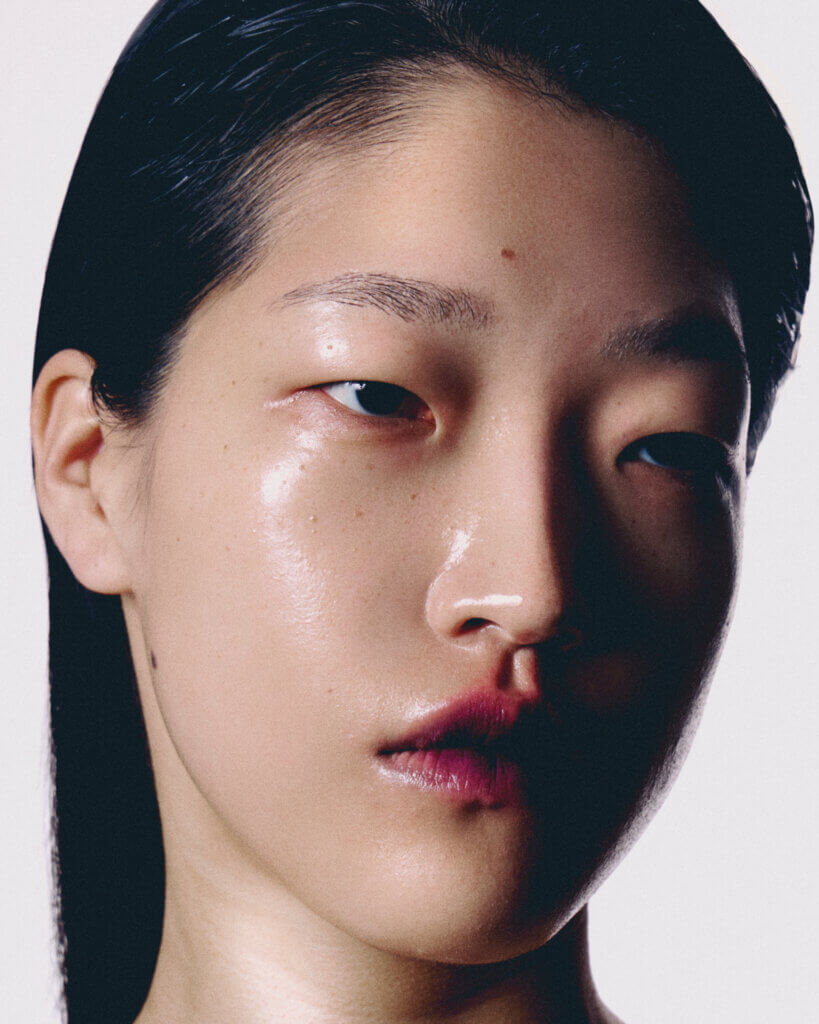
For a bit now, I’ve been wanting to photograph a beauty editorial, but with the faces of the talents fully filling the frame. Kind of like the iconic images of the water towers by Bernd and Hilla Becher. As minimal as it gets, no distractions. To form that thought into a beauty series, I talked to makeup artist Janette Peters, and somehow we came up with the idea to implement a „glass look,” similar to what Pat McGrath did for Galliano at Margiela a few years back. On every set, I usually ask the makeup artists for more glow on the talent’s skin, so it seemed like a good fit.
The original „glass look“ gives more of a doll-like vibe, but we wanted to create more of a personal approach to it: a start into a new life, an egg hatching. We wanted the look to emulate an amniotic barrier about to be broken through.
For the facial expression, my aim was to show this amazing group of models in a sleep-like state, in between dreamy and melancholic, like a resetting memory.
The editorial is titled around the idea of a “reset.” What does a reset mean to you personally?
Professionally, it’s the beginning of a new project. I try to forget the last one and make the next work my best work. On a more personal note, I am resetting every time I go for a walk with my dog, Topolino. On average, I reset 3 times a day.
The editorial includes minimal styling and set design. Does removing these aspects from the frame make portraiture more challenging? What are the benefits of a simple portrait?
Yes and no. On one side, there is definitely more focus on the expression if the face is all you see. The more a frame shows, the more it leaves room for „error“ if perfection is what you are looking for. It brings great importance to the casting, which was really on point. The portraits seem simple, but the path to get there wasn’t. I have a huge appreciation for the dedication of Janette, Mai Anh, and Aenea, as well as the patience of Eric and our group of talents, because each beauty look took roughly an hour to create. All in all, the more you take away in a portrait, the more you gain. Without the distractions of clothing or background noise and the uniformity of the beauty look, everything comes down to the person.
Did you talk to the models about the idea of rebirth before shooting, or was the narrative created mainly through the visuals?
I am not a documentary photographer. I stage scenes and direct. Of course, I talk to the cast, but more about what moves them and who they are. Out of curiosity, but also to know how to get them to where I want to go with the project. What really helped with this, also, was the music I put on to create a certain mood in the studio. Whenever I didn’t take photos, we changed the song rather quickly because my same 5 songs by Burial got annoying over the course of the day, apparently.
What do you hope the viewer takes away from this editorial?
That’s the beauty in visuals; each individual sees something slightly different if they look at it long enough. I usually don’t like to talk too much about my intentions with a project, because it gives everybody else more freedom to have their own version of it. If one person feels something, thinks about it, or even resets, I am happy.
Credits:
Photography – Tobias Kruse @tobias_kruse
Makeup – Janette Peters @janetteptrsmua
Hair – Mai Anh Rudolph @maianh.makeup
Assistance – Eric Terrey @terreyeric
Makeup Assistance – Aenea Westermann @aenea.west