







From deepfakes to censorship, the erotic filmmaker reflects on how technology is reshaping intimacy, and why responsibility in porn matters more than ever.
If one filmmaker is reimagining what porn can be, it’s Erika Lust. The award-winning Swedish erotic filmmaker behind ERIKA LUST, a platform known for creating sex positive films, centers consent, the female gaze, cinematic craft, and real people’s fantasies that transcend stereotypes and harmful tropes.
In an age of AI-generated porn, deepfakes, rising loneliness, increased censorship, and a lack of comprehensive sex education, the question of where porn is headed feels more urgent than ever.
With Pornhub reporting billions of monthly visits and ranking among the top ten most viewed websites globally, alongside Google and ChatGPT, pornography has become a central part of the digital attention economy. It is also increasingly shaping how we view and learn about sexuality and intimacy. In a landscape where time spent viewing is currency, faster and more extreme content often performs best.
What does this mean for our relationship to intimacy, to our bodies, and to each other? And what place does human connection still hold within sex, technology and porn?
Erika Lust reflects on the future of erotic filmmaking, the role pornography plays in expectations around sex, and the responsibilities that come with it.
Q: What is the core mission behind your work today- has it changed since you first started in the erotic film industry?
When I first entered the erotic film industry, my mission was very personal. I was frustrated by what I saw in the industry and wanted to create films that felt cinematic and grounded in the values I champion, like mutual pleasure and consent.
“I wanted to see versions of myself and other women reflected on screen as full human beings, not stereotypes.“
That core impulse and mission hasn’t changed. What has evolved is the scale and depth of our mission. Today, my work is not only about creating erotic films, it’s about advocating for a sustainable model of production and consumption in porn. To me, this means fair pay, safe sets, clear consent practices, and respectful collaboration with our performers. It also means encouraging our audience to think critically about what they consume and to support ethical subscription-based platforms like ours rather than exploitative free porn sites. At its heart, my mission as an adult filmmaker is to help shape a sex-positive culture. I want to contribute to a world where pornography can be artistic and where desire is explored with curiosity instead of shame.
Q: Do you distinguish between porn and an erotic film? Where do you situate your own work?
This is a question I’m asked often, and I understand why. The word “porn” carries a lot of baggage. It’s associated with something purely functional, often male-centered, sometimes careless in its production. “Erotic film,” on the other hand, suggests artistry, intention, atmosphere, and deep emotions.
For me, the distinction isn’t about respectability. It’s about the intention and execution behind the work. My films live in the intersection. They are explicit and unapologetically so. But they’re also cinematic, story-driven, and grounded in ethical production practices. Ultimately, I’m less interested in labels and more interested in impact. If my films arouse you and also make you feel seen, respected, and emotionally engaged, then I’ve done what I set out to do.
Q: What defines an Erika Lust film- aesthetically and ethically?
Aesthetically, my films are cinematic. I care deeply about storytelling, character development, lighting, costume, and music. All the elements that make any great film immersive. For example, in films like Nylon Dreams, for example, the visual atmosphere and sensual textures of the 70s aesthetic become part of the erotic experience itself; another film where you can see desire built through mood, tension, and emotional rhythm, using landscape, silence, and music to create a sense of seduction that goes beyond the physical act is Siren Song. We always try to represent relatable characters, emotional build-up, tension, conversation, chemistry.
“Sex does not happen in a vacuum; it happens between people with histories, desires, insecurities, fantasies.“
So I focus on context, passion, and the intimate details of connection rather than mechanical, detached depictions of bodies performing for a camera. Across projects like XConfessions and House of ERIKALUST, you’ll see diversity not only in bodies and identities, but in tone and perspective. Some stories are tender, some playful, and others are raw or experimental. They are always grounded in the human experience. I want my viewers to feel something.
Porn is a form of media that reflects and shapes the culture we live in, which is why I believe that filmmakers have a responsibility to use its power consciously. It means creating spaces where performers are collaborators, not commodities. It also means building opportunities behind the camera. I actively produce and finance female and queer guest directors from around the world because representation like that changes the gaze globally. When women and LGBTQ+ creators hold key creative roles, the stories expand. The fantasies expand. The industry expands.
Q: Who is your target audience? Have you noticed any shifts in age, gender or desires over the years?
When I began making films, people assumed my audience would be “women who don’t like porn.” That was the stereotype I heard a lot. But very quickly, I realized something much more interesting: my audience is incredibly diverse. My target audience is anyone who wants to experience sexuality in a way that feels respectful, cinematic, and emotionally engaging.
Over the years, I’ve seen significant shifts. Desire itself has expanded in beautiful ways. Audiences are more open to exploring varied perspectives on pleasure. My audience isn’t defined by age or gender as much as by mindset: they are people who believe sex is a healthy, natural part of life worth celebrating.
Q: Through XConfessions, you’ve received thousands of anonymous fantasies. Have you observed changes in women’s desires over time? Do political moments shape fantasy?
XConfessions has always felt to me like a living archive of desire. Because the fantasies arrive anonymously, people are incredibly honest: sometimes they’re shy, bold, and often surprisingly tender. Over the years, I’ve received thousands of confessions, and what I’ve seen is a growing confidence. In the early years, many confessions carried a tone of hesitation, almost like an apology for wanting something “too much,” too dominant, too adventurous, or too unconventional. Over time, that apology has faded. The fantasies have become more self-assured, more specific, more unapologetic. There is curiosity about dynamics, about switching roles, about watching and being watched, and about connection as much as climax.
“It reflects a broader cultural shift toward understanding sexuality as layered and personal rather than fixed. And yes, political moments absolutely shape fantasy. When society feels restrictive, fantasies often become more transgressive. During times of social tension like we’re seeing across the globe right now, I’ve noticed more fantasies that center around autonomy and control.“
During periods of collective isolation, like the pandemic, there was a surge in longing for touch, for closeness, for intimacy with strangers. XConfessions fascinates me because it’s born from this relationship with the audience. It documents not just private desire, but the emotional climate of a moment in time. It demonstrates to me, as a filmmaker, how sexuality doesn’t exist outside of culture; it responds to it, pushes against it, dreams beyond it.
Q: How do you ensure performers feel safe and empowered on set?
Safety is part of the core foundation of my work as a filmmaker. If a performer does not feel safe, respected, and genuinely empowered, then the scene will never feel authentic, and authenticity is everything in my work. Before anything is filmed, we have detailed conversations about boundaries, desires, and expectations.
“Consent is not a one-time checkbox on a form that we pass around; it’s an ongoing dialogue.“
We discuss what performers are excited about, what is off-limits, what protection will be used, how the scene will unfold. And we make it very clear that they can change their minds at any time.
This is also where our intimacy coordinators are essential. They are present throughout the process; during casting, before the scene, during filming, and even after production wraps. They support performers’ mental, emotional, and physical well-being. They facilitate conversations around sexual health, boundaries, and comfort levels.
And if at any moment someone feels unsure or wants to pause, they step in immediately. No explanation is ever required beyond “I’m not comfortable.” We also conduct post-production check-ins because consent is ephemeral; feelings can shift after an experience. We want performers to reflect on how they felt and know that their well-being matters beyond the shoot day.
Q: Gen Z is reportedly having less sex and fewer relationships than previous generations (ex: 48% of Gen Z adults have never had sex). Do you think porn plays a role in this shift?
I think we have to be very careful about making porn the scapegoat for complex social shifts. Gen Z is growing up in a completely different world than previous generations. They came of age during financial instability, climate anxiety, social justice movements, and a global pandemic that quite literally isolated them from physical intimacy during formative years. Of course, their relationship to sex and dating looks different.
Porn does play a role, because it is part of our media ecosystem. But I don’t believe it is as simple as “young people are choosing porn over real relationships.” That framing ignores loneliness, mental health struggles, dating app fatigue, changing gender norms, and the pressure of hyper-curated online identities.
Q: How do you think mainstream porn affects teenagers’ and young adults’ expectations around sex, pleasure and bodies? How do you incorporate your awareness of that into your films?
Free online porn is often the first place young people encounter explicit sexuality. That alone gives it enormous influence. The problem is not that teenagers are curious, because curiosity is natural and healthy. The problem is that most of the free porn that’s online right now presents a very narrow, performance-driven version of sex. Bodies are highly standardized. Pleasure is exaggerated and often male-centered. Communication is minimal. Consent is implied rather than expressed. There is rarely any context, aftercare, or emotional nuance.
If that is your first experience with sex, it can absolutely shape expectations: about how bodies should look, how long sex should last, what sounds people should make, who initiates, who receives pleasure, and whose orgasm matters most. It can create pressure to perform rather than to connect. It can make young people feel insecure about their bodies or confused about what real intimacy feels like.
That awareness is central to how I make films. In my work, I deliberately show communication. I show eye contact. I show laughter, awkwardness, and tenderness. I cast diverse bodies, ages, genders, and sexualities because I want viewers to recognize themselves. Sex is part of a story, not a disconnected performance.
Q: Do you believe Erika Lust’s porn can function as sex education? If yes, what kind of responsibility does that carry?
Porn is not, and should never replace, comprehensive sex education. It is entertainment, fantasy, storytelling designed to arouse—not to instruct. At the same time, we have to be honest: when young people aren’t provided with comprehensive sex education at school or at home, they are left to learn about sex on their own—which, in many cases, leads them to free online porn tube sites. The issue is that many aren’t equipped to distinguish between reality and the constructed narratives that porn creates.
However… porn is educational whether we intend it to be or not. When people, especially young people, consume sexual content, they absorb messages about bodies, pleasure, consent, power, communication, and desire. If mass-produced porn becomes the default sex educator, then filmmakers like me carry a greater responsibility to be conscious of what we are modeling.
In that sense, my work can function as a supplement to sex education by modeling healthier dynamics. In my films, you see communication, enthusiastic consent, diverse bodies and sexualities, mutual pleasure, and moments of tenderness, laughter, and vulnerability.
This is also why I created The Porn Conversation, an initiative designed to help parents, educators, and young people talk openly about pornography. Pretending porn doesn’t exist is unrealistic. Instead, we need to equip young people with media literacy and the ability to question what they’re seeing, to understand that porn is constructed fantasy, and to separate performance from real-life intimacy.
Q: Over the past years, we’ve seen increased internet censorship around sex and bodies, yet at the same time, a surge in AI-generated porn and deepfakes. How have these shifts affected your work and the industry more broadly?
The past few years have been fascinating and also deeply concerning for my industry. We’re seeing increased censorship around sex and bodies, which creates a tension because sex-positive education, erotic storytelling, and healthy representations of desire are suddenly harder to share. For someone like me, whose mission is to normalize pleasure and celebrate diverse sexualities, that’s a real obstacle. It forces us to innovate how we reach audiences while staying true to our values and ensuring we’re operating within the parameters of what’s legal within each country.
At the same time, we’re seeing a surge in AI-generated porn and deepfakes. Deepfakes are particularly alarming because they can create explicit content without consent, putting a performer’s privacy and agency at risk. This is something I take very seriously, because consent really is a non-negotiable in my work, and technology that bypasses consent is something I find deeply unethical. For me, these shifts are a stark reminder that our work isn’t just to entertain. It’s to be part of a broader cultural conversation about sex and consent, and they reinforce the responsibility adult filmmakers have as creators in a digital age.
Q: Where do you see mainstream porn in 10 years? And where do you see Erika Lust in 10 years?
When I think about the future of porn, I believe the next ten years will be defined by how we navigate technology, but also by how we choose to value human work.
At the same time, I believe there will be a growing appreciation for authentic, human-centered erotic storytelling. Algorithms and artificial bodies cannot replicate the intimacy, chemistry, and vulnerability that living and breathing people bring to a scene. In many ways, I think audiences will increasingly value that authenticity.
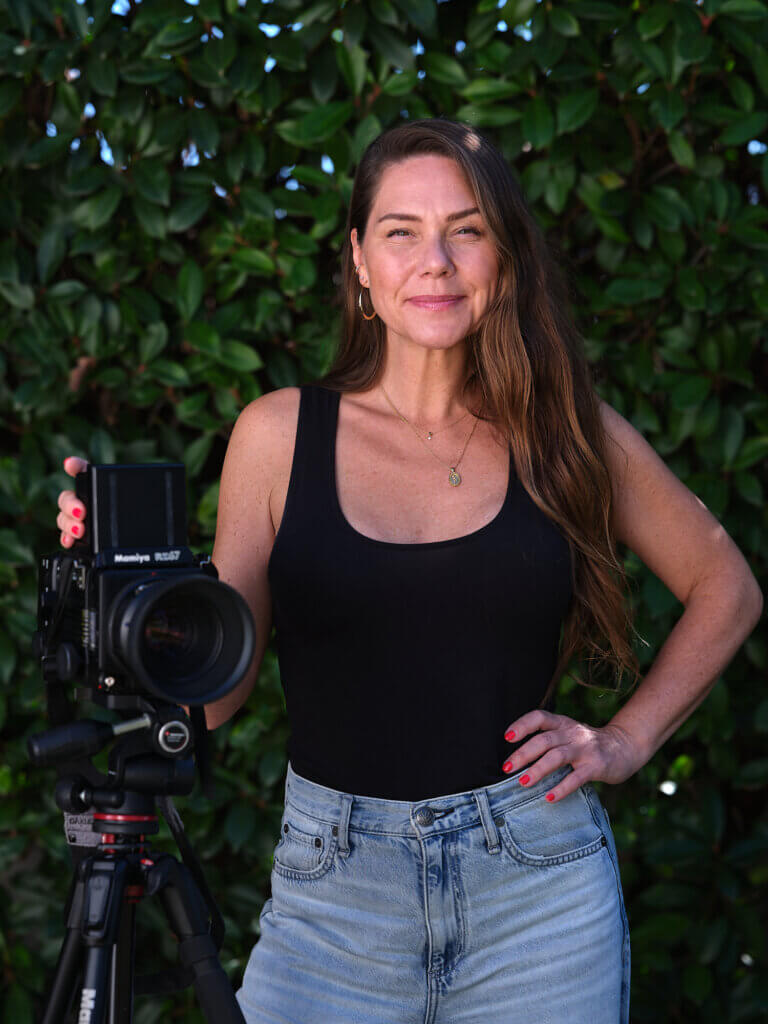
“At the same time, the future of the industry doesn’t depend only on creators; it depends on audiences. When you choose to pay for the porn you watch, you are giving value to that work. You are supporting the people behind it and making a statement about the kind of content you want to see: work that is made with care, with respect, and with real creative ambition.“
Image by Jahel Guerra Roa
As for my own work, I see ERIKALUST continuing to grow and push boundaries as a home for cinematic erotic storytelling. I want us to keep producing films with strong artistic direction, shot with the same care and technical quality as any other cinema, while continuing to collaborate with performers and directors from diverse backgrounds. My hope is that audiences will increasingly seek out pornography that feels intentional, human, and beautifully crafted—stories where desire is explored with imagination, emotion, and respect for the people who bring it to life.
Lust is currently writing her memoir LUST: Pleasure, Performance, Power, set to be released in October 2026.
The book interweaves personal narrative and industry insights with cultural criticism, exploring the contradictions within the porn industry and feminism today, inviting readers to question their preconceptions about pleasure and reclaim their own desires and bodies.