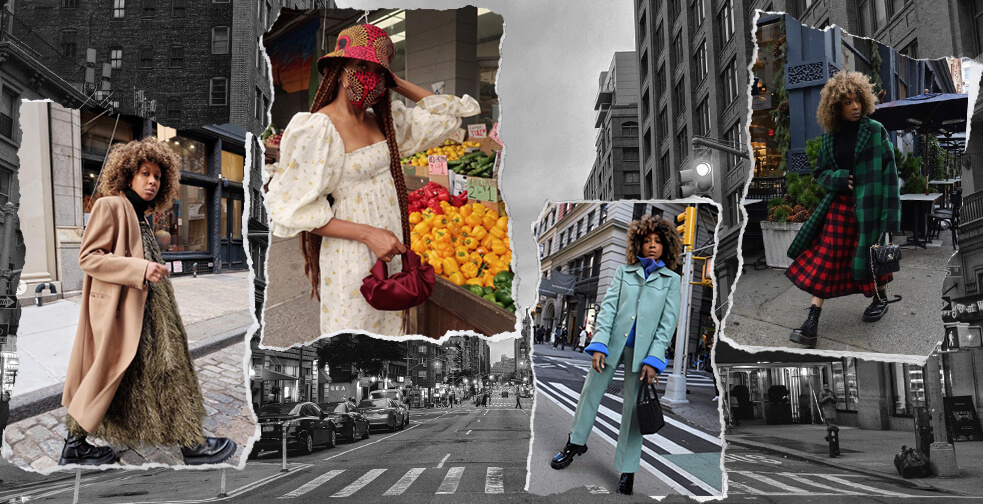







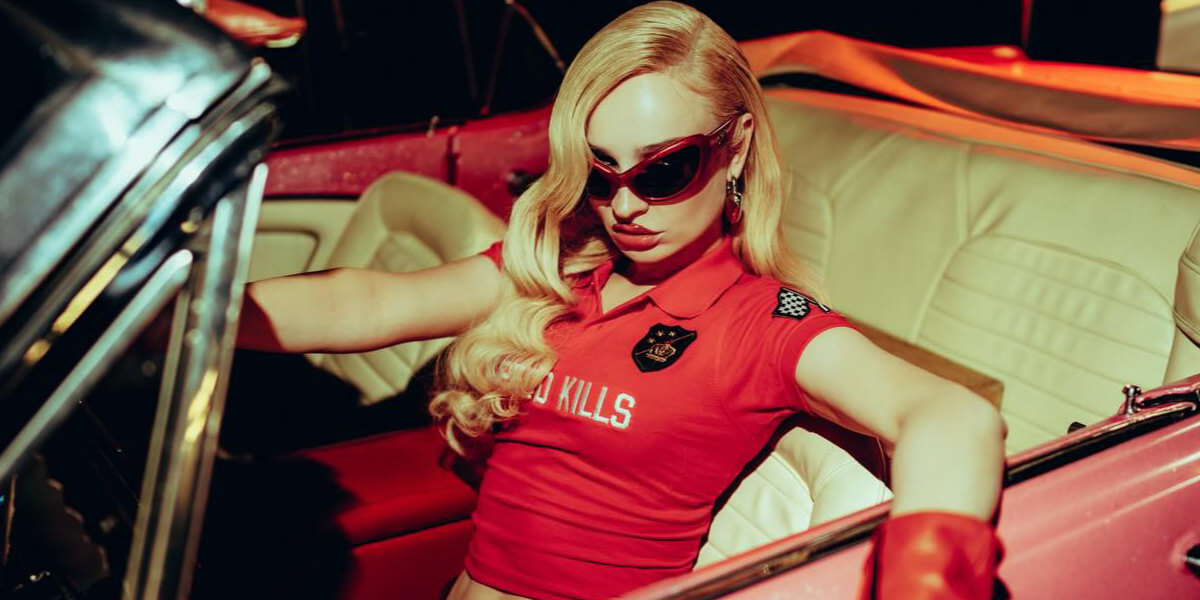
Header Image Credit – Director of Photography: Carter Knopik, Image Rights – Kim Petras
It’s a Friday night, and plans to go out are already set.
Outfit: We wear whatever we want.
Dancing: We move however we feel.
Flirting: With whoever we want.
Attitude: No fucks given.
That kind of freedom still feels relatively new. For decades, and in many ways still today, nightlife has often meant entering spaces shaped around the male gaze. Spaces where music, atmosphere, and behavior often revolved around male pleasure. The club was supposed to feel exciting, liberating, excessive. Yet for many women and queer people, it also meant constantly being perceived. The music often reflected that dynamic, or even amplified it. Throughout the 2000s and early 2010s, club culture was dominated by tracks centered around hyper-masculine fantasies, where women frequently appeared less as individuals and more as accessories to lifestyles built around status, sex, and consumption. Female desire, consent, and queer identity were rarely part of the conversation.
Thinking back to my 2000s MP3 player favorites, I immediately remember artists like The Pussycat Dolls, Destiny’s Child, Christina Aguilera, and Rihanna. Their music not only gave me confidence but also introduced me to a proto-version of empowerment and feminism. Listening to songs like Independent Women, I Don’t Need a Man or Can’t Hold Us Down felt especially radical and rebellious at the time.
“Call me a bitch ’cause I speak what’s on my mind
Guess it’s easier for you to swallow if I sat and smiled”
The lyrics centered on emotional independence, self-worth, and resistance against double standards. Encouraging women to take up space rather than shrink themselves for male approval. Yet much of that era’s “girl power” still operated within existing structures of desirability, carefully packaged through polished femininity and commercial aesthetics.
“The shoes on my feet, I bought it
The clothes I’m wearing, I bought it”
Even empowerment itself often became tied to consumption and marketable confidence. The rebellion was visible, but still highly controlled. Music that empowered women already existed. But it still largely remained polished, digestible, and carefully compatible with mainstream expectations.
Over the last few years, pop culture and nightlife have noticeably shifted, particularly within queer club culture and FLINTA* spaces. The energy started to feel different. Louder. Messier. Less adjusted. More provocative and far less interested in the male gaze.
Last summer, a friend and I spontaneously agreed to DJ at a party. Almost immediately, I knew the set had to center female desire and celebrate FLINTA* artists. I wanted tracks that felt excessive, political, hypersexual, maybe even slightly uncomfortable. A set that didn’t just energize the room, but actively changed its atmosphere. Unapologetically rebellious. As we built the track list, artists like Shygirl, COBRAH, Slayyyter, Kim Petras, and Charli XCX quickly became central references. Their music combines explicit lyrics, queer-coded aesthetics, irony, fetish references, and hyper-feminine exaggeration. Through those influences, the room suddenly felt different. Less observed. Less performative. Less centered around male attention.
For many queer and FLINTA* people, that shift changes far more than just the setlist. Historically, queer nightlife has existed because mainstream spaces often failed to feel safe in the first place. Clubs became environments where people could experiment with identity, sexuality, and self-expression without constantly monitoring themselves through the expectations of others. That feeling still deeply matters today.
At a time when queer and trans identities remain heavily politicized, gathering together inside clubs, raves, and nightlife spaces continues to function as more than entertainment. It becomes visibility. Community. Sometimes, even survival. And maybe that is exactly why this new generation of artists resonates so strongly. Their music doesn’t just soundtrack queer nightlife. It actively contributes to creating spaces where people feel seen, protected, and understood.
This new generation of artists is repositioning what lyrics can represent. Their songs often function less as passive club tracks and more as statements hidden inside hyperpop, techno, electroclash, and experimental club music. Tracks like BB, Slut Pop Miami, or Down The Drain embrace sexuality, dominance, and femininity in ways mainstream pop has often hesitated to fully approach. Even though sexuality in pop music is nothing new, the framing has shifted. The music feels intentionally excessive. Hypersexual. Sometimes grotesque. It draws heavily from underground queer nightlife, fetish aesthetics, drag culture, BDSM references, and internet-born exaggeration.
What separates artists like COBRAH or Shygirl from earlier hypersexual pop imagery is not the presence of sexuality itself, but who controls the narrative around it. Songs about domination, kink, pleasure, or desire no longer feel written through a masculine fantasy. Instead, sexuality becomes self-authorship. A way of reclaiming control over how femininity, queerness, and desire are allowed to publicly exist. Not even interested in appearing respectable.
What makes this newer wave feel distinct is not only the imagery itself, but the refusal to fully package it for mainstream approval. For many FLINTA* and queer audiences, Charli XCX’s Brat album did not simply feel like an album. Rather than promoting polished perfection, the album celebrated insecurity, chaos, and emotional contradiction. Suddenly, being “too much” no longer felt like failure, but identity.
At the same time, artists like Slayyyter rejected the expectation that female pop stars constantly need to appear perfectly constructed. Her visuals feel intentionally messy, ironic, and DIY rather than polished into something universally consumable. Many of these artists were never designed through traditional pop industry systems in the first place. Their audiences came first. Built through Twitter stan culture, queer nightlife, SoundCloud uploads, and underground club scenes, artists like Slayyyter, Chase Icon, or COBRAH developed loyal fanbases long before major labels fully understood their appeal. For years, that kind of music was often considered too niche, too explicit, or simply commercially unviable. But labels eventually could no longer ignore the audiences that were already there.
Slayyyter’s rise illustrates that shift particularly well. Back in 2019, it felt almost unthinkable that an artist so explicit, confrontational, and aesthetically rough around the edges would receive major label backing. Yet after years of building a dedicated audience online, her eventual mainstream breakthrough no longer felt like industry discovery. It felt like delayed recognition. Unlike many mainstream artists shaped top-down through label strategies, these artists largely grew from communities that already saw themselves reflected in the music. The fans created the momentum first. The industry followed later.
What once existed mostly inside queer clubs, underground parties, and internet subcultures is now increasingly moving into mainstream spaces. Artists like Slayyyter and COBRAH are no longer niche references hidden inside curated playlists or club lineups. They are playing major festivals, touring globally, and building audiences far beyond queer nightlife scenes. Earlier this year, Slayyyter performed at Coachella Valley Music and Arts Festival while simultaneously announcing her WOR$T GIRL IN THE WORLD TOUR. Even the title itself feels intentionally confrontational. A rejection of the expectation that women, particularly hypersexual women, still somehow need to remain likable, respectable, or easy to consume.
Meanwhile, COBRAH’s rise from Stockholm’s fetish and BDSM scenes into global pop spaces demonstrates how aesthetics once considered too explicit for mainstream visibility are now entering much larger cultural conversations. At the same time, the growing visibility of these artists raises another question. What happens when aesthetics once rooted in underground queer spaces become mainstream products themselves? Especially at a time when queer aesthetics are increasingly profitable, while queer and trans communities themselves remain politically targeted. Maybe that tension is exactly what makes this moment so culturally interesting. These artists are not asking for permission. They are entering mainstream spaces entirely on their own terms.
The cultural significance of this shift goes far beyond provocative lyrics or fetish aesthetics. These artists are creating spaces where queer people, women, and FLINTA* audiences can imagine themselves outside traditional expectations of desirability, gender, and behavior. Instead of translating themselves into something softer or easier to consume, artists like Shygirl, COBRAH, Slayyyter, or Chase Icon embrace exaggeration, hypersexuality, irony, and chaos as forms of self-authorship.
Personally, and probably for many others too, that visibility feels deeply meaningful. Seeing queer identity, female desire and non-conforming femininity exist publicly without apology creates possibilities that previous generations rarely had access to. It would be easy to reduce this moment to shock value. Latex. Explicit lyrics. Club chaos.
But what these artists are creating feels far bigger than provocation itself. Their music builds temporary worlds where queer people and FLINTA* communities can exist differently. Louder. Messier. Less apologetic. And honestly, I’m just grateful for everyone supporting these artists, listening to their music, and understanding the cultural significance behind it. Because thanks to them, the dance floor finally feels like it belongs to all of us.