






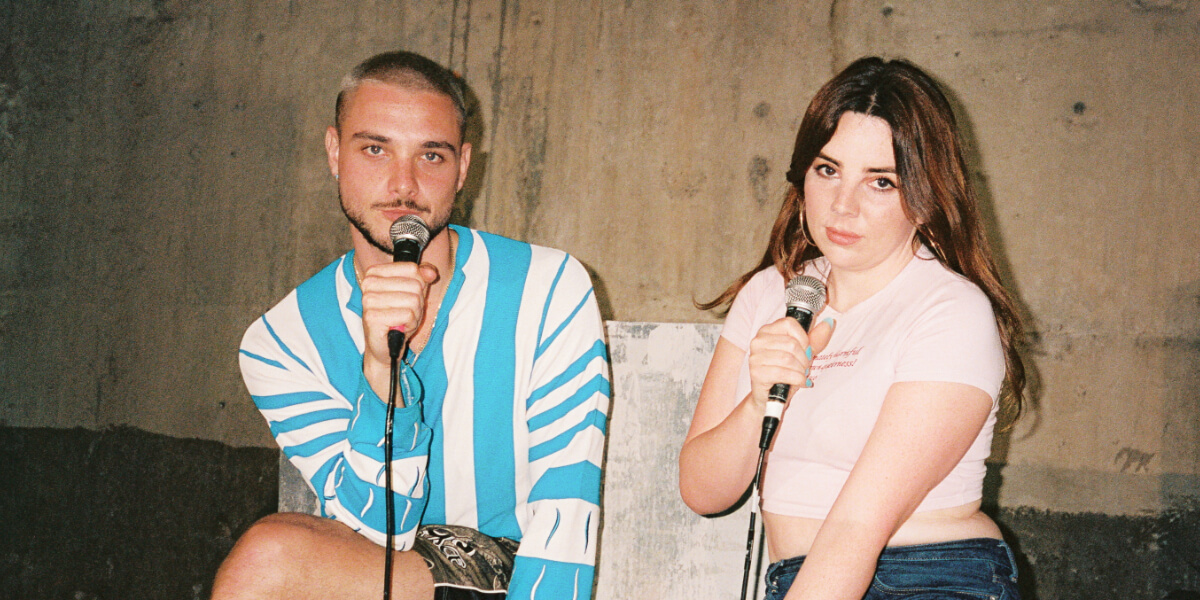
Zooey Gleaves is a figure who has traversed multiple creative universes, but amongst his extensive work runs a thread of commonality. Zooey is infatuated with all things pop and visual culture. An obsessive researcher of the Zeitgeist and a true music, film, and fashion fanatic, if there’s one thing Gleaves is going to do, he’s going to get to the bottom of it. Whatever it is.
This year, he has channeled his fixation into a living, breathing series he calls References. Through the series, Gleaves traces the histories behind fashion, art, and pop culture, unpacking the people, images, and ideas that continue to shape the present. It covers everything from the iconography of queer idols such as Madonna and Björk to the homoeroticism in horror to the enduring power of irreverence and humor as a tool against evil. Equal parts visual research, cultural investigation, and personal obsession, References has become a destination for the creative and the curious.
We spoke to Gleaves about cultivating taste, researching culture, internet nostalgia, and of course… References!
What was the first thing that made you realize culture could be studied rather than simply consumed?
Well, from a very young age, as a teenager, I would spend a lot of time in the art department at school, and they had a small art library full of books. It was one of those things where, the moment I realized I was into art, I just couldn’t stop. Honestly, I would go to the art library most days and sit there looking through all the books, and my kind of autistic-not-autistic brain would commit a lot of it to memory. There was just something so fascinating about seeing the multiplicity of ways people can translate their own version of the world, seeing how that can look in so many different forms. I think that’s always been the most fascinating thing to me.
On the topic of good taste, do you think taste is something that is innate, cultivated, or obsessively researched?
I think good taste is something that’s honed. I think you’re definitely born with a perspective and a point of view. That doesn’t mean it can’t change, and it doesn’t mean it can’t grow, be reshaped, or be reformed. I think so much of taste is, unfortunately and wrongly, tied to class and money. We all know that some of the most upper-class and wealthy people have some of the worst taste imaginable. The people who dictate what’s considered good taste and bad taste are often wrong. What’s really interesting is when somebody’s taste is unique and entirely their own. Whether it’s considered good or bad doesn’t really matter.
What reference do you find yourself returning to over and over again?
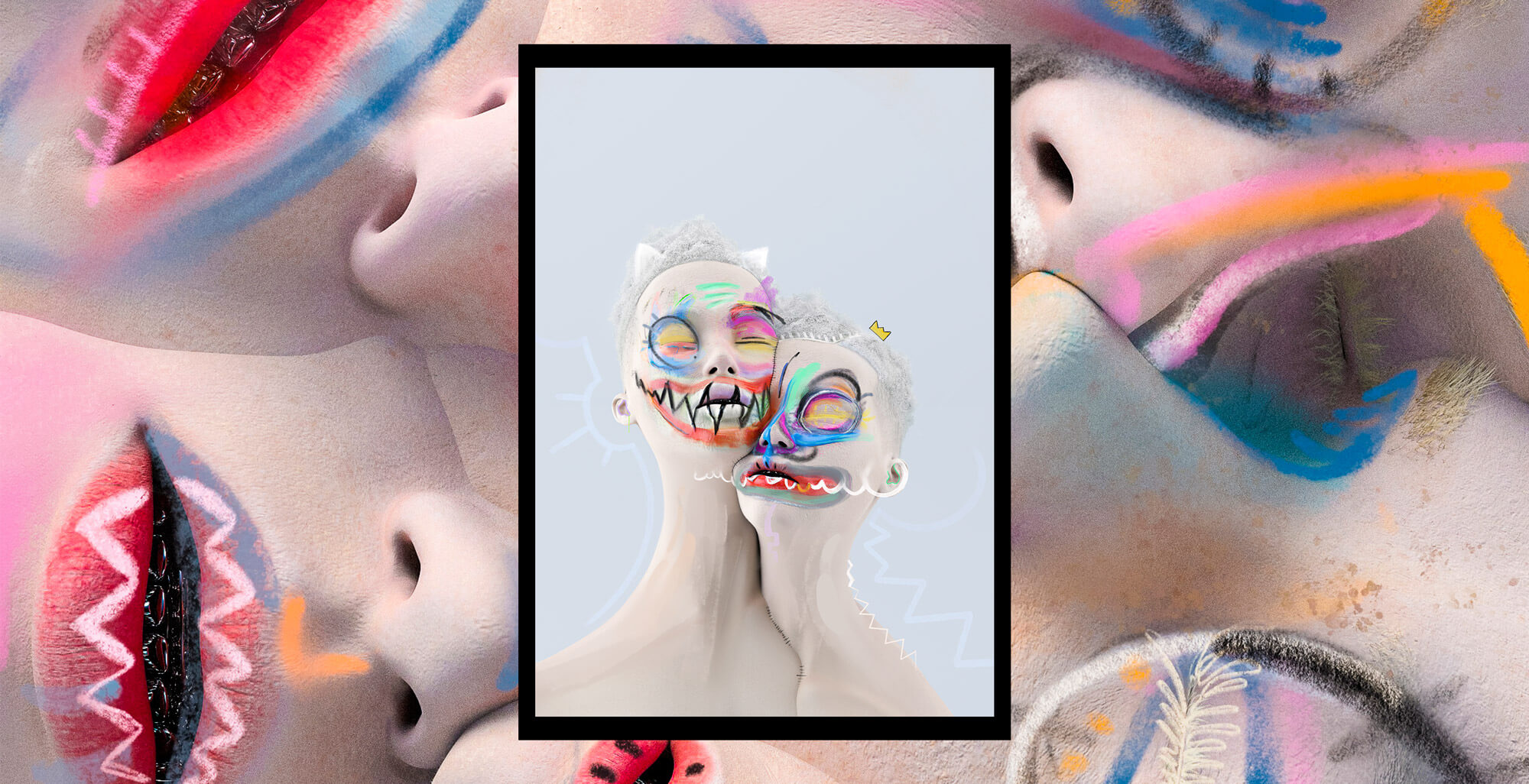
There are so many things that I can’t shake, but the photography of Pierre et Gilles is always something I return to. They’re a French duo and have been partners for something like fifty years at this point. One of them is a photographer, and the other paints on top of the photographs. They’ve been making portraits this way for a really long time and have created incredible portraits of loads of amazing celebrities. The quality of their work is just so beautiful to me: ornate and unapologetically gay. An art teacher showed them to me when I was about sixteen or seventeen, and it completely changed my life. So thank you, Mr. Mills, for showing me those two gay guys who made portraits together, because they’ve genuinely changed my life forever.
What’s your favorite episode or investigation you’ve done so far?
Honestly, the one that came out today (Friday, 19th June). I did a video all about fashion’s response to 9/11, which was shadow-banned, I think. It’s on something like sixty-three likes and counting at the moment, which, for somebody with 13,000 Instagram followers, does give you a little pause for thought. I really enjoyed making that video. There have been others I’ve loved too, but that one is probably at the top for me right now.
Has researching references changed the way you consume contemporary culture?
I suppose what it’s done is make me more diligent about research. I think I forgot for quite a long time that I’m somebody who really loves doing research and finds it rewarding to make connections and put things together. It’s something I always did in conversation but never really made a practice of doing. Low-key, it’s one of the things that’s kept me sane. So it’s not so much changed the way I consume culture, but it has definitely made me feel a lot more mentally well.
The internet used to feel like a place to explore, but now it just predicts what we want. Do you think that shift has changed the way taste is formed?
Yeah. It’s the death of the individual again and again and again. You read scary headlines about how the UK hasn’t created a new music genre in something like a decade, and it’s like, ooh, that’s scary. I think all those things are connected. This idea of really figuring out and honing who you are, what you like, and feeling comfortable with the discomfort of not necessarily being part of a group or identifying with a specific group… that’s more important than ever. Hopefully people figure that out.
What’s something from the old internet that you miss?
Honestly, the good old Tumblr days.
You could just scroll for hours and hours. We’d watch Made in Chelsea with my friend, and during the ad breaks we’d scroll through our favourite Tumblr, run by this girl who had this really moody, bruised-light, vaguely self-harm-adjacent goth Tumblr. She’d post about drama with her friends, and we’d read it religiously between Made in Chelsea ad breaks. I really miss that. I also miss early M.I.A. on the internet. She was incredible online back in the day when she had her record label, N.E.E.T. Recordings. With the rise of GIF culture and everything, that era was just really fucking amazing.
What’s the most exciting thing happening in culture right now that isn’t getting enough attention?
I think London is currently full to the brim with really exciting queer projects and events that deserve more attention. Smart Press is one. Querida, which is this fab new pop-up gay taco night, is another. There are so many little moments happening, people making really wonderful things, and there’s always something to do. That’s incredibly important, especially in a city where the narrative is constantly “blah blah blah, things are closing.” We need more of that stuff. Anyone who’s putting on anything right now is doing something really fab.
How do you hope References will evolve?
Well, I’m working on a podcast for References right now, which should hopefully be ready by the end of summer. We’re still trying to nail down a few final guests. What I really want to step into properly is my role as a broadcaster and start having detailed, ornate conversations about people’s work and their often crazy creative practices. There seems to be a market for that, so it’s something I’m excited to get into.
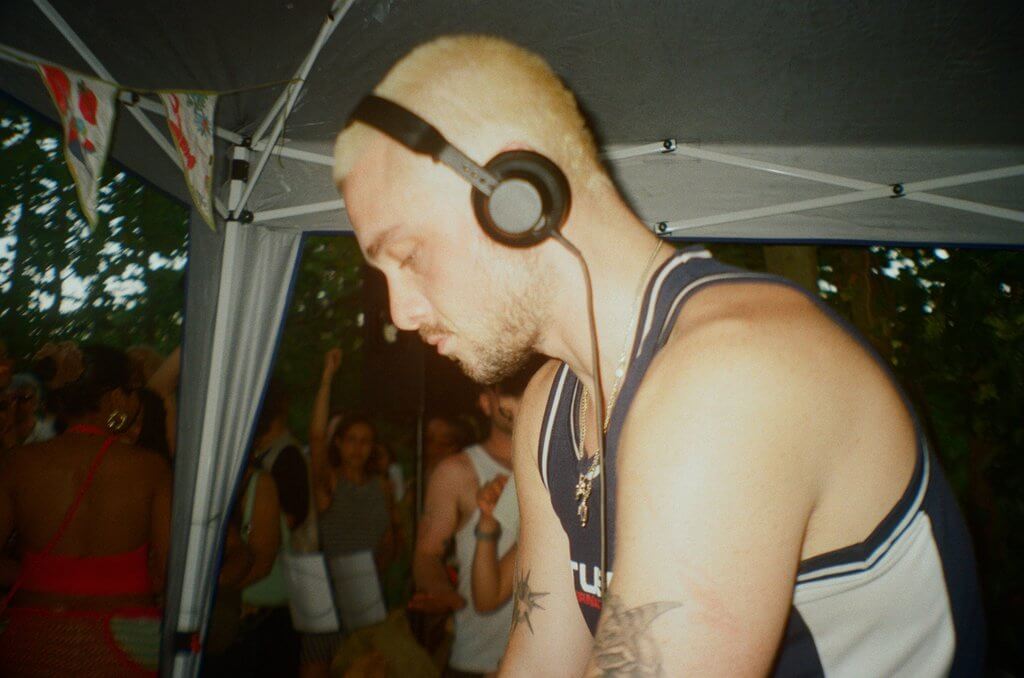
Final question. One designer, one film, one artist. Go.
One designer: right now, for me, it’s Miguel Adrover. I’ve been researching a lot of his collections for References recently, and his clothes look like they were made yesterday. The way he casts his shows, the references he pulls together, and the way everything looks—it’s sexy, sophisticated, and deeply chic. He’s clearly been an inspiration to so many designers, from Telfar to, you know, what’s his name… that motherfucker who used to be at Balenciaga and now does Gucci. He’s so amazing and so formative. He’s got a new book coming out that’s a collection of the looks he’s been making since moving back to Mallorca. I think Miguel Adrover is incredible.
One film: there are so many. I watched Chocolate Babies recently while I was in Australia. It’s an incredible film by Stephen Winter. It’s about a group of Black queer and trans activists who launch various guerrilla-style actions against politicians in New York City to secure greater access to healthcare for people living with HIV and AIDS. It’s amazing to watch and deeply inspiring because it reminds you that politicians should actually be afraid of us and in service to us. The streets still matter. As we move further towards the rise of the data center and the omnipresent billionaire mogul, that idea feels more important than ever. More power to it, honestly.
One artist: Kelela. Always Kelela. Always number one. A song for every mood and every moment. Sophisticated, emotional, deeply sexy, contemplative, and dancefloor-ready, but also perfect when you’re staring out the window at 3 am because you can’t sleep. There’s a song for every occasion. She’s deeply inspiring and, in my opinion, one of the greatest artists of our generation. And yeah, she’s bad.