




Just in time for this year’s second round of Fashion Week, Berlin finally cooled down. A week earlier, the front rows at the city’s shows might as well have been filled with beachwear.
I kicked off Fashion Week by slipping into my boots and jumping into the U-Bahn to the Laura Gerte show. Despite being founded only in 2023, the Berlin-based designer has already presented her third runway collection this season, continuing to establish a clear visual and conceptual language within the city’s fashion scene.
The invitation only revealed the title of the collection: Lost to Virtue. It immediately sparked my curiosity.
Historically, the term “virtue” has been closely tied to morality, discipline, and social expectations. The title itself suggested that the collection would address those concepts in some way, though the perspective was uncertain.
Another hint was revealed by the venue itself: the Berliner Ensemble, which is steeped in rich history and has long been associated with politically engaged theater.
Across her previous collections, Looped & Bound, Desire & Chaos, and Deviant Defiant, Laura Gerte has consistently explored feminist and sociocultural themes. Built entirely from reclaimed and deadstock materials, her collections combine experimental silhouettes with conceptual narratives, creating a dialogue between opposing ideas such as fragility and resilience.
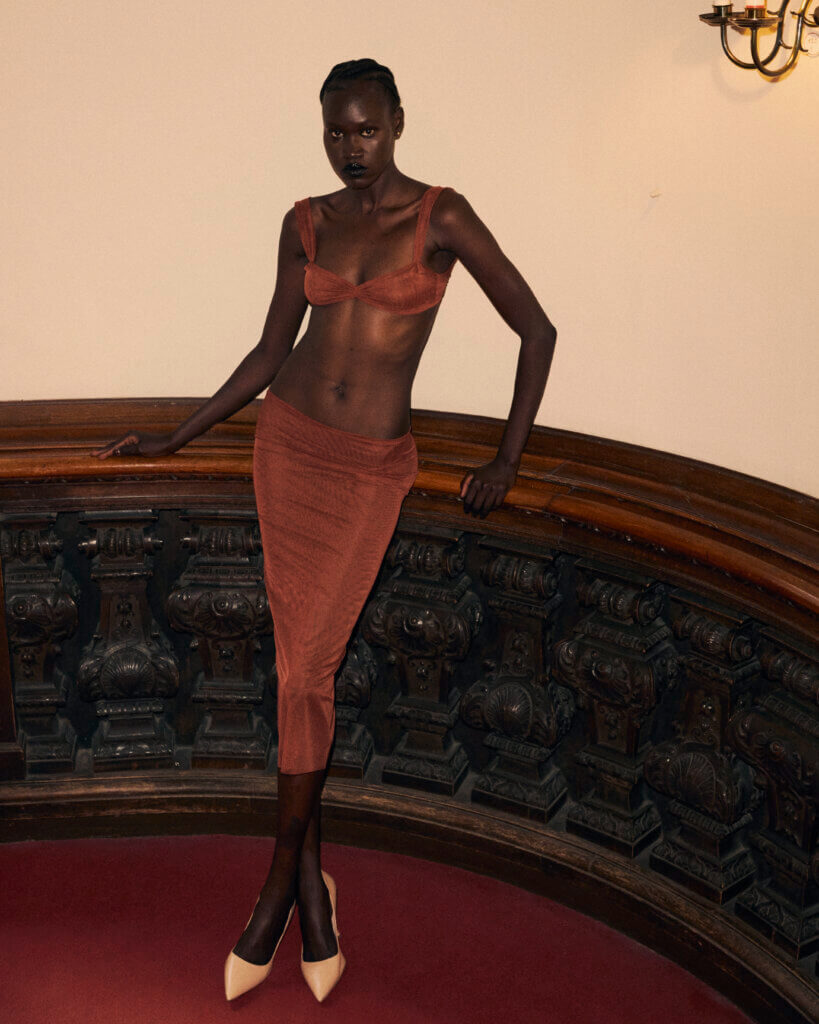
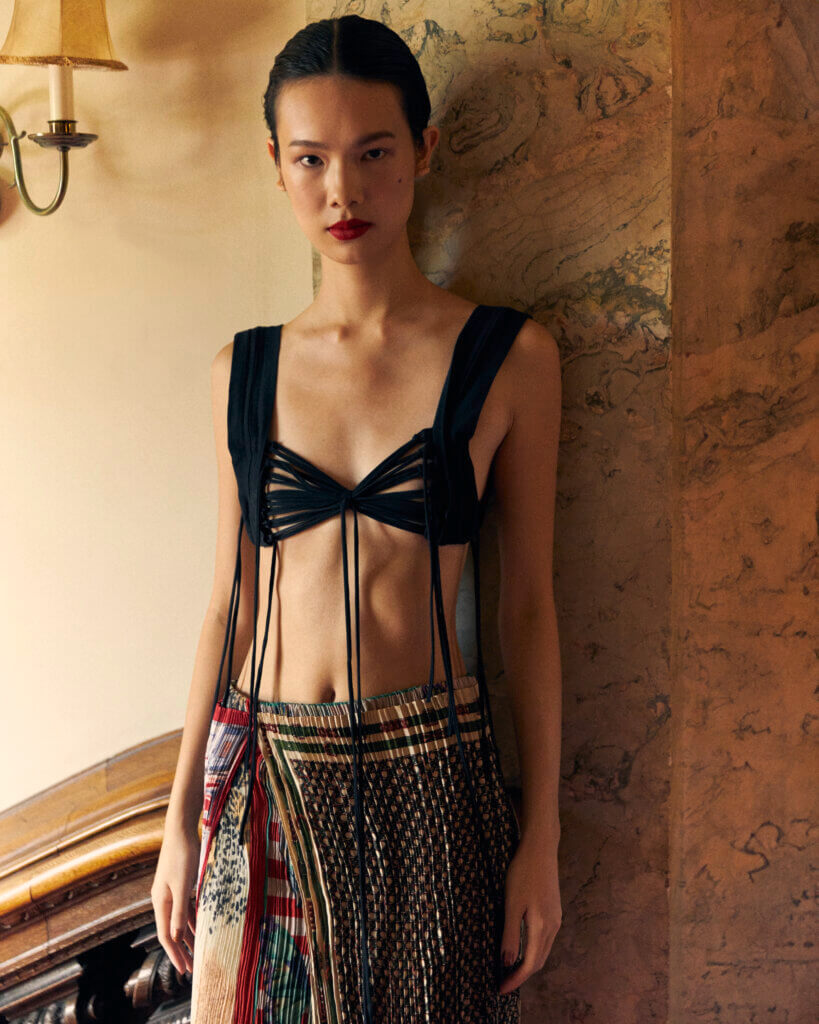
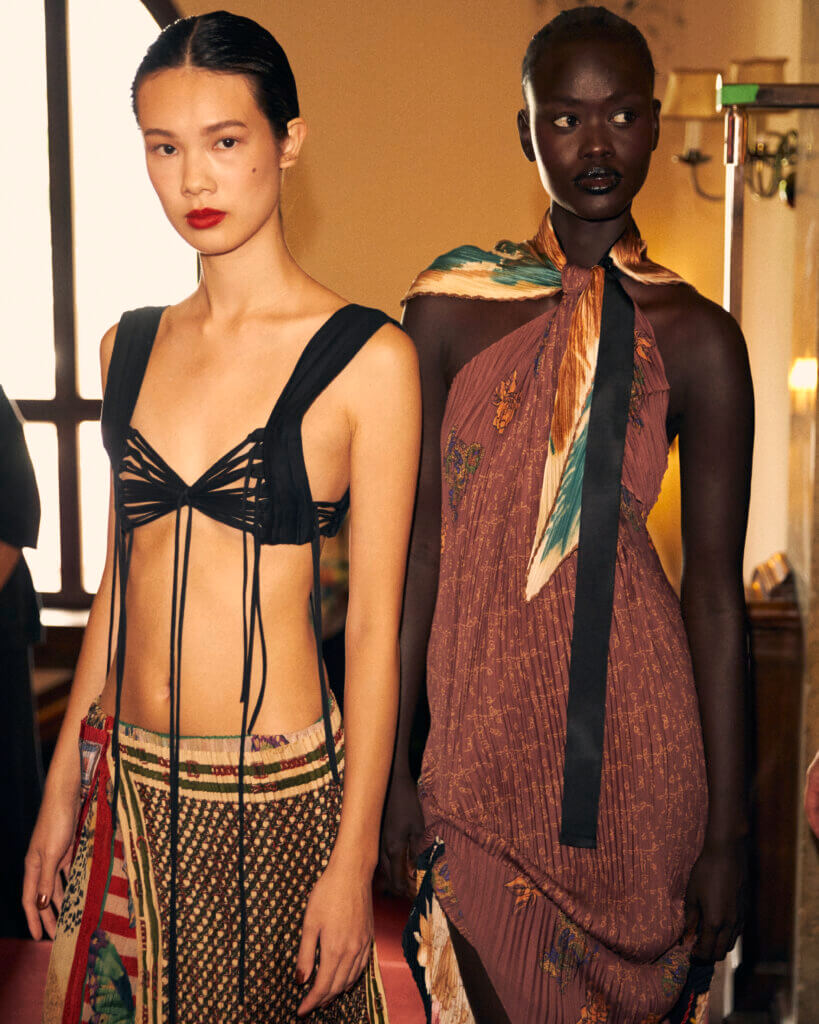
Upon entering the final show space, a red light flooded the room as the windows were covered with red foil. The red note on each seat offered the first clue to the collection’s narrative. It described the concept of the “virtuous woman” as a mechanism of control that has historically demanded women remain invisible, silent, and grateful for their diminishment. Rather than defining virtue as an ideal, Lost to Virtue invited the audience to imagine what could exist by losing those mechanisms: “free, feral, unruly, amused.”
The show started, and a techno house beat by Detroit techno pioneer Kevin Saunderson filled the room with a hypnotic energy. It immediately felt like the historic space turned into a club, and the audience began to vibe to the sound. Laura later explained that the mix, titled Future, has significant sentimental value for her.
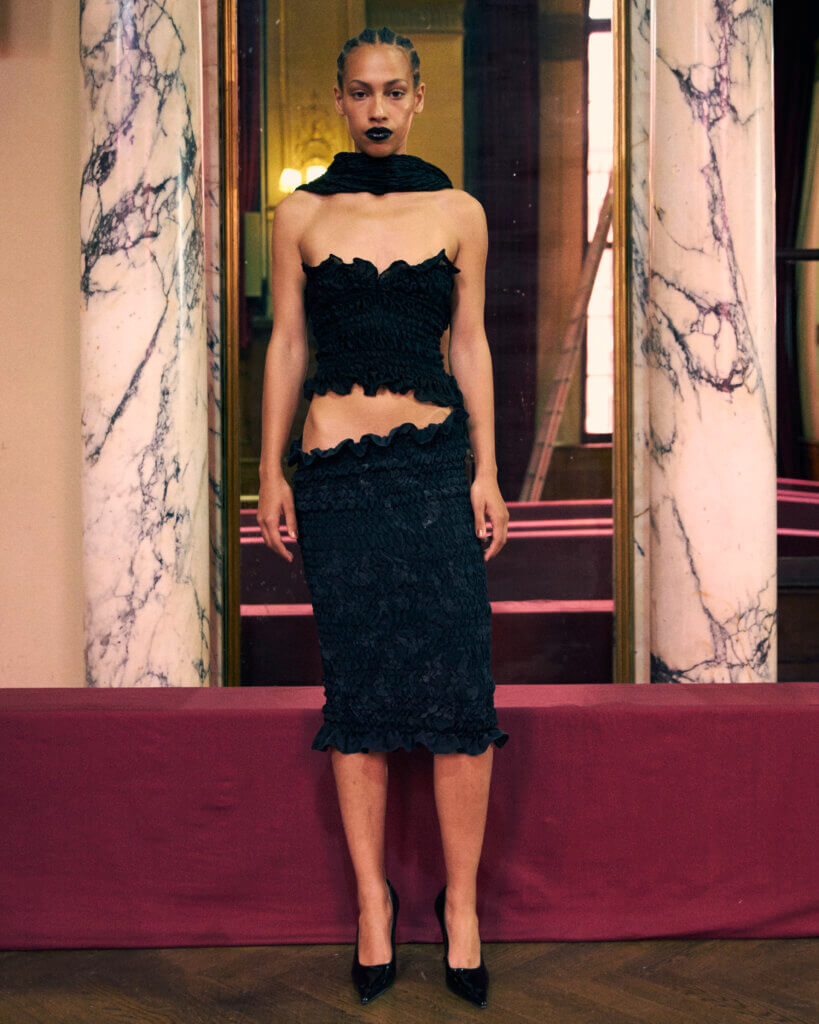
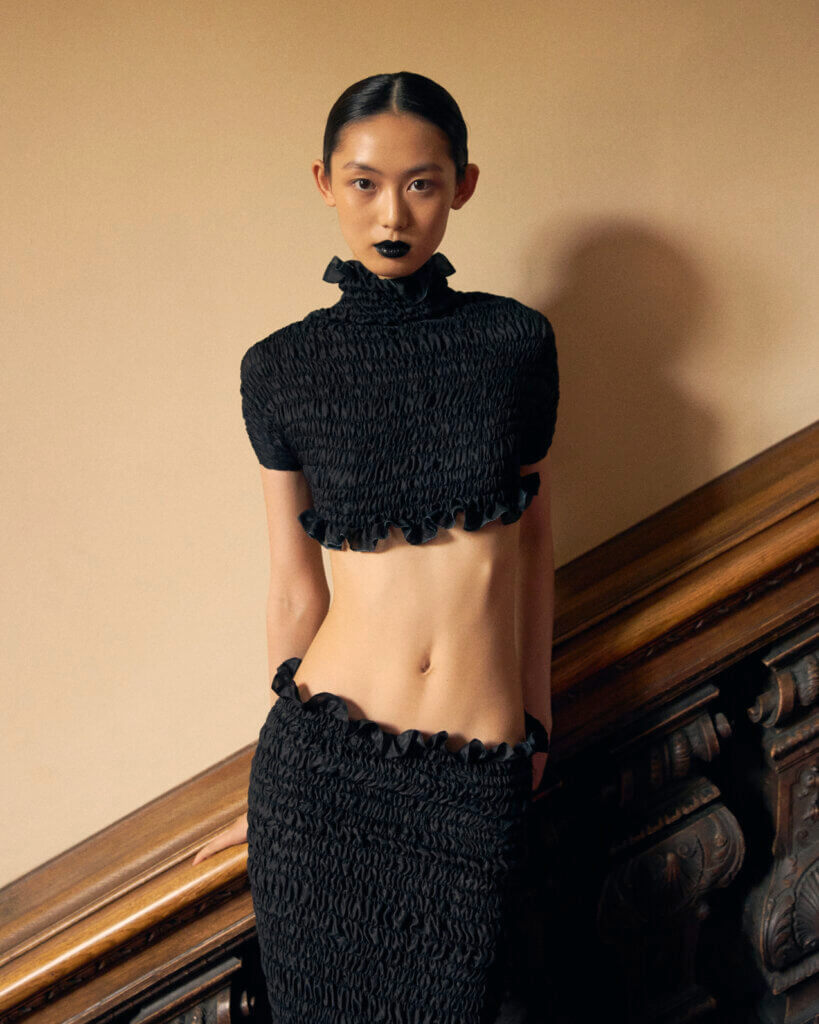
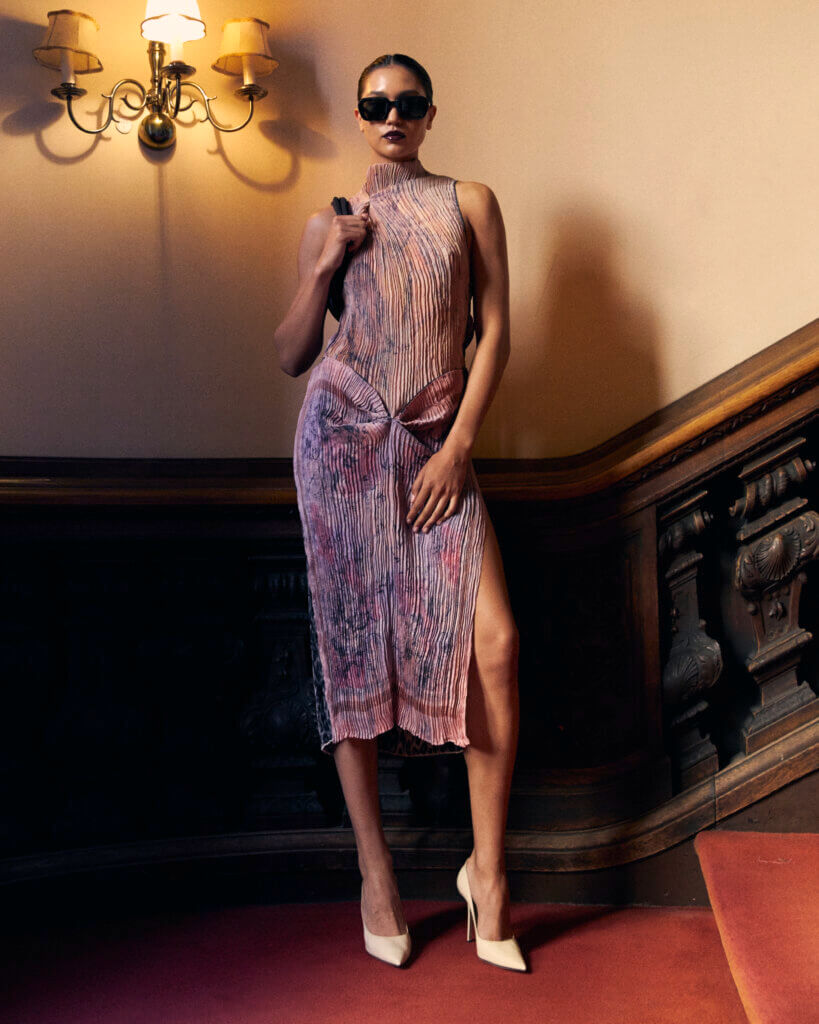
The following collection featured looks that played with different details, materials, and silhouettes. The designs twisted between conservative cuts and elements that expressed the show’s theme of freedom and wildness. Such as a crew-neck one-piece suit that surprised with cutouts at the hips. The looks also demonstrated how well legere pieces can be combined with playful styles and mixed materials.
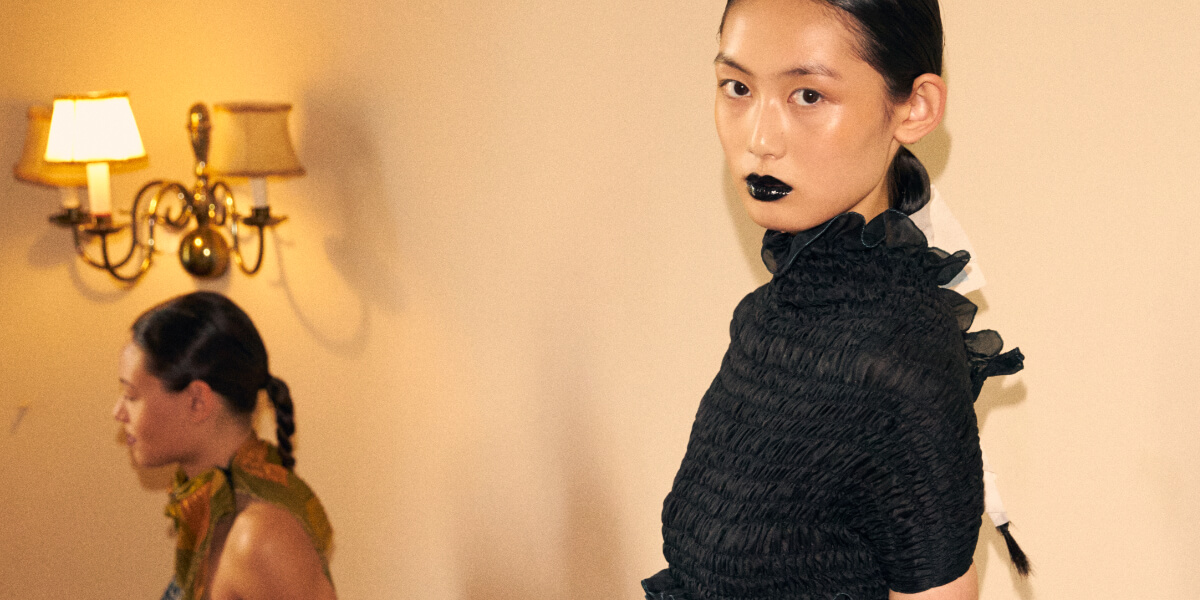
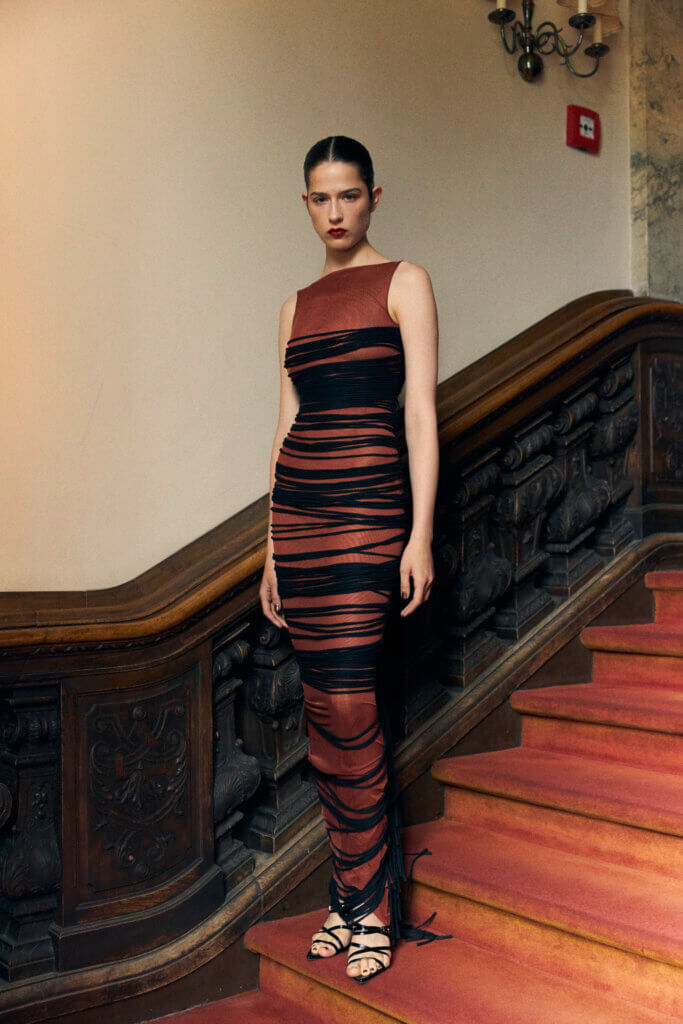
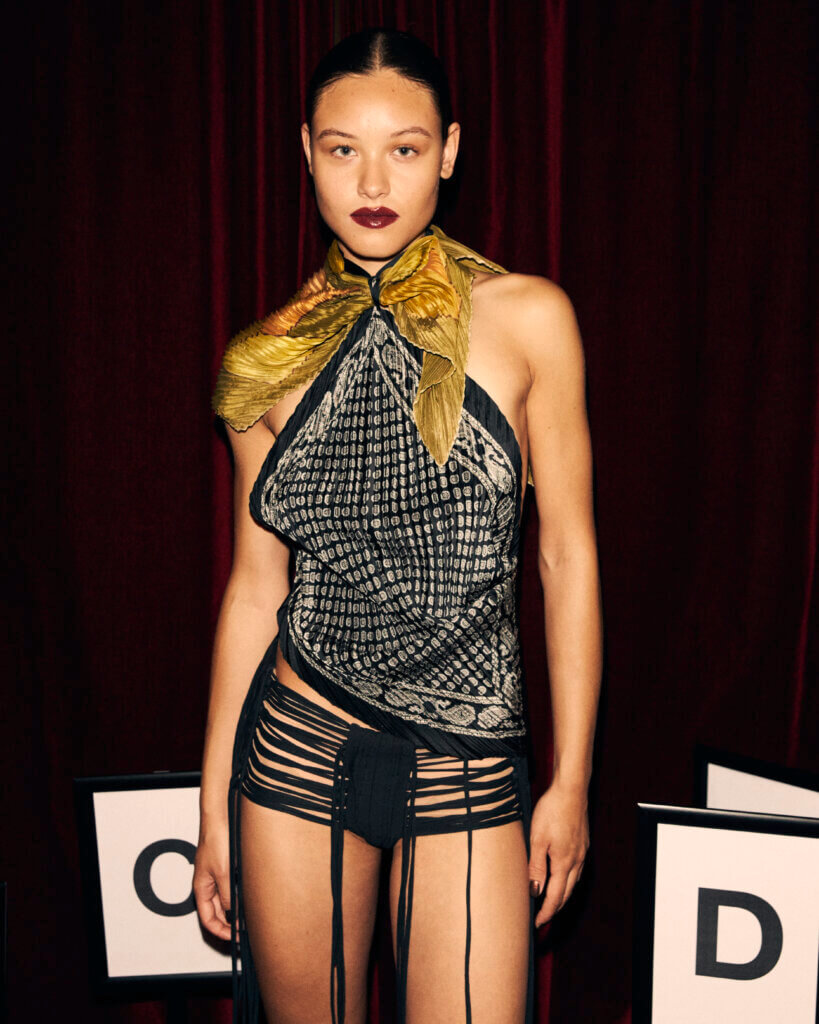
Many silhouettes abandoned conventional garment construction in favor of textile manipulation and modular draping, which reinforced the collection’s tension between control and freedom. True to her concept, Laura Gerte’s collection consisted solely of deadstock and recycled materials. While the collection included dresses, suits, skirts, tops, and two-piece sets, it was the pieces made of black strings that especially caught my eye.
As the final look disappeared backstage and the soundtrack that changed into a more emotional sound faded, I spoke with Laura Gerte about the ideas behind Lost to Virtue, her artistic evolution, and the personal significance of this collection.
Your collections are rooted in feminist and sociocultural inquiry. What drew you to the theme of Lost to Virtue this season, and how does this collection build on or challenge the feminist ideas you explored in previous seasons?
The initial inspiration actually came from a visit to the Musée de la Chasse et de la Nature in Paris with friends. I became fascinated by the surreal, almost Dadaist way objects were presented, which led me to research Surrealism, Dadaism, and eventually feminist writing. That’s when I discovered Mina Loy’s Feminist Manifesto. Although she wrote it in 1914, it wasn’t published until the 1970s because it was considered so radical.
One of the manifesto’s central ideas is the destruction of virtue. Virtue has historically been used as a mechanism to control women. The idea that you have to be a “virtuous woman” means suppressing your desires, your ambitions, and your own wishes in order to fit into a predefined role.
The collection begins with white dresses that symbolize this ideal of virtue, before gradually descending into something much more chaotic, bold, and free. At the same time, I never wanted to expose women or make them vulnerable. I wanted to give them armor. When the models put on these clothes, I want them to feel free.
Collectively, my previous collections form a trilogy, including this one. The first collection was about vulnerability, the second explored darker, more familiar themes, and this collection is about liberation. It feels like the end of one chapter and the beginning of another.
You describe your designs as playful yet defiant, provocative yet soft, and fragile yet resilient. Are there any pieces in this collection that particularly embody these qualities?
For me, it’s the black silk looks towards the end of the show. They consist of countless silk strings wrapped around the body and are combined with cotton elements. It’s a technique I’ve been working with since my university days, and it still represents everything I want to express.
The garments are very close to the body. They almost restrict movement, but because they’re made from silk, they remain incredibly soft and delicate.
I also like how the cut-outs reveal different parts of the body without ever feeling forced or uncomfortable. It’s always about balancing material, silhouette, and construction while giving everything a new twist each season.
Looking back on your previous collections, what has changed the most? Not only in the collections themselves, but also in you as a designer?
One obvious change is that some signature elements have evolved. For example, the piping that used to appear throughout my collections is now only present in the bags. Letting go of something that had become such a strong signature was actually very liberating.
As a designer, I always try to expand my creative universe while still staying connected to what defines my work.
Personally, I don’t think I’ll ever be completely satisfied. I constantly challenge myself and often struggle with imposter syndrome. But in a way, that’s also what keeps me moving forward. No matter how difficult the process is, it always prepares me for the next step.
Your work is known for transforming reclaimed materials into powerful and unexpected creations. Did you choose specific materials in response to Lost to Virtue?
Absolutely. The materials always play an important role in communicating the concept. I wanted the fabrics to move between softness and restriction, reflecting the tension between control and liberation that runs throughout the collection. Deadstock and reclaimed materials continue to be central to my practice because they allow me to build new narratives from existing resources.
This season’s show took place at the Berliner Ensemble, a theatre with a rich cultural history founded by Bertolt Brecht and Helene Weigel. What made it the right setting for Lost to Virtue?
Today, it’s the home of the Berliner Ensemble, but historically, the building carries so many different layers of meaning. For me, it represents older ideas of womanhood and tradition.
Transforming that space through red window coverings, the music, the styling, and the collection itself created an interesting dialogue between history and the present. I loved placing something so contemporary into a location with such a strong historical identity. Bringing those two worlds together felt very meaningful for this collection.
The soundtrack immediately stood out during the show. How did you choose the music, and what role does music play in your presentations?
Living in Berlin has had a huge influence on me. Before studying fashion design, I spent a lot of time in Berlin’s nightlife and club scene. For me, those spaces represent freedom, openness, and different ways of living.
The opening track by Kevin Saunderson is one I’ve danced to countless times. Connecting that part of my own life to the runway felt very personal. It’s not necessarily what people expect from a fashion show, but that’s exactly why I wanted to use it.
The closing track was much more emotional for me. It represents the desire for something new, the feeling that there’s still more to discover creatively and personally. I actually cried while listening to it a lot, because it expresses something very deep inside me. Even though it’s not a typical high-energy finale, I felt that the emotion came across, and that was the most important thing.
After finishing the interview, I walked out of the Berliner Ensemble feeling inspired. I kept thinking about how passionately Laura Gerte speaks about her work and how thoughtfully every element of the show had been developed. It was clear that the collection had been considered far beyond the garments themselves, with the venue, music, materials, and silhouettes all reinforcing the same narrative.
In my opinion, that’s exactly what makes a runway show truly memorable. Fashion has always had the power to communicate ideas beyond clothing. Seeing a designer use her platform to address feminist issues so thoughtfully left me with a genuine sense of hope.
Images shot by Nikos Karpouzis
for exclusive behind-the-scenes TITLE coverage of Berlin Fashion Week SS27