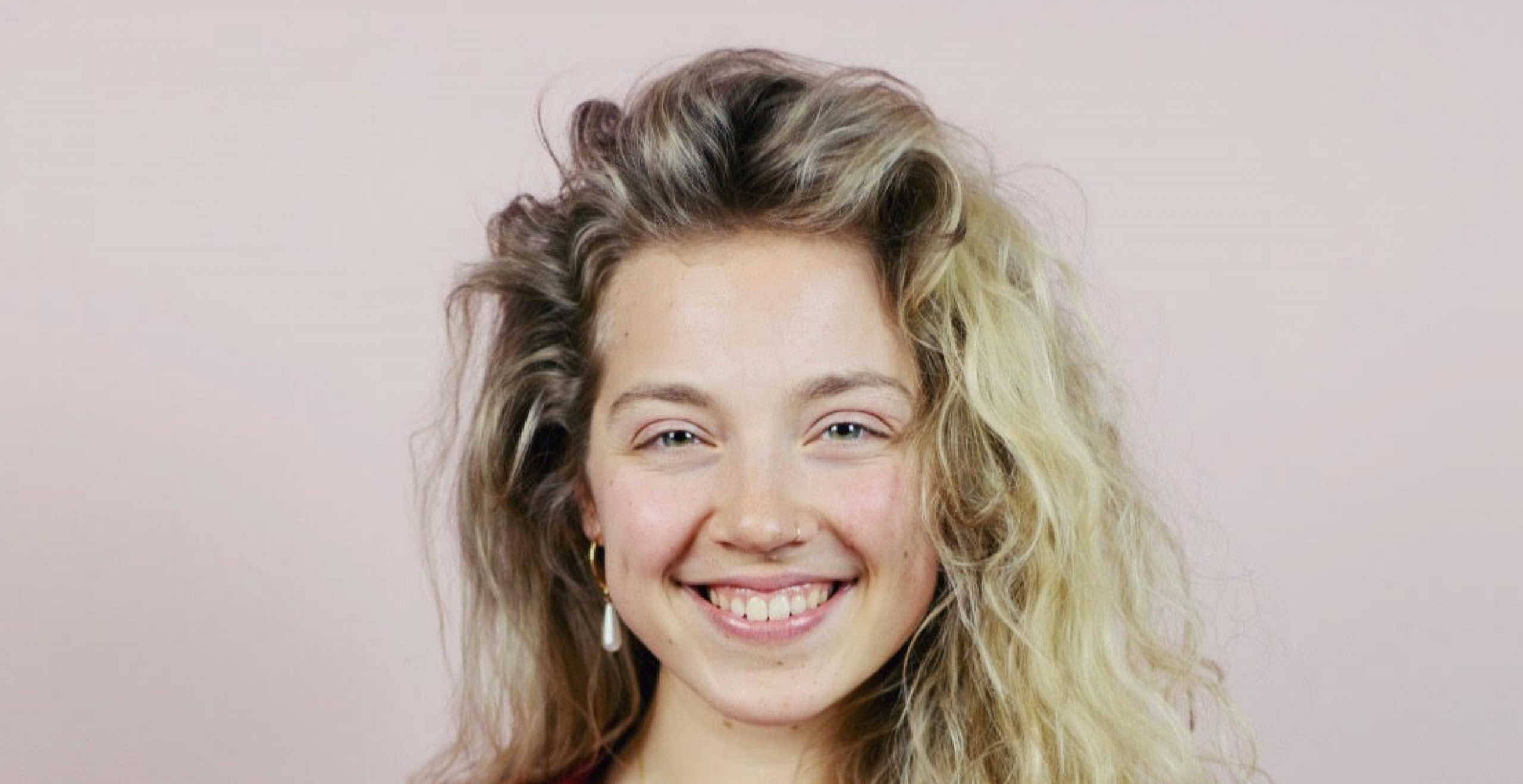



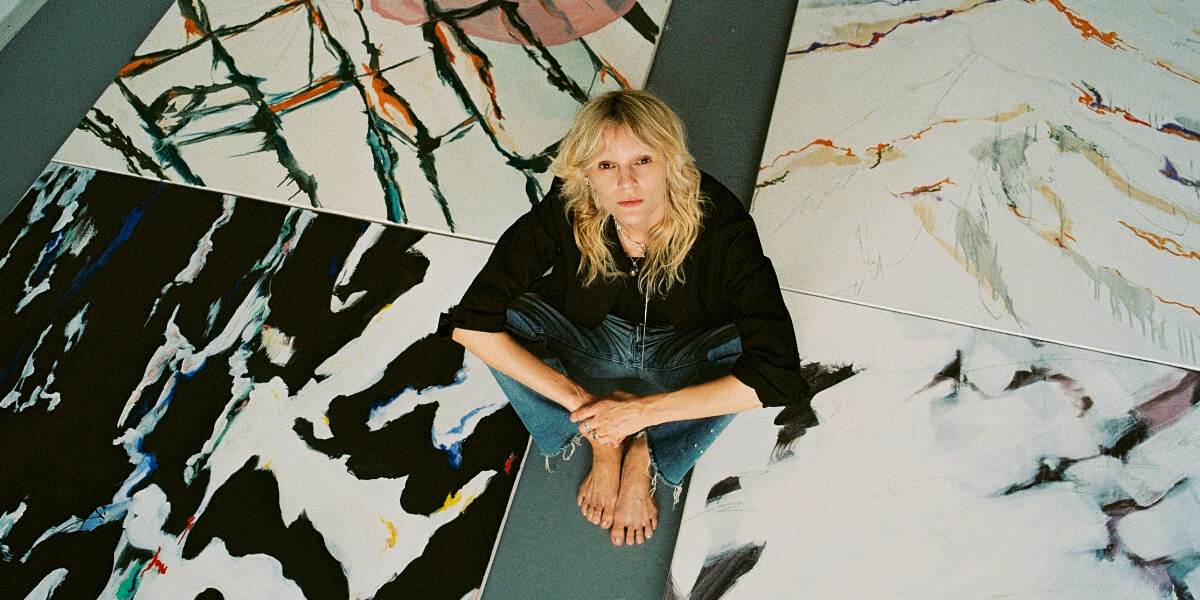
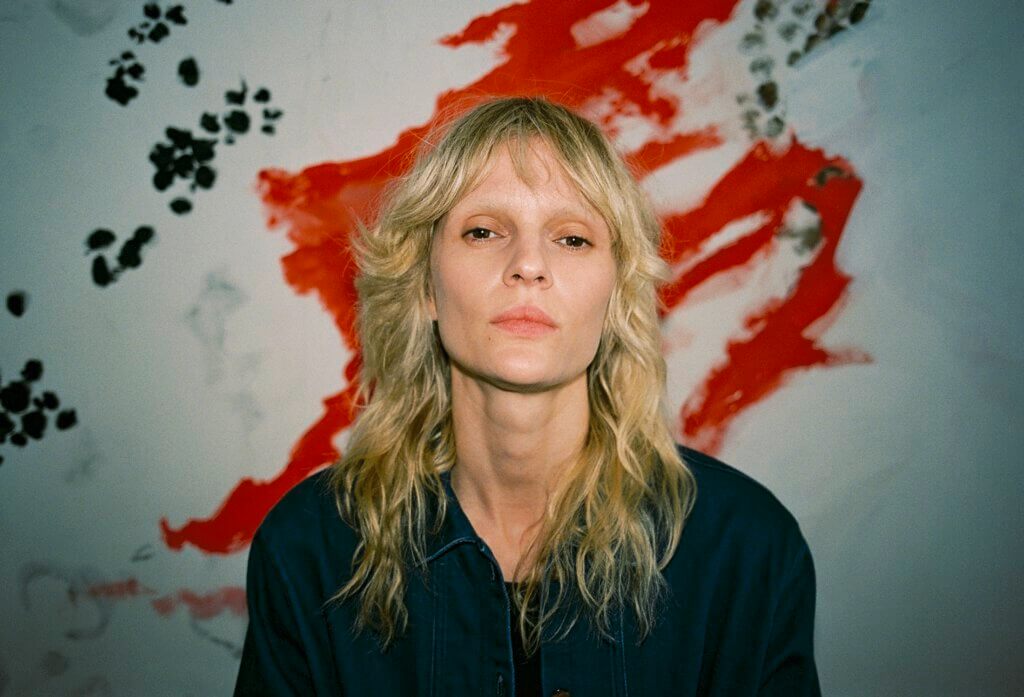
Anna Kuen is a contemporary, multidisciplinary artist, moving fluently between disciplines, inhabiting the roles of artist, musician, and model. In the studio, she constructs immersive visual worlds shaped by feeling and intuition; in music, she builds emotional spaces through sound; and in fashion, she lends her presence to other people’s visions and embodies their imagination.
In this conversation, we explore the tension between visibility and control, ambition and rest, performance and privacy. Kuen reflects on motherhood, solitude, discipline, and the environments that have shaped her imagination, from the dramatic landscapes near the German Alps to the focused cocoon of her current studio. What emerges is a portrait of an artist deeply engaged with her own becoming. Anna Kuen is someone less concerned with spectacle and more invested in building rooms for thought, feeling, and possibility.
You move fluidly between music, art, and fashion. Do these practices feed each other, or do you approach each as a separate creative language?
I think this is very much an “inside/outside perspective” topic, because I am clearly the same person working in all these fields, so they are definitely connected. At the same time, I treat them differently; my role in each field comes with its own way of approaching execution and performance.
Modeling is often about embodying someone else’s vision. How do you maintain your own creative identity within an industry built so heavily around image?
I have a very strong imagination and have found my own language in the arts. For me, it’s really important to never create anything just to be liked by others. Do your own thing and stick to it. I also usually don’t look too much at what others are doing and instead focus on making my own vision a reality.
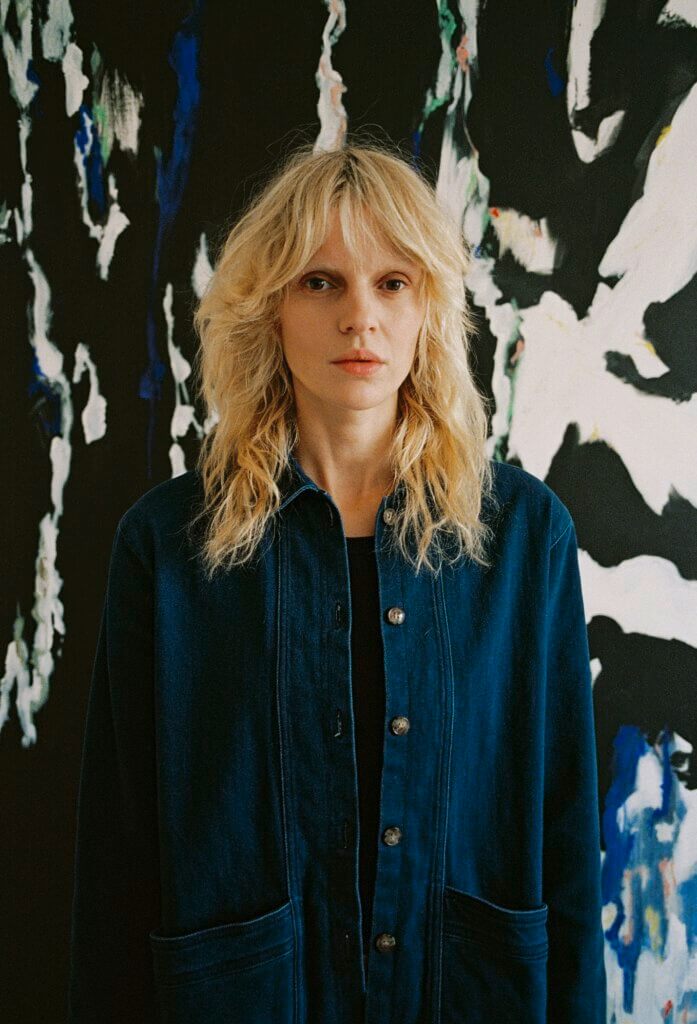
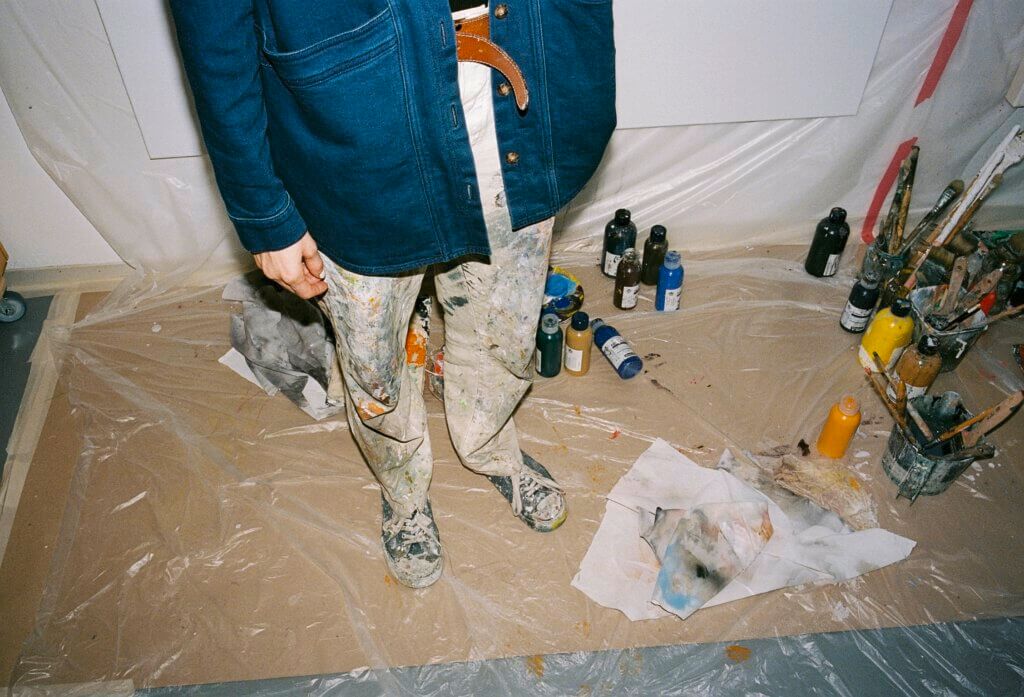
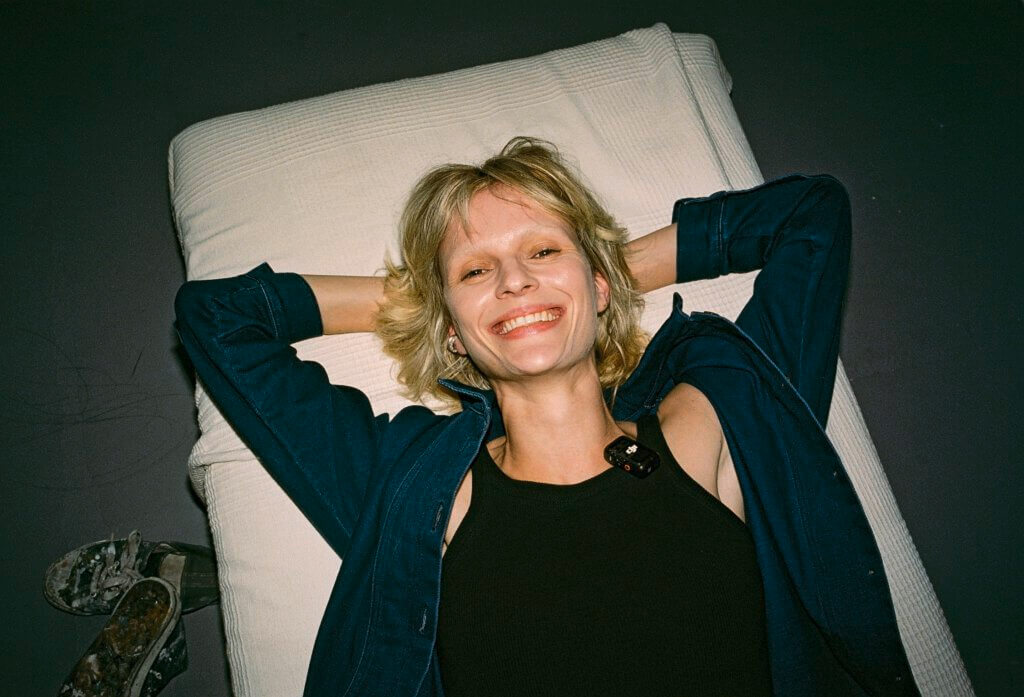
You operate between being the subject and being the author (the one seen, and the one shaping what is seen). Do you feel more powerful being visible or being in control of the image?
Both parts have their own power. I do feel more powerful creating my own work, though. As a model, you are not in control of the result or of someone else’s ideas, but it is also not the task of a model to be in control. Working as a model means helping others create their work; you support them with your presence by embodying the vision. This process is very different from the work in my studio or when I play music. In those cases, I have full control, and I am building rooms for imagination.
Has your experience in front of the camera influenced how you construct visual narratives in your artwork?
Not at all. When I work in the studio, painting or developing new bodies of work, I am not thinking about the performative aspect in front of the camera. It’s important to let that performative aspect go in order to truly create something of your own. I do see a trend right now where artists seem to perform their art for an online audience, and I don’t think this helps any form of art; it is rather distracting. I do film myself during certain parts of my work in the studio, but that is more documentation than performance and has no impact on how I create an artwork.
Ambition is often framed differently for women. How do you define ambition for yourself right now? Has that definition changed over time?
To me, ambition is about letting your own ideas thrive, letting your mind spin and imagine the world you want to live in. It is absolute self-awareness in the sense of taking responsibility for your actions and, therefore, for your life.
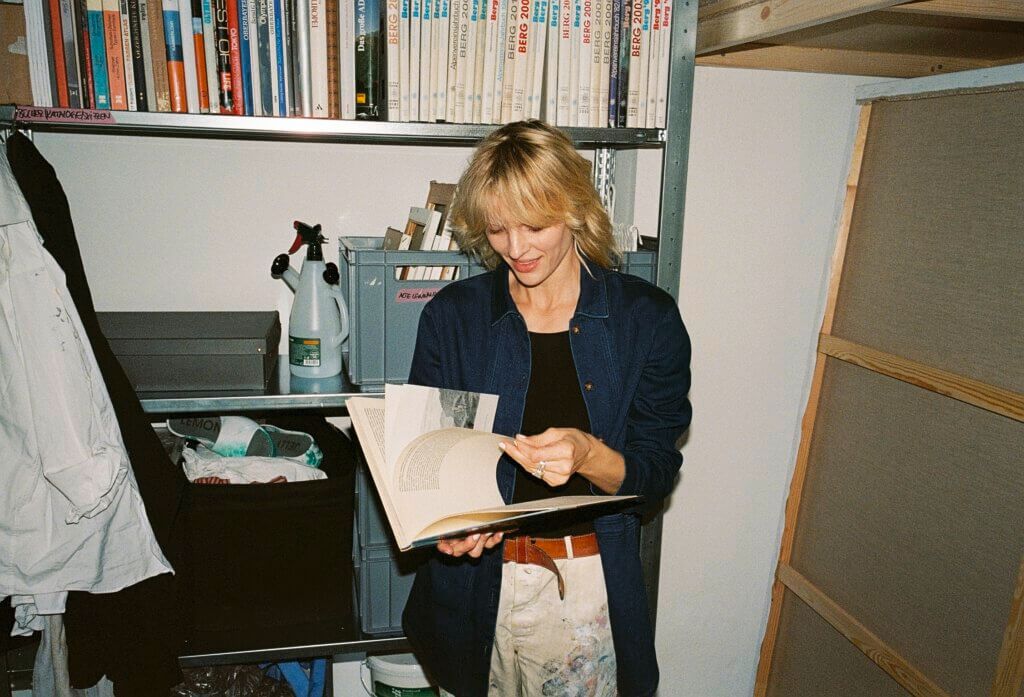
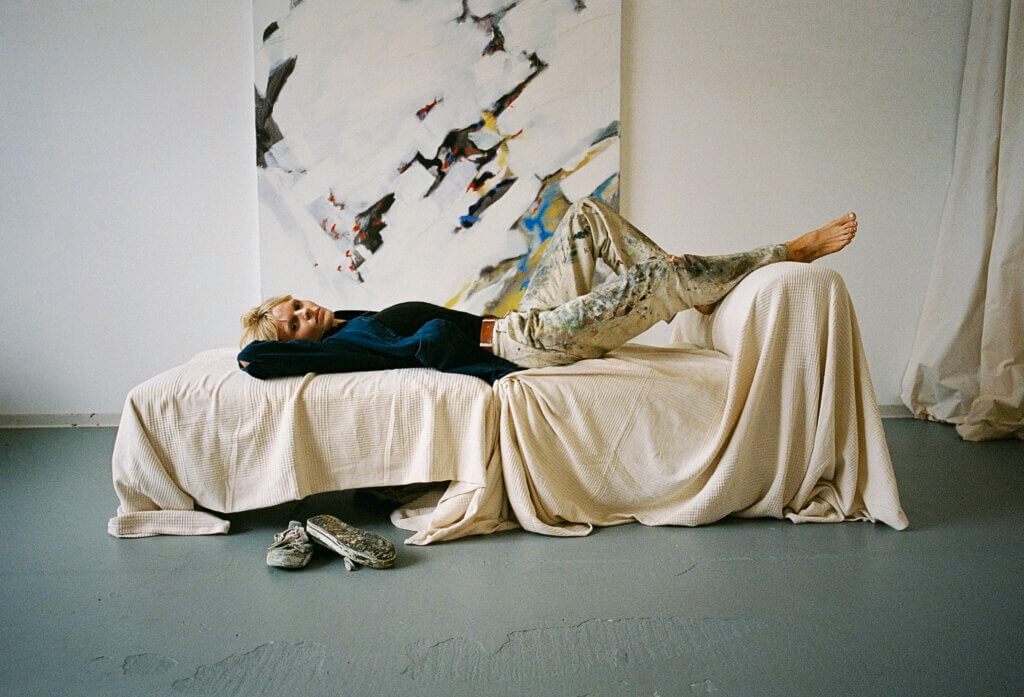
You’ve spoken about the mantra “Less Thinking, More Doing.” What does that look like in practice, especially when you feel creatively stuck?
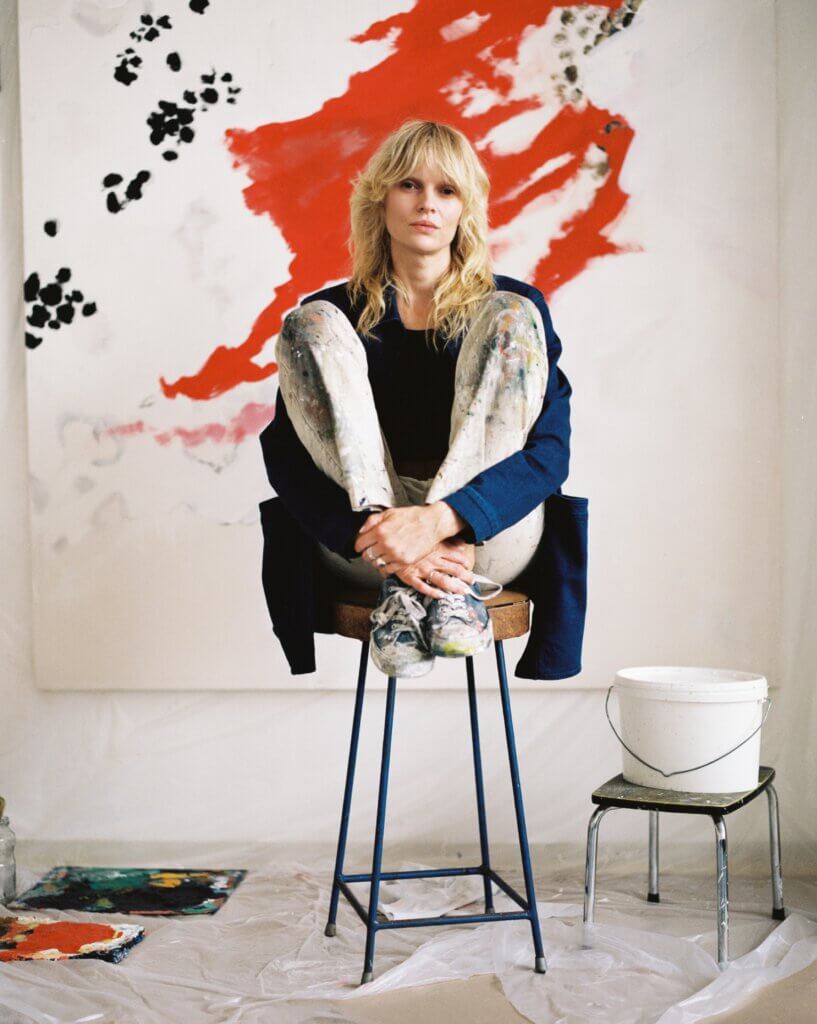
“We tend to overthink almost every step nowadays, and this can really block the creative process. So I push myself to simply take action, to begin working, even if it means failing and continuing anyway. It’s the only way to make progress and to push anything further.“
Can you tell me about a moment in your career that fundamentally changed the way you see yourself as a creative person?
There wasn’t one single awakening moment; it has been more of a gradual growing into my life, and allowing my creativity and ideas to become reality.
How has motherhood reshaped your relationship to your art, both practically and emotionally?
I am much more focused because of the limited time I have for each of my professions, so I have to make every minute count. That has made me even more pragmatic in my decisions, somehow sharper and more focused. Emotionally, I don’t feel that pragmatic all the time, and it is quite a lot to juggle, but it has also taught me to be softer with myself.
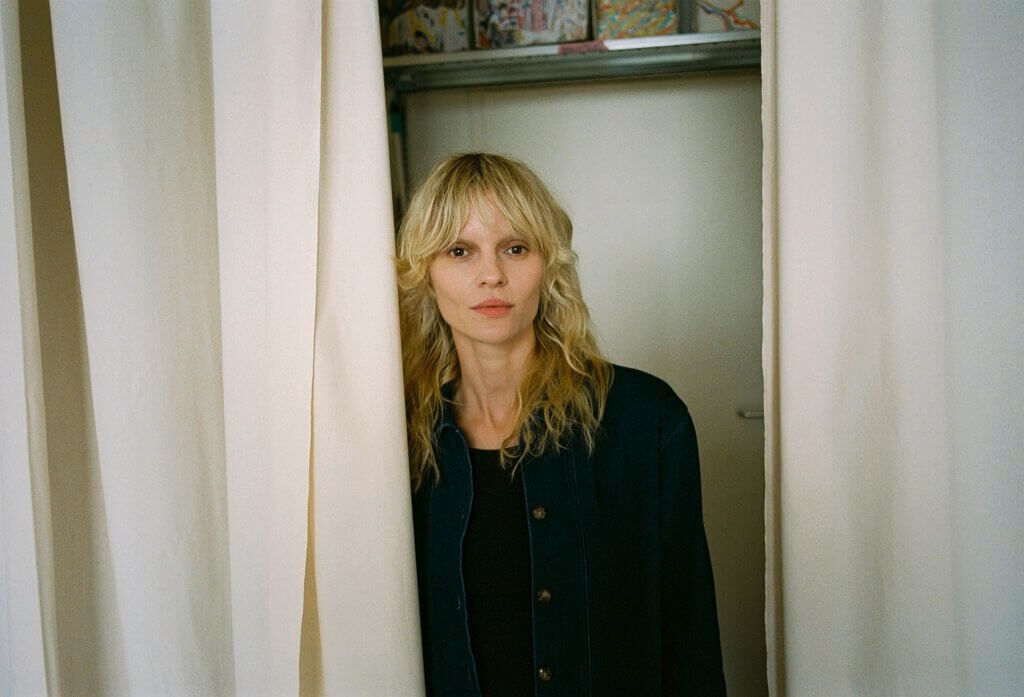
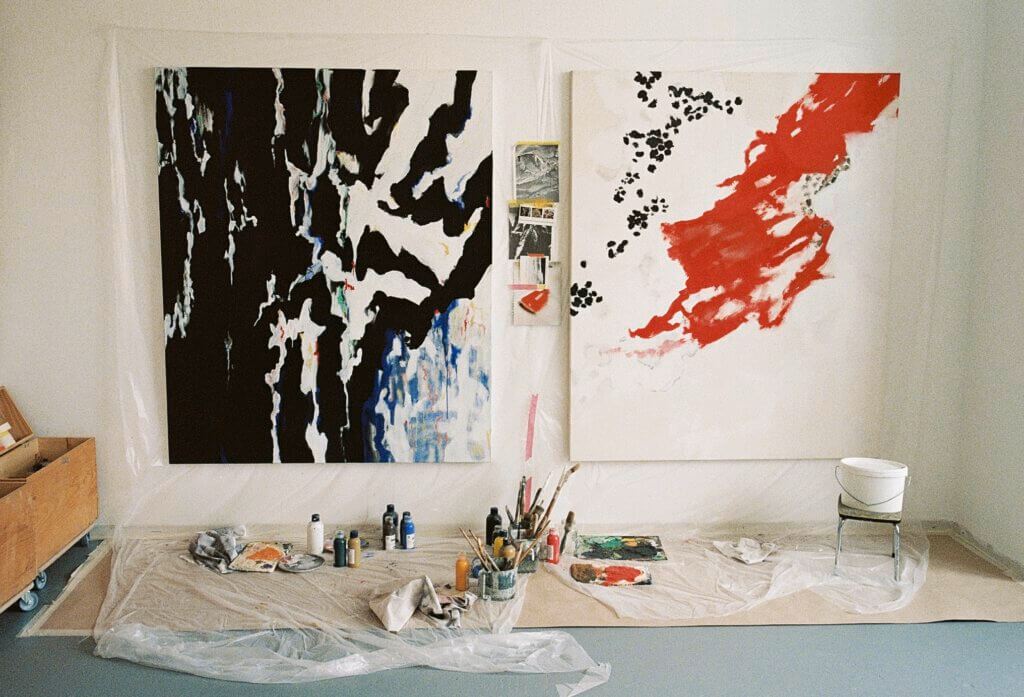
I’m interested in the relationship between art and environment. Have the places you’ve lived, both growing up and now, shaped who you are and what you create? If so, how?
Yes, most definitely. The environment near the German Alps, where I grew up, has influenced my artistic approach a great deal. The landscape in and around these monumental mountains is so impressive, and the natural shifts in weather and light are constantly transforming the scenery into entirely different, almost theatrical situations. My studio now is very bright and feels like a safe space; it is my cocoon where I can hide away and create while the world spins busily outside. So yes, this too is shaping my work.
You’ve quoted Marina Abramović saying, “As an artist, you should be prepared for loneliness.” How do you channel loneliness without letting it consume you?
It has always been easy for me to be and work by myself; I am an introverted person, and I am never bored. I always have something I want to, or need to do. But the specific loneliness mentioned here means something else, in my opinion. As an artist, you are your own harshest critic. You constantly have to work with and against yourself, overcome failure again and again, and this can make you feel quite lonely. It is not something to overcome but rather something to work with, in my opinion.
Is there a ritual, practice, or mindset you return to that carries across all areas of your life (art, music, fashion, and motherhood)?
Yes, I do have rituals, which I think are very important for checking in with yourself on a regular basis. I have kept a studio diary for many years, where I write down whatever is on my mind before I start working. In music, I usually try to imagine a feeling or the kind of space I want the audience to find themselves in. Sometimes it is simply a few breaths, in and out, to connect body and mind and be ready to begin.
Credits:
Photography by Nikolas-Petros Androbik