





There is a scientific reason why January, especially the second half of it, feels outright bleak. If you live in the northern hemisphere, chances are you haven’t seen sunlight in a good 3 months. Perhaps you woke up on January 1st to a grey fog, sleep-deprived, and dopamine-depleted. Maybe doom scrolling to avoid your thoughts ruminating on the past year, while also panicking about the year ahead. All of which doesn’t leave much space to focus on and enjoy the present.
The words “Millennial Optimism” have been increasingly appearing on my TikTok For You page, accompanied by Tumblr filters, shoegaze music, and images of hipsters living a carefree and cringe-free life in Brooklyn in the 2010s. Gen Z has started romanticizing this seemingly innocent, happy-go-lucky, optimistic time. This was before we had perfectly curated Instagram feeds, algorithms, and this hyper-self-aware, panopticon way of digitally existing.
The 2010s were about living in the moment, louder, messier- a permission slip to act first and think later. They were reigned by the messy, sleazy aesthetic of party girls like Kesha and Miley Cyrus, underscored by soundtracks like “We Are Young” by Fun. It was an era of the YOLO attitude. You Only Live Once.
Perhaps YOLO evokes images of Drake in his prime, who popularized the acronym with his 2011 song “The Motto”. Or perhaps you associate it with a justification for questionable choices and impulsive behavior. But the meaning behind YOLO did not start as a synonym for reckless hedonism.
YOLO might seem like a relic of the early 2010s and party culture, but the philosophy behind YOLO is far older and has more depth than many of us realize.
It was never supposed to mean “do whatever you want” without consequences. The phrase is actually attributed to Grateful Dead drummer Micky Hart, who used it as a reminder that life is short and you should make the most out of it. Dedicate the short time you have to the things you love and that actually matter. He named his California ranch YOLO ranch for this exact reason.
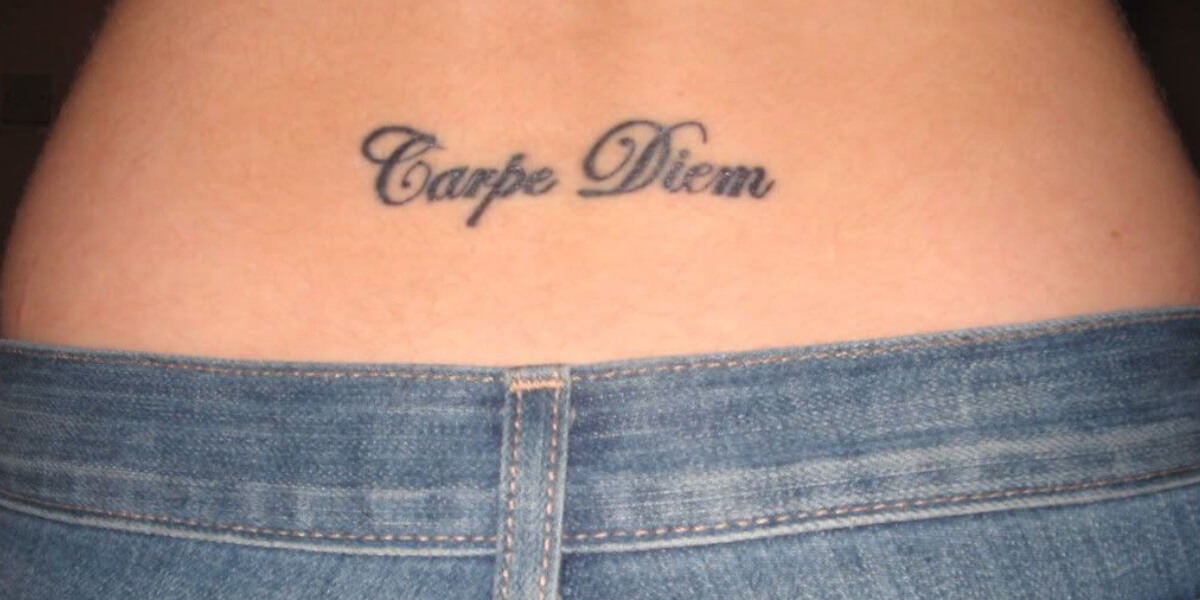
Long before that, philosophers encouraged the same attitude with the mottoes “Carpe Diem” (Seize the Day), used since 23 BC, and “Memento Mori” (Remember that you will die), which is traceable all the way back to ancient Greece. Both are reminders of urgency, mortality, and the importance of savoring the present.
2026 feels like the perfect time to reintroduce and redefine the YOLO philosophy. Especially in an era of uncertainty and rapid technological changes, YOLO can act as a memento to do the things that are actually meaningful to us.
I spoke to Sharon Lebell, author and expert on Stoicism and Happiness, who shared some of the Stoic tools with me. Some of which I believe share a philosophy similar to what YOLO was meant to be.
Stoicism, originating in ancient Greece around 300 BCE, is actually considered the predecessor to many principles in current Psychotherapy and was meant to function as “medicine for the psyche”. Stoic philosophy helps people accept what they can’t change, focus on the present, and build resilience, which feels especially helpful in January when optimism feels more inaccessible.
One of the core ideas and exercises is the “dichotomy of control”, differentiating between things that are within your control and things that are not.
Sharon told me that listing down on a piece of paper all the things that are within your control can lower anxiety dramatically and shift thoughts to more solution-oriented thinking. Stoicism asks us to think and act on what IS in our control and make the most of the present moment. Because time is a limited and finite resource.
Memento Mori, remembering you will die, is one of the most common exercises practiced by Stoics.
“We should think about the fact of our death often as a way of clarifying the preciousness of our life. We really need to get deep inside ourselves; time is ticking, and life is a finite set of events. This helps us to focus on what really matters. When we’re able to do this, the petty concerns get demoted or even fall away in our minds,” Sharon says.
Stoic philosopher Marcus Aurelius similarly warned, “You could leave life right now. Let that determine what you do and say and think.”
Even if remembering our mortality feels dark and gloomy, it actually helps us live more meaningfully because all the little menial issues fall away. What actually really matters to you? Your time is limited; you do only live once.
Personally, I’ve realized that many of my most memorable and meaningful choices were made with this mindset. I decided to apply for a Master’s degree at a point where many people told me that it might get in the way of working and that it’s not “necessary”. It caused doubts and fear in me, but I applied anyway, in a YOLO moment. And now, because of this decision, I get to spend a research semester in the city I’ve always dreamed about, but found reasons why I couldn’t go. YOLO.
Also, in my friend and family circles, I realized the impact of this philosophy. In the 80s, my Dad moved his entire life and ballet career from the U.S. to West Berlin in a YOLO moment. He didn’t speak the language, he didn’t know anyone, it was just a gut feeling. He ended up meeting my mom, and he’s lived here ever since.
Obviously, not every YOLO decision turns out perfectly, and I did not love every haircut or color I‘ve ever gotten in a YOLO mood. But hair grows back, and now I don’t have to wonder what it would feel like to have pink hair or tiny bangs. What you can’t grow back are moments in time or missed opportunities.
Like one of the famous Stoic philosophers Seneca stated: ”The whole future lies in uncertainty: live immediately.”
So, if you are looking for a New Year’s resolution, let it be to integrate more YOLO energy into your life. And not the Drake way, but the Stoic way. Apply for that degree or job you actually want, try that art course, tell the person you have feelings for them, book that trip with your friends, stop faking orgasms. Because YOLO.