




Who actually gets to opt out of being labeled? The internet wants to label every fiber of our being, and fashion’s answer is anti-reference dressing, a way of combining clashing references that refuses to settle into one aesthetic. Doechii’s new music video “CATWOMAN” makes that unusually clear.
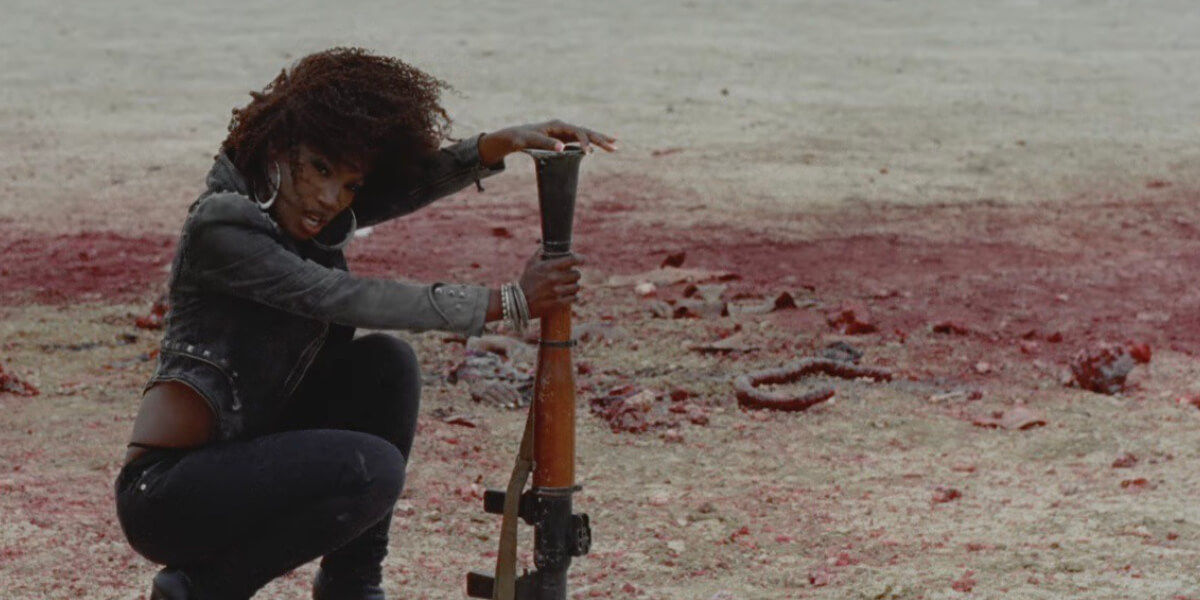
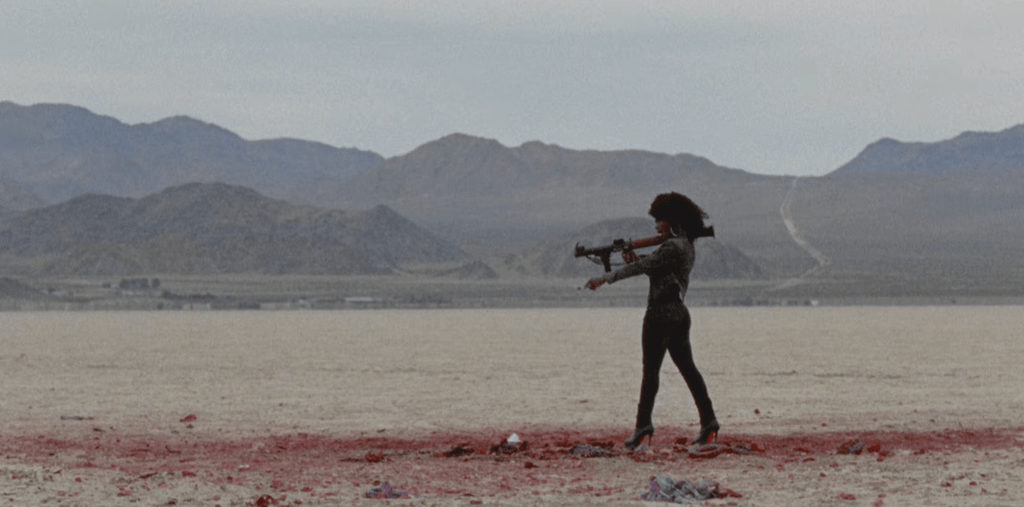
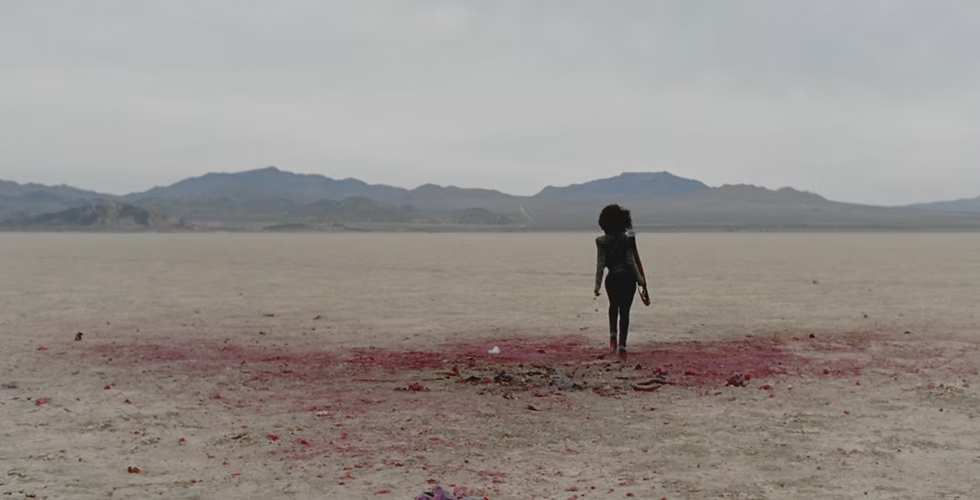
She enters the frame and walks through a desert with beaded cornrows, a white sports bra, and washed-out baggy jeans slung low beneath a wide branded waistband. Her look feels almost predictable, because we’ve been conditioned to expect a certain image of a rapper. And for a few moments, the scene follows a familiar script: Doechii faces the camera and starts her performance. Suddenly, her body bursts into a thousand pieces, leaving a bloodbath on the ground. Once the dust settles, another version of her arrives with a voluminous afro, oversized hoops, a lollipop in one hand, and a bazooka over her shoulder. She comes to a stop in a pool of her own blood.
“CATWOMAN” is the second release of her revived Swamp Sessions, co-directed by Doechii herself alongside Carlos Acosta, who also directed her acclaimed music video for “DENIAL IS A RIVER.” It’s tempting to read the plot as a theatrical take on reinvention. But there is more going on here.
We need to have a look at the internet’s obsession with naming everything we wear. Cottagecore, clean girl, mob wife: every look arrives with a name, a description, and a curated shopping list. A few months later, they vanish almost as quickly as they appeared. By now, the fatigue is hard to miss. Even the Global Fashion Agenda has suggested that the era of hyper-specific aesthetics is shifting toward more personal, contradictory ways of dressing. But still, our urge to follow trends hasn’t gone anywhere. Instead, it has shrunk into even more specific microtrends. Take bag charms: everyone has their own way of styling them, but somehow everyone has one.
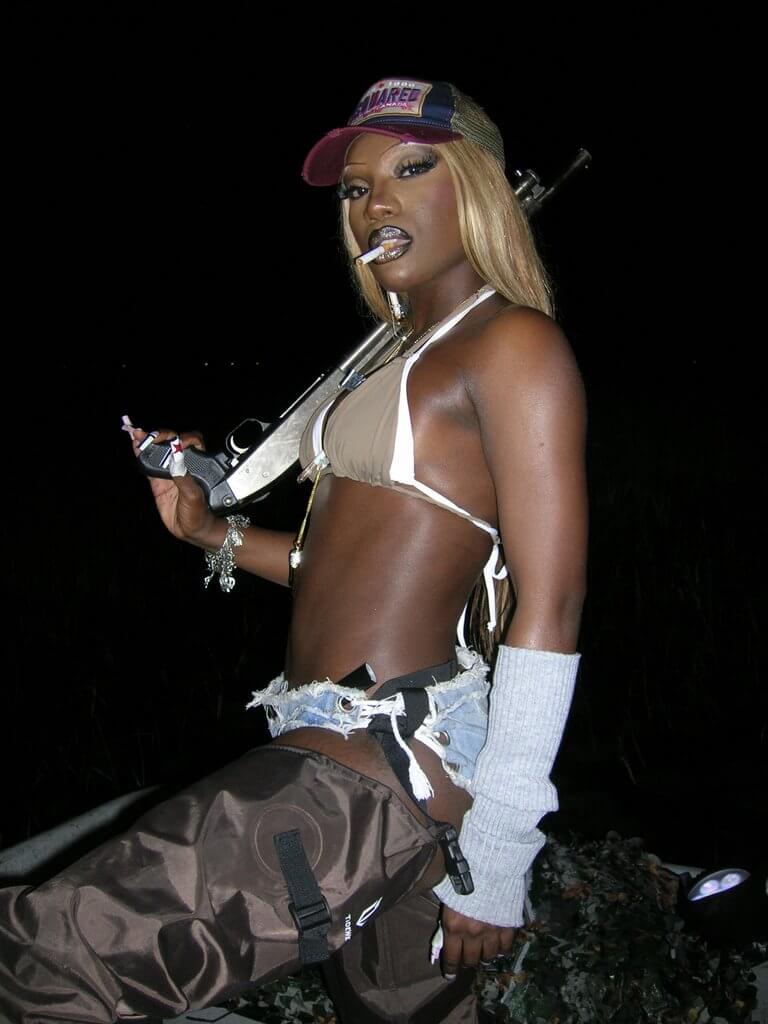
What matters now isn’t so much what we wear but how we put it together. Anti-reference dressing loves combinations that traditionally wouldn’t belong in the same look. And its growing appeal is reflected in the success of Belgian designer Julie Kegels, who just won this year’s LVMH Prize. She has paired power blazers with low-slung sweatpants and printed a skirt to look like a leather sofa. Her collections tend to put something strange next to something beautiful.
In fashion, resisting categorization can feel like a creative choice. But for Black women, being categorized has never been just a matter of aesthetics. There have always been stereotypes waiting to be pinned on us: rarely flattering, never of our choosing. We’re often read a certain way before we even get dressed.
Back to Doechii, then. She didn’t just change her outfit. It becomes clear that she shot herself and eliminated an entire version of herself. Her second look is a collage in itself. The afro and the hoops recall the heroines of 1970s Blaxploitation cinema—Pam Grier in “Coffy,” “Foxy Brown,” and Tamara Dobson in “Cleopatra Jones”—women who wrote their own rules, often while armed. Doechii completes that image with sunglasses, a cropped leather jacket over a black bralette, black skinny jeans, and platform heels. The silhouette becomes closer to a 2000s pop star than to the rapper we saw moments earlier. Add a lollipop, and none of it adds up to a single image.
We thought we knew the first Doechii within seconds. Twenty seconds later, she was gone. Then the video simply carried on with the same desert, the same camera, and another verse, as if nothing had happened. Only the version of the Doechii we were watching changed.
In a handwritten letter shared on Instagram in October, Doechii described spending years relearning hip-hop “as a student”—and perhaps you have to know the references before you can start playing with them. She writes about wanting to stretch the genre through different sounds and different parts of herself. Her mission is to see “Black womanhood exist at the center of hip-hop AND pop.” And it gets even more extreme: “I want people to choke on me.” She wants to be overwhelming and embody every version of herself. And she wants to extend that same freedom to her fans: permission to evolve and be “all of you, all at once.”