






Header image photographed by Amanay Hassan
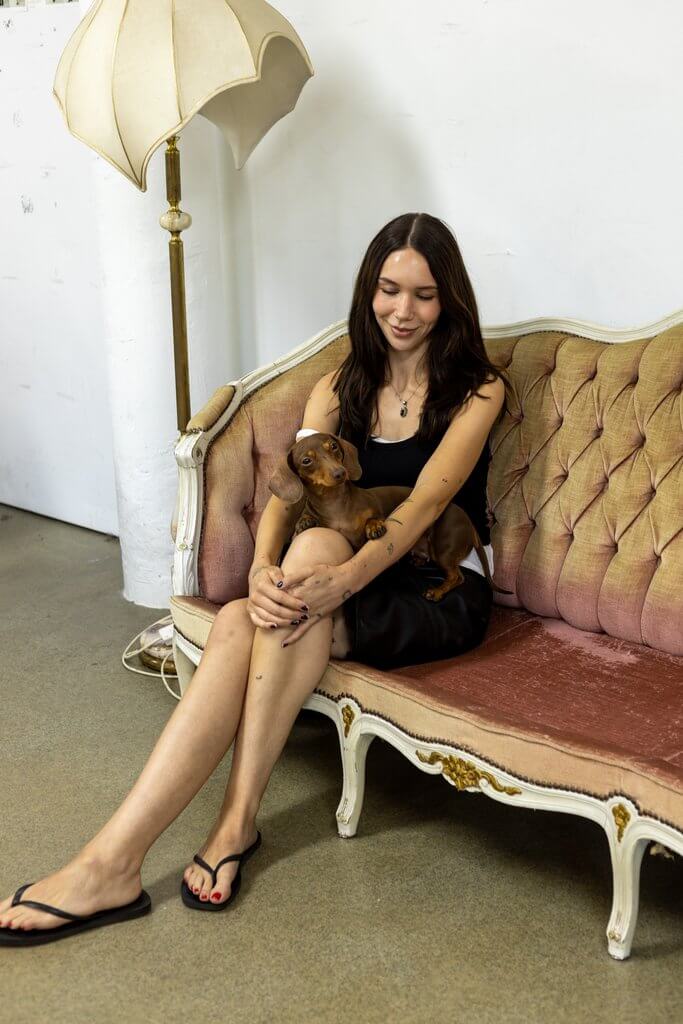
There’s a particular kind of quiet that settles over Berlin in summer. Fashion week was a month ago, the city collectively exhales, and so, it turns out, does SF1OG. I find their studio tucked behind a courtyard in Wedding, in a brick building where I meet the brand’s founder and creative director, Rosa Marga Dahl.
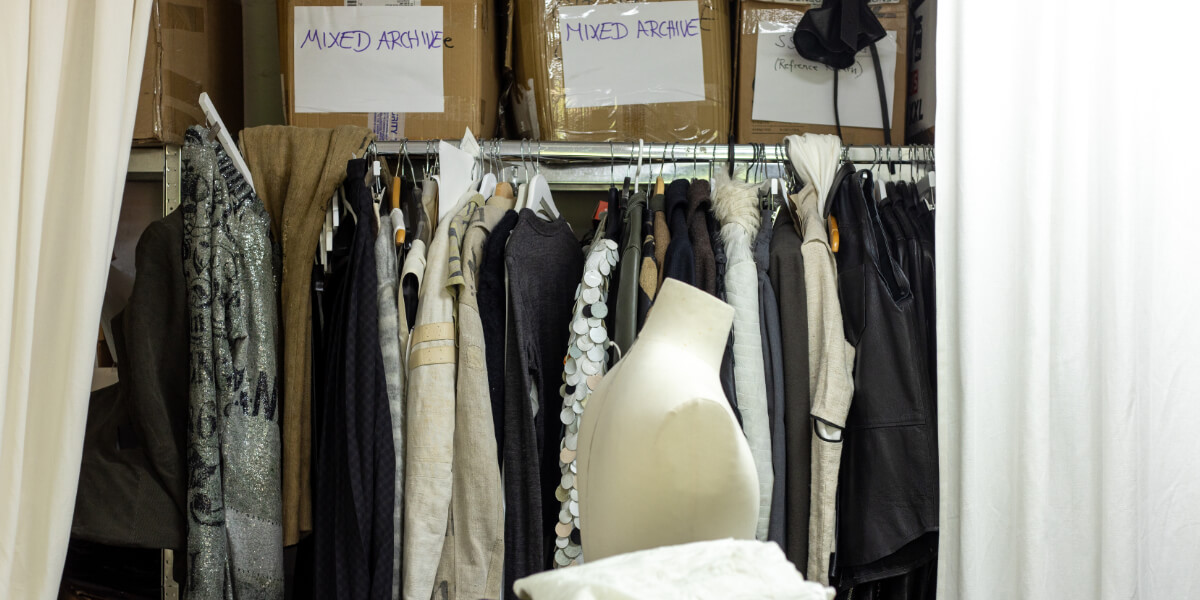
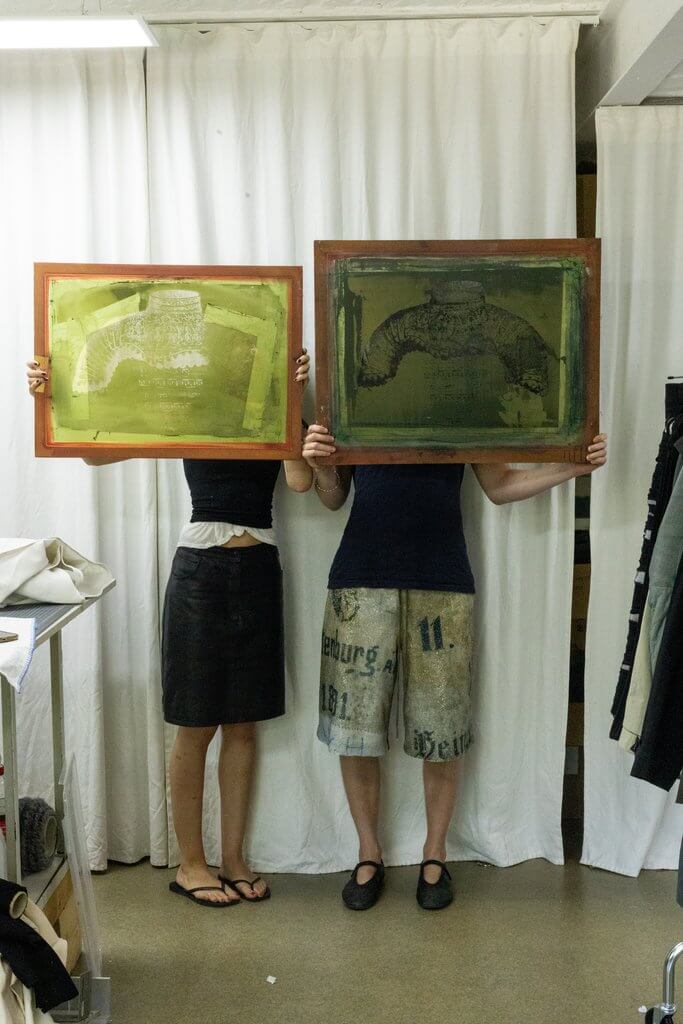
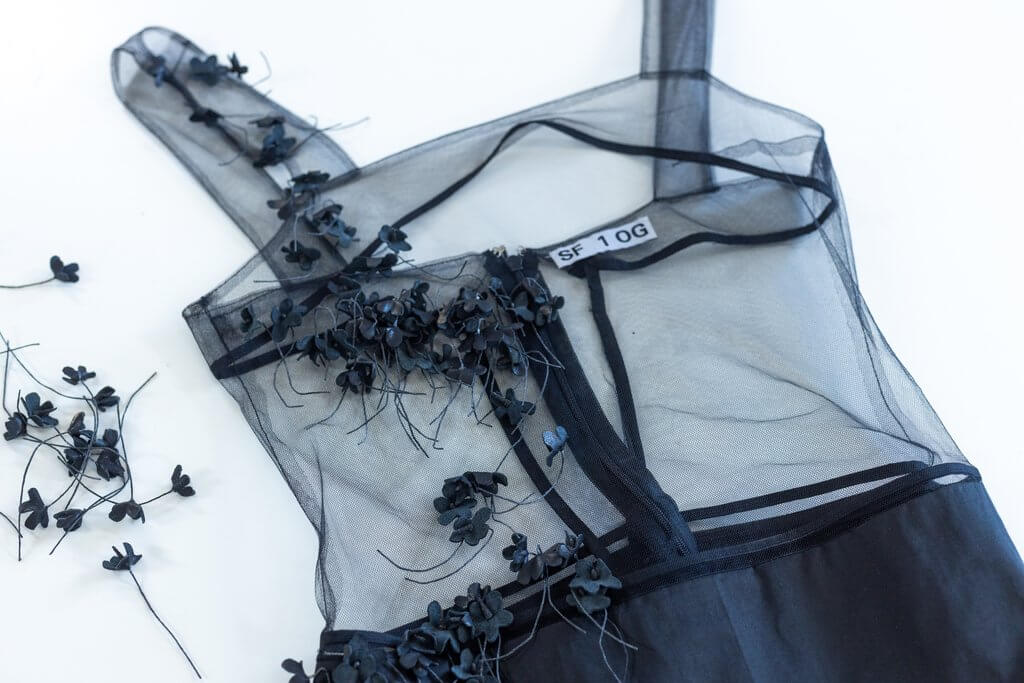
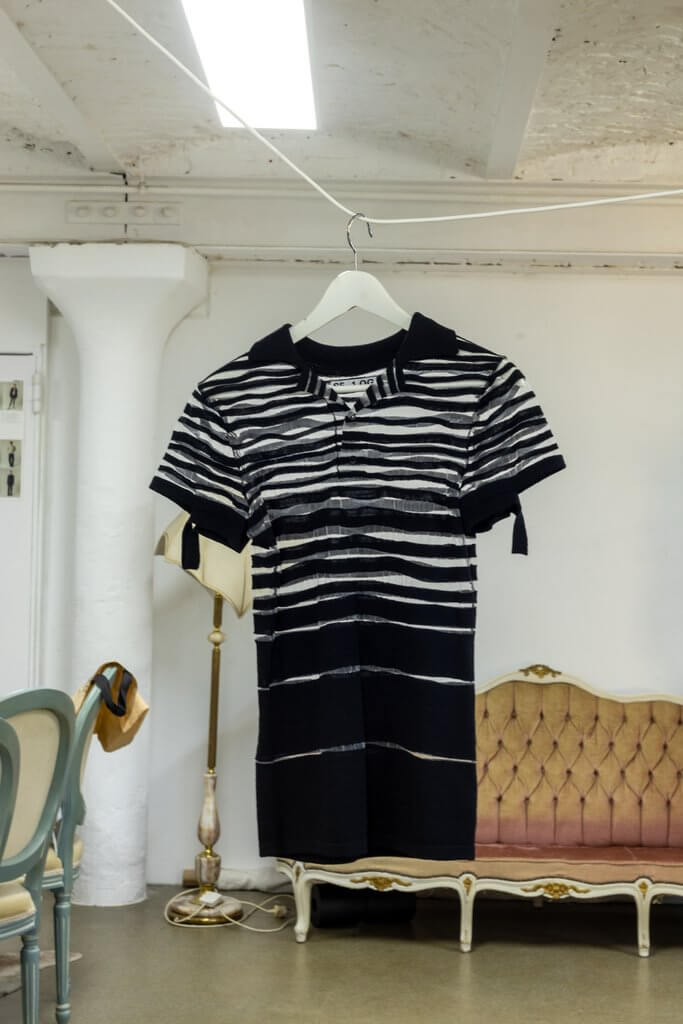
She runs SF1OG together with its commercial director, Jacob Langemeyer—a Berlin-based sustainable label built on the premise that old things deserve better futures than a landfill. Nostalgia meets presence, though “nostalgia” barely covers it: think antique linens, forgotten crafting techniques, and fabrics with enough history that you wish they could talk. Around us, the new SS27 collection hangs on rails, with some last fabric scraps scattered about, offering glimpses of the process behind it.
Somewhere behind us, a steam iron groans—their words, not mine, for what they’ve nicknamed the “exhaustion noise.” Fitting, for a studio that just survived its tenth runway season.
We talk about what it actually takes to build a collection from an idea, about linen that was once considered sacred enough to hand a bride at her wedding, and about a Berlin fashion scene that barely resembles the one SF1OG launched into back in 2022.
Rosa, how are you doing, one month after BFW? Is there such a thing as summer break at SF1OG?
After the show, we always take a full week completely off, aside from maybe answering emails. You can never truly switch off entirely, but things definitely slow down. Before the show, we’re here every day until late at night—right now it’s a lot more relaxed.
For your SS27 collection, you explored the duality of good and evil, drawing on references like the film Suspiria and photographer Ari Versluis, alongside broader societal questions. What drew you to this theme, and how did it become the collection’s focus?
After a show, I usually start hunting for the next theme almost instinctively—it tends to come from something that intrigued or moved me. This time it was documentaries about rock artists, where several of them said essentially the same thing: that their art holds up a mirror to society, revealing that good and evil aren’t so easily separated. There are institutions and societal frameworks that define what counts as good and what counts as evil—but that line can blur and even flip entirely. Digging into that felt exciting, because it’s such a vast, open-ended theme—there’s so much you can read into it and feel through it, depending on where you’re standing at the time.
The best part of the process was realizing you can’t actually pin down a definitive answer. For me, it wasn’t research meant to solve anything—it was more like learning as I went.
One reference was the work of photographer Ari Versluis, who explores conformity through his lens. How did that shape your process?
We’ve drawn on his work before, because fashion essentially plays out what he’s documenting: society always has groups that mirror each other in some strange way. I guess it’s human nature to want to place yourself somewhere through what you wear.

Everyone’s trying to find and express identity through clothing—even when that identity is a refusal to have one at all. What I find interesting is that he almost argues there’s no such thing as true individuality—there’s always someone else being “individual” in exactly the same way. I love that idea, actually, because it means no one’s really alone in it.
People also identify with SF1OG and express their individuality through your pieces…
…or fold pieces of us into their own style. Mostly, people pick out parts of the brand and weave that into who they already are. And they’re such different people—everyone makes it their own and wears and reads the piece differently. That’s my goal too: not to design for a single group, but for many different people, each of whom can find themselves reflected in it.
With your latest S/S27 show, you presented your tenth runway season. What were the biggest lessons from the years since your first show in March 2022?
When I think about lessons learned, it mostly comes down to quality and manufacturing. From day one, we wanted the pieces to hold up to a high standard. You pick up something technical every single time, and the garment just keeps getting more refined.
The ideas were always there from the start—it’s the execution that’s grown alongside our resources, opportunities, and skills. That’s still true today, right down to how we structure a collection: what we need for sales, for image, for storytelling—and how all of that comes together.
How has SF1OG evolved beyond that? And what will never change?
What matters to me is that the core stays constant—the same motivations, always an emotional tie to myself, always a story that wants telling. What interests me and what feels relevant shifts over time. But the underlying reason for why we do this hasn’t changed.
And why do you do it?
Honestly, the question of why doesn’t really come up; you just do it because there’s no other option. It’s almost like a hamster wheel you can’t step off of—except you don’t actually want to. It’s a life’s work: getting better at it, building on it, and sharpening it. I don’t wake up wondering whether I want to go to work; I just go.
The city and Berlin’s fashion scene are a key factor too. How would you say it’s changed in recent years?
Enormously! And it shows everywhere. At our first Fashion Week show, back when it still ran under Mercedes-Benz, brands were only getting a small prize fund. When that model shifted so the money went straight to the brands instead of the organizer, a lot more labels suddenly had both the opportunity and the incentive to show at Fashion Week.
Berlin as a city, along with the Fashion Council, opened the door for a lot of brands—smaller ones especially—to show their collections, and that’s what’s turned Berlin into a Fashion Week that keeps gaining relevance, one that now draws international press. And that makes a massive difference—you can put together the best show and the strongest collection, but none of it matters much if no one’s watching. If you ask us today whether the stress, effort, and money that go into another show are worth it, the answer now is a clear yes.
You’re also present in Paris, showing your showroom during Fashion Week there. How do the two cities complement each other for you?
During Men’s Week, pretty much every store and its buyers show up in Paris—including a lot of buyers who matter to us and simply don’t make it to Berlin, because that’s also where all the international brands set up their showrooms.
I love Paris, genuinely. There’s something about it—it feels like our work is out there, and the whole world gets to see it.
There’s hardly an article about SF1OG that doesn’t mention nostalgia. Historical references run through your work, reframed in a contemporary context. What draws you to the past?
Anything with a history behind it feels special to me, maybe even valuable, because I know it only exists once. Maybe it’s from my grandmother or from some eBay user’s grandmother. Either way, it carries a story.
Even as a kid, I found that thrilling. We once dug something up in my neighbor’s garden—some kind of silver spoon. Finding something like that always feels like unearthing treasure. It has a realness to it that a lot of new things just don’t, for me. And I love carrying that emotion, that feeling, forward from something old.
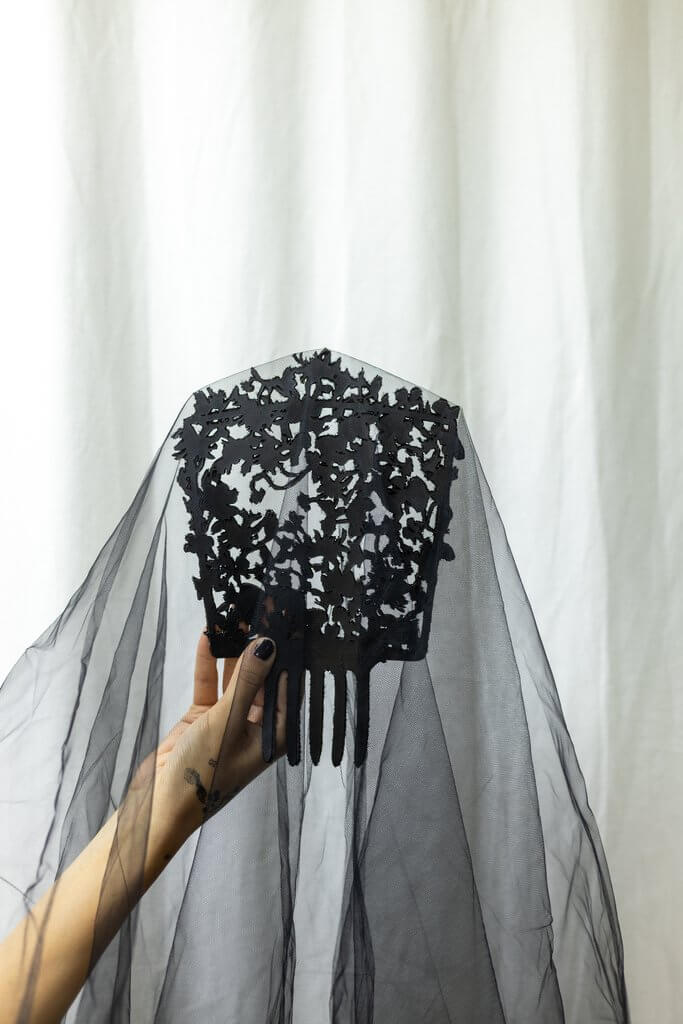
That said, we don’t only work with old fabrics—our formula is roughly a third antique textiles, a third repurposed or deadstock, and a third new but sustainably sourced materials. I think it’s that mix that makes it work. A garment becomes genuinely interesting once you’re working with a fabric that already has a story to tell. Sometimes it comes with real constraints too—you’re not working with a standard fabric width, for instance, just around 70 cm, because it was woven on small looms back then. That naturally shapes the design and gives the process a bit of a nostalgic pull.
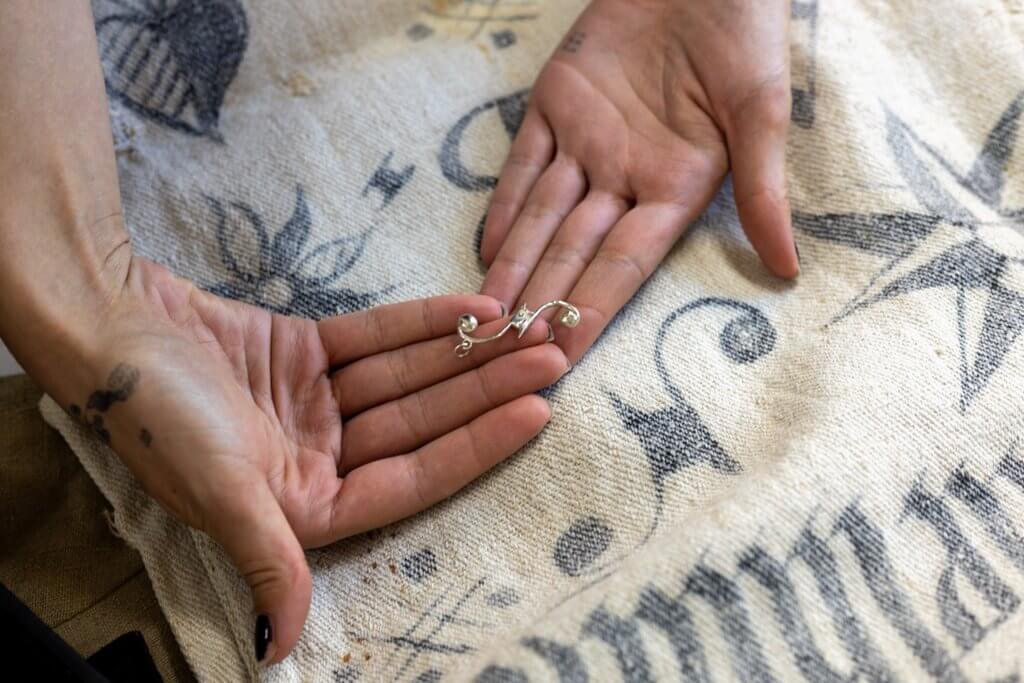
Image photographed by Amany Hassan
My grandmother always said linen was sacred. It’s hard to grasp now just how valuable those tablecloths were—but they were cared for and passed down through generations or given as part of a dowry. That’s not really something people do anymore. I never got married, but my grandmother handed it down to me regardless, and now I simply work it into what I make. I find real beauty in that—giving the fabric a new kind of value.
What do you wish for SF1OG in the near future?
More than anything, we keep growing—the team, the studio, everything we’re able to experiment with. That starts with selling more and refining the product, but ultimately what I care about is being able to keep making something new.
There are things we want to do but simply can’t afford yet—that’s unfortunately the foundation everything else rests on, as much as it’s sometimes frustrating. The more room we have to breathe, the bigger the possibilities get: new product lines, maybe even shoes someday. And at some point I’d love to bring someone new onto the team—someone with real expertise in a very specific area. Working with people who bring something special, with artists—that’s where my mind immediately starts running.