






It’s the middle of August, which means that half the city has gone off to marinate in the Mediterranean while the other half is making the most of urban summer. Hinge is exciting again because the usual rotation of friends, acquaintances, and exes is now being stirred up by travelers from all over the world, which makes for a great chance to check out some pop-ups, listening bars, and hook up without any repercussions. Almost every week, another speed dating announcement sits at the top of my feed, and there’s an increasing number of tightly enveloped couples to dodge on the sidewalks. People are dating again. Some are even getting married.
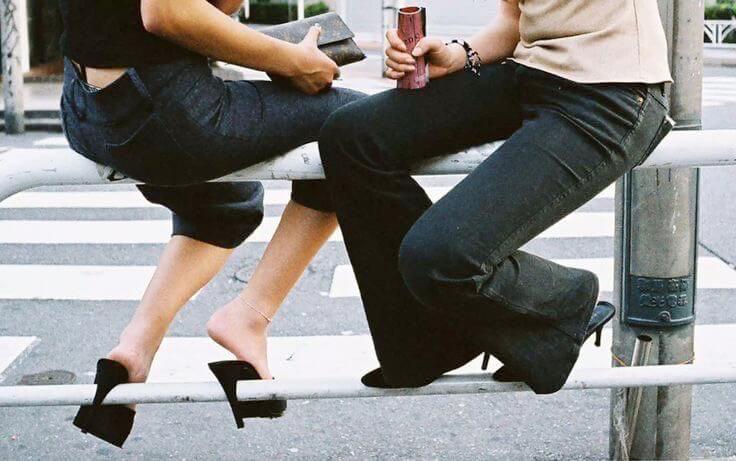
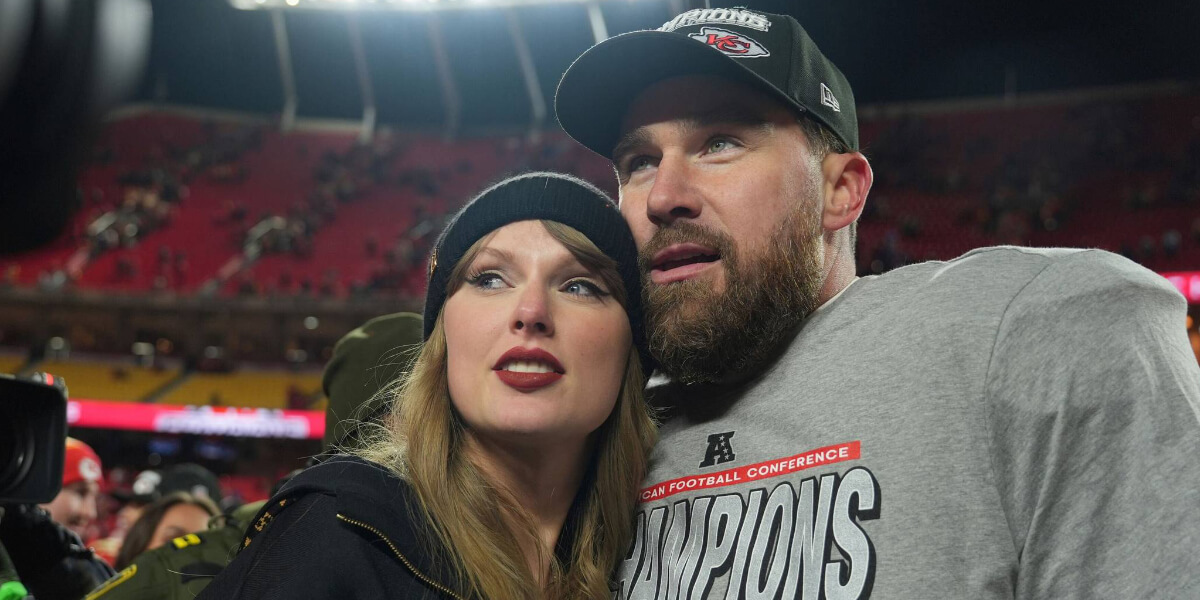
Take, for example, Dua Lipa and her now-husband, Callum Turner. Since their Hollywood-style meet-cute at a café in London, the singer and actor have been one of the Internet’s favorite couples, sparking the viral Whenever someone makes a wish, God doubles it and gives it to Dua Lipa meme. But theirs wasn’t the only secret, not-so-secret wedding this summer. Taylor Swift and professional football player Travis Kelce tied the knot while shutting down parts of Midtown New York during one of the busiest holiday travel weekends of the year, which sparked a burst of utterly justified public outrage. In addition to that, Travis has been at the center of political speculation about his MAGA ties, something that doesn’t really add up with the liberal feminist image Taylor has been feeding into over the years. And as if that’s not enough drama already, Olivia Rodrigo has been spotted getting all chummy with her new finance bro boyfriend, Julian Croonenberghs. Now a private equity associate at HG, Julian was previously employed at Goldman Sachs, a firm that focuses on artificial intelligence.
Fans are disappointed in Olivia, who has been deliberately promoting human creativity over AI technology and declared in one of her songs that she “would never settle for a guy with a fake job.” One X user posted, “So a nepo baby who went into the worst industry, to push the worst products, destroying society,” while another commented, “Going out with a loser for character growth, she truly is the successor to prime Taylor Swift.” All of this leaves me with the question: What do the people we date say about us and our politics? Is who we date who we really are?
Since the commodification of dating apps, we’re able to look for potential partners with surgical precision and prejudice. It starts with the kind of app you choose, ranging from one that matches single parents, another that brings together fitness lovers, to some that specifically connect science fiction enthusiasts or gluten-free individuals. And it doesn’t stop there. I counted sixteen preferences on Hinge that you can use to filter your proposed matches, including categories like ethnicity, education level, and politics (with some only accessible to premium users, naturally). It’s concerning if you think about it, but I myself have vehemently swiped left on people who claim to be “not political” or “moderate.”
I have many feelings and strong opinions, so I’m just not in the mood for moderation. And I’m not the only one around here. As stated by Michael Kaye, director of brand marketing and communications at OkCupid, “Some [European] countries have a higher rate of people looking for daters with the same political views than in the United States.” In France, it’s a solid 75% and 67% in Germany, compared to 56% in the U.S.
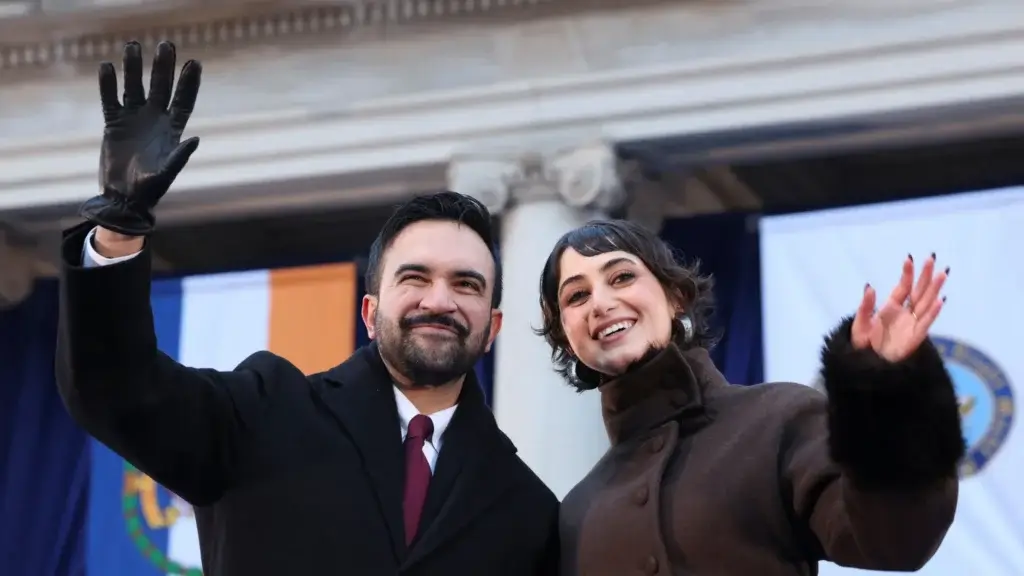
In a piece for The Guardian, Dr. Jess Carbino, a former sociologist for Bumble and Tinder, goes as far as to say that “Politics is the new religion. “It’s become the way people choose to frame how they look at the world and their values,” I remember my grandmother telling me about her first-ever boyfriend and how his parents didn’t like the fact that he, a Catholic, was dating a Protestant. They eventually broke up because of this difference, something that I, as a Gen Z, can hardly relate to. According to a 2025 NPR/PBS poll, among Gen Z and young millennials between 18 and 29, six in ten feel it’s important to date or marry someone who shares their political views. “A lot of people in previous generations report that they didn’t even know the politics of the person they were dating for a good long time because it just wasn’t as relevant as other information,” says Daniel Cox, a senior fellow at the American Enterprise Institute. But while last year’s Mamdani win triggered a national “hot commie summer” and a “real appetite for leftists,” according to Abby Beauregard, the NYC fundraising chair for Democratic Socialists, this year is leaning more towards a “cold conservative summer.”
While I’m not here to deny that Travis Kelce is in love with Taylor Swift, I’m wondering whether he actually loves what she claims to stand for or cares about the people who listen to her music—people whose basic rights are being trampled on by a government he seems oddly close to. Love is, and has always been, political. Whether we like it or not, love exists within structures of power, economic decisions, and societal norms that shape its expressions.
For generations, we’ve been conditioned to view love as some kind of magical feeling or uncontrollable force. But author and philosopher Bell Hooks argues strongly against this limited understanding, rather defining love as an action. It is a conscious choice, a decision we make to extend ourselves and to nurture each other’s growth and well-being. That means it stands in direct opposition to systems of oppression that stifle growth and inflict harm, demanding that we hold ourselves and others accountable. In her well-known book All About Love, Hooks writes, “True love is a combination of will and action, which implies care, commitment, trust, responsibility, respect, and knowledge.” So yes, who we choose to date says a lot about us. Nevertheless, it’s still up to each of us how much we choose to care about what other people think. And as we should all know by now, billionaires couldn’t care less.
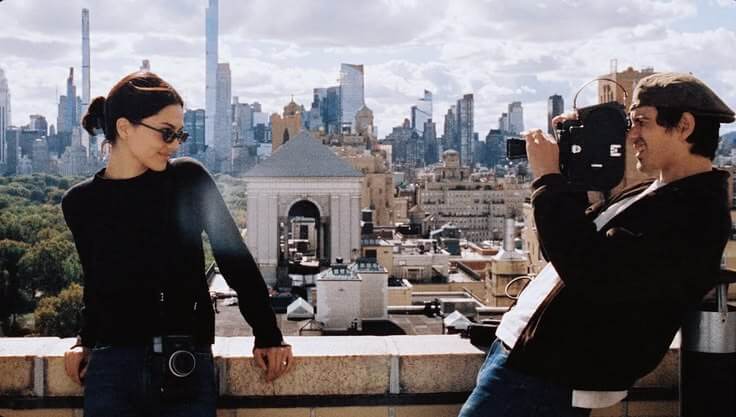
Who does seem to care, on the other hand, is we. By “we,” I mean the people who are most likely to come across this article—artists, academics, avid social media users… You might have already heard of the so-called “swag-gap relationship,” a term originally coined by TikTok user @itsalmondmilkhunni. In the video, she outlines her reasons for not wanting to be with a partner who doesn’t match her swag. It’s not simply about style, as fashion editor Amber Chow explains in an article for Coveteur. “At its core, ‘swag’ isn’t just how you dress—it’s a blend of cultural fluency, confidence, taste, and social power.”
Of course, it’s normal to want our friend’s approval of our new boo, but nowadays you can go as far as making a career out of having an objectively attractive partner who matches your aesthetic. Couple influencers are all over social media, swapping outfits, swooning over each other, and giving unsolicited relationship advice. The personal brand becomes a shared brand. Our partner turns into a reflection of our style, hobbies, values, and politics while also signaling our desirability and worthiness of love to the world. The smaller the perceived “swag gap,” the larger the social capital.
While one corner of the internet is convinced “swag-gap relationships” are doomed to fail because of their inherent imbalance that can lead to insecurities and comparison, others proudly show off their “swag-gap” partners, stressing the importance of emotional compatibility and mutual care. Other couples take the trend less seriously while at the same time adding further categories: “no swag gap, no political gap, no intelligence gap, no moral gap, no humor gap—just height gap.” Essentially, it’s up to each of us what we look for in a romantic partner and how much weight we want to put on that connection. For some, a romantic relationship provides refuge from the harshness of the world, while for others it’s a foundation for shared struggle, like Palestinian artist Areej Kaoud visualizes in her piece Resistance is the Deepest Form of Love. Whether you keep your relationship private or public, always remember: the personal is political.