





In August 2025, Berlin-based feminist creative agency and community platform @PLAYBABE0 was permanently removed from Instagram under accusations of maintaining a “fake identity.” Overnight, years of queer cultural work disappeared from public view. But PLAYBABE’s experience is far from unique.
Across social media platforms, queer, feminist, and sex-positive creators are reporting a familiar pattern of account removals and poorly explained enforcement decisions. Repro Uncensored, a global nonprofit that documents and challenges online censorship, has tracked more than 130 similar cases. What emerges is not a series of isolated moderation mistakes, but a broader question about how platform governance determines whose work remains visible online.
To understand the personal and political consequences of these decisions, I spoke with Aurélia Majean, founder of PLAYBABE.ORG, and Martha Dimitrou, founder and executive director of Repro Uncensored.
For creative collective PLAYBABE.ORG, the removal came at the peak of a campaign for FEM PWR, a self-published feminist publication combining interviews, community submissions, and cultural commentary. Built over four years, the Instagram account had amassed more than 5,000 organic followers and served as the project’s primary channel for community-building and fundraising. Majean believes the trigger was a promotional campaign built around a staged “leaked video”; a deliberately provocative video project exploring the culture of sex tapes, and the ways women’s sexuality has been commodified. Shortly after posting, the account was asked to verify its identity… Then it disappeared.
“The official explanation Meta gave was ‘fake identity,'” Majean says. Despite submitting government documentation, press coverage, and company registration papers, the account was never restored. “I think the real reason was probably sexual content. Everything we do is provocative, but still within the boundaries of empowerment and expression.”
Without the platform, PLAYBABE.ORG lost not only its primary distribution channel, but also much of the community and visibility it had spent years building. “It became really hard to reach everyone at once,” Majean explains. “We lost contracts, sponsorships, and community reach. But the biggest loss is the political work we were doing — the visibility for feminist topics, interviews, and conversations.”
For the first time in six years, PLAYBABE.ORG was unable to release its annual nonprofit calendar, a project that raised funds for feminist enterprises. “Each year we produced, conceptualised, and sold our PLAYBABE Calendar to support different feminist organisations,” Majean says. “We made five editions, all of them sold out. 2026 was the first year we couldn’t do it, because Instagram was our only sales platform.”
Martha Dimitratou, founder and executive director of Repro Uncensored, sees cases like PLAYBABE’s as part of a much larger pattern. “For years, we’ve been gaslit by Big Tech,” she says. According to Dimitratou, removals are only one part of the problem, as organisations increasingly find themselves locked out of accounts that remain technically online but are effectively unusable. “These are also horrible forms of censorship because the account is up,” she explains. “But they can very easily tell you, ‘No, you’re just not resetting your password correctly.'”
At the centre of the issue is not only platform policy, but the difficulty of challenging moderation decisions once they have been made. “The redress mechanisms are so difficult to access”, she argues. Through its work with visual artists, photographers, sculptors, and cultural workers, Repro Uncensored has observed that content involving bodies, sexuality, and politically sensitive themes is disproportionately affected by takedowns and restrictions. “We work with a lot of these artists, and their work is being taken down all the time. Though nudity is part of their craft, this is completely overlooked”.
Dimitratou also questions whether moderation decisions are based solely on individual posts. Instead, she believes accounts may be flagged because of their connections to other users, communities, or pages. “What we believe is happening is that their AI moderation filters take down multiple accounts that are somehow connected.” Despite widespread criticism, major platforms continue to frame moderation systems as neutral enforcement of community standards, a characterisation that Dimitratou rejects. “There is very much moderation. It’s very biased, actually,” she says. “We see deepfakes, hate speech and radicalised content all over the place.”
The contradiction between aggressive enforcement of some content and apparent tolerance of other harmful material has become a defining tension in debates around platform governance. For critics, these incidents point to something larger than isolated technical mistakes. They point to a system of moderation whose impacts are unevenly distributed across communities and forms of expression.
For queer creators, social platforms have become essential infrastructure for artistic distribution and community-building, as well as political visibility. “I don’t think it’s realistic to tell people, ‘Just get off Instagram,'” Dimitratou says. “It’s very much part of people’s digital identity.” At the same time, reliance on a single platform creates profound vulnerability, a point echoed by PLAYBABE’s experience. “It’s very dangerous to communicate only through one platform,” Majean reflects. “You need to exist on as many platforms as possible so that when one disappears, everything doesn’t collapse.”
Yet building that kind of resilience is easier said than done. While many creators are actively searching for alternatives, few platforms can match the reach and visibility of Instagram. Newsletters, independent websites, Patreon models, and emerging niche networks offer partial solutions, but none fully replicate the scale of mainstream social media. “Thinking that there are alternatives, and funding those alternatives, is critical,” Dimitratou argues.
As Europe moves toward expanded regulation of digital platforms, the stakes are becoming increasingly political: “I think Europe will be a battleground for a lot of our rights in terms of moderation and censorship,” she says. But regulation alone may not resolve the deeper structural issues, particularly while moderation systems remain difficult to scrutinise or challenge. In the meantime, creators are adapting not only their platforms but their practices, building parallel infrastructures and rethinking what visibility means outside internet culture.
Rather than retreating after the account’s removal, PLAYBABE.ORG doubled down on offline organising. Partnering with Berlin-based electronic music collective Ne0warr@s and Repro Uncensored, the collective hosted No Longer Online at Phantom Bar, a night dedicated to the communities that continue to exist beyond platform control. The promotional material carried a simple message: “Reported, restricted BUT still IRR€SISTIBLE.”
“Offline is always stronger than online,” Majean says. “Real-life community building has more impact than posts ever could.” For Majean, the event was a way of saying we can exist whether you want us to or not. The promo post read: “We don’t exist online anymore, but we exist offline — and that cannot be taken away.” Alongside the event, PLAYBABE also produced a political pamphlet addressing censorship in queer communities, and the ways social media platforms continue to regulate representations of gender and sexuality.
PLAYBABE.ORG have fought back.
Rather than allowing the removal to define them, they have transformed the loss of visibility into collective action. They may have had their account removed, but their spirit remains defiant, and their voice loud.
Censorship – 0, PLAYBABE – 1.
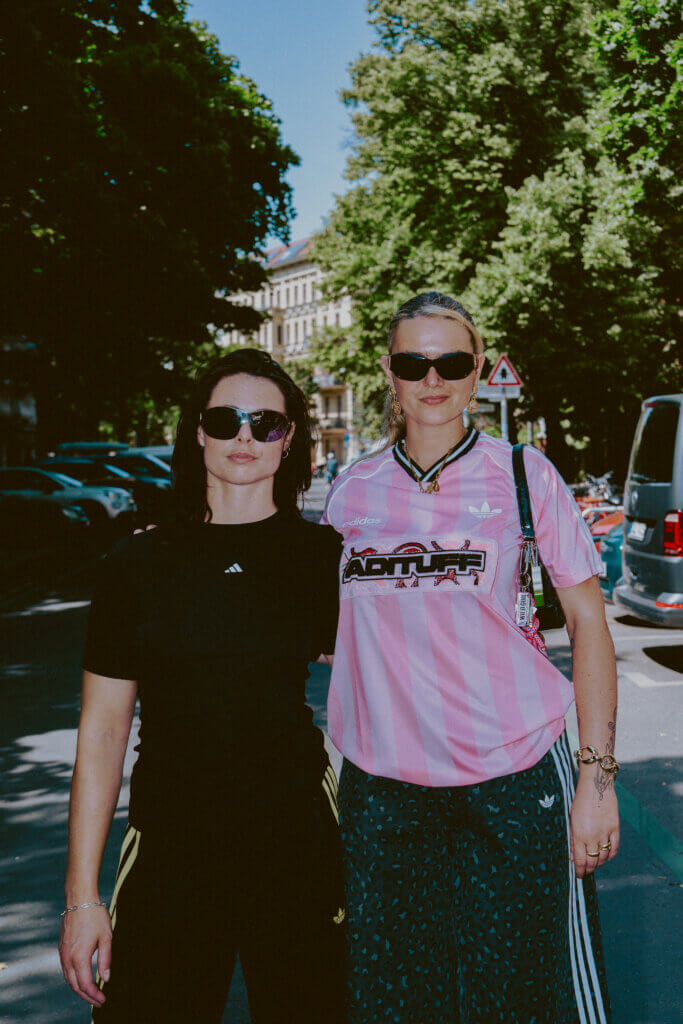
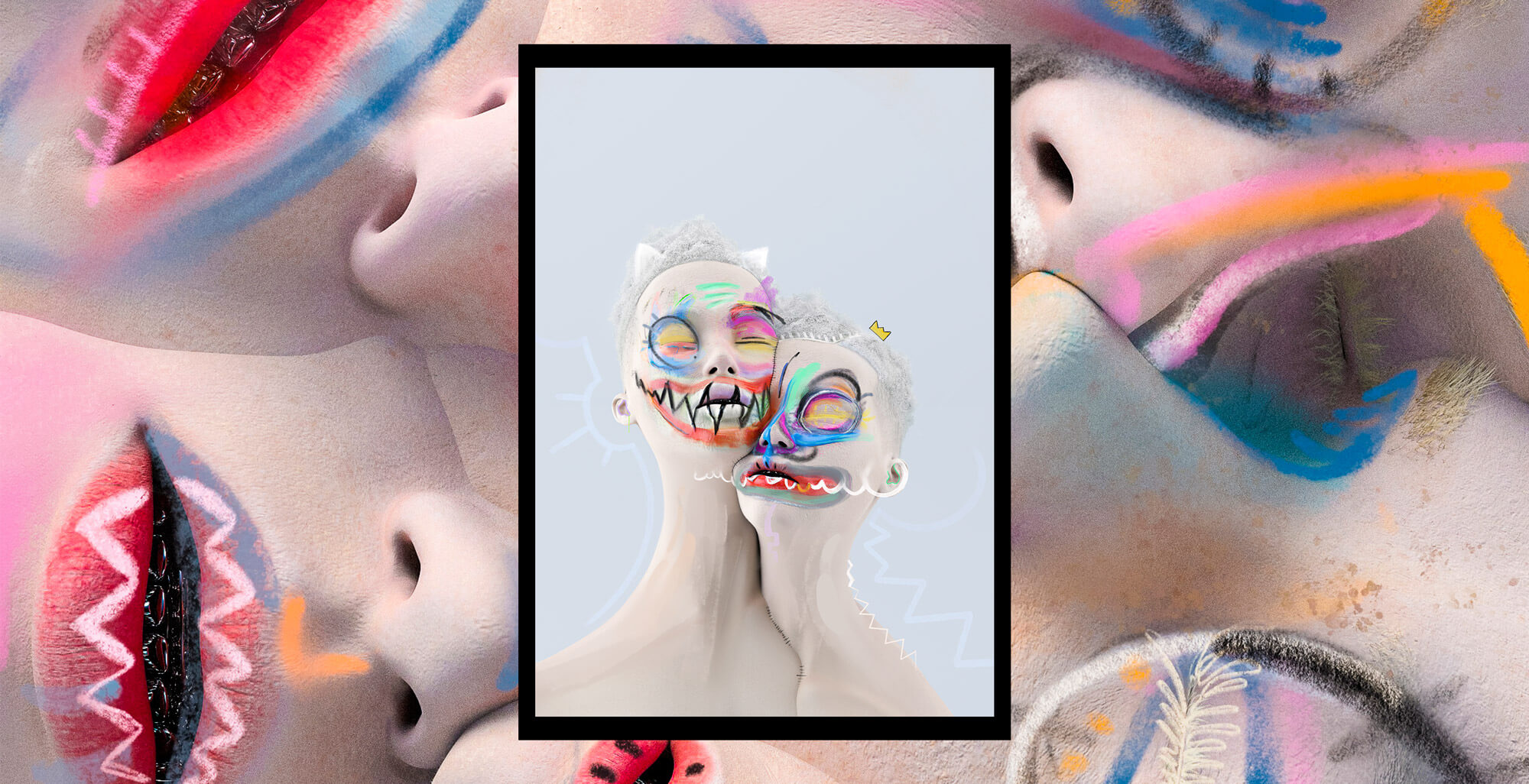
Image credits @saybytoit