




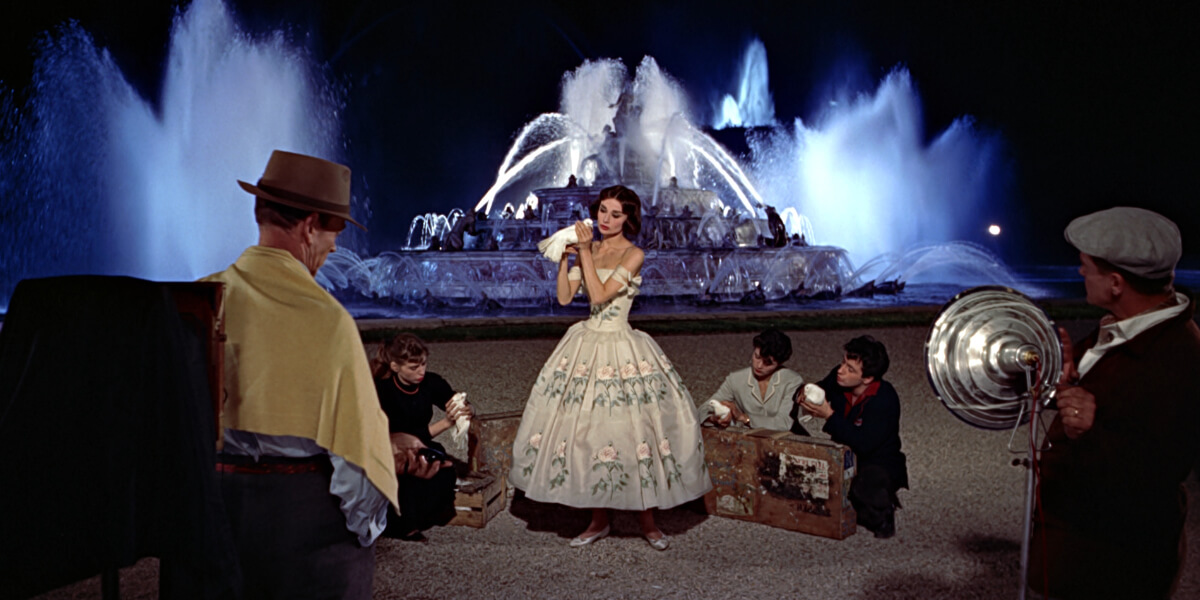
In this era of rapid digitalization, the borders between the arts and advertising are growing increasingly blurred. An incarnation of this phenomenon is how fashion brands are adopting the visual language of cinema in their ads, as exemplified by works such as the Gentle Monster advertisement film “The Hunt” by Nadia Lee Cohen starring Hunter Schafer, and the Chanel short film ad with Margaret Qualley and A$AP Rocky shot by Michel Gondry for the Chanel Métiers d’Art 2026. But after all, the connection between technology and the arts is nothing new.
Arts and the time of mass (and social) media
Technological progress has always shaped the arts. The history of photography and the various stages it went through throughout the 1800s and 1900s is a history of technological advancements. Already in 1935, Walter Benjamin theorized in his seminal work The Work of Art in the Age of Mechanical Reproduction that the ability to reproduce a work of art stripped it of what he called its “aura”: its uniqueness, originality, and function as a historical memorial.
Thanks to Benjamin’s work, Theodor Adorno and Max Horkheimer, two key figures of the Frankfurt School, introduced the term “cultural industry” (Kulturindustrie) in 1947, which well expressed the metrification of culture and its transformation into a category of standardized consumer goods.
The democratization of technology and the rise of social media have further accelerated this process. According to the GSMA, more than half of the world’s population owns a smartphone. In this context, 5.66 billion people use social media platforms as of this October.
Widespread access to easy-to-use devices with high-quality cameras, tutorials, BTS, and social media platforms has allowed people from all walks of life to experiment with photography and videomaking and share their work with people far and near. Professional artists, museums, film production companies, and other cultural institutions have also been posting art and art-related content on these platforms. When people can not only watch but also create high-quality films and photos with devices they use daily, art creation and consumption are democratized.
In recent times, advertisements too have undergone a similar trajectory. Until about a decade ago, only agencies and professionals were the ones behind the ads people saw on television, billboards, and magazines. Now, the advertisements we see daily on social media are created by user-workers like influencers of all kinds and reach.
The growing connection between high-end fashion advertisements and art
Large companies with a lot of prestige and notoriety have always had the sizable budgets to run bigger ad campaigns than smaller companies. Celebrity advertising, too, isn’t a novelty. Actress Lillie Langtry became the face of Pears Soap in 1882.
Now, though, these brands have an even greater need to stand out through the quality, style, and format of their advertising. That’s why they are adopting the language of cinema, using their funds and know-how to ensure their ads have the technical characteristics and carefully constructed storytelling that mimic those of cinema. A language that these brands can harness to match their ads with the image they wish to project. “The Hunt” well fits Gentle Monster’s edgy, artsy image, and the short film with A$AP and Qualley embodies the playfulness and subtle nostalgia Matthieu Blazy has been injecting into Chanel as the brand’s new creative director.
Collaborating with influential people also carries extra prestige now that AI is becoming a go-to tool for many small and medium-sized companies. Attention to storytelling and customer perception is particularly essential for brands with a higher price point and a consequent need to pursue a wealthier clientele. Nowadays, more than ever, high-end brands need to sell an idea of fantasy and escapism rather than the ever-present “relatability” of social media content. The artification of advertising is one of the results of the complex relationship between art-making and profit in late-stage capitalism, and it raises the age-old question: what is art? Arguably, these days, art is what it is despite it all by those who can’t imagine a life spent without creating.