




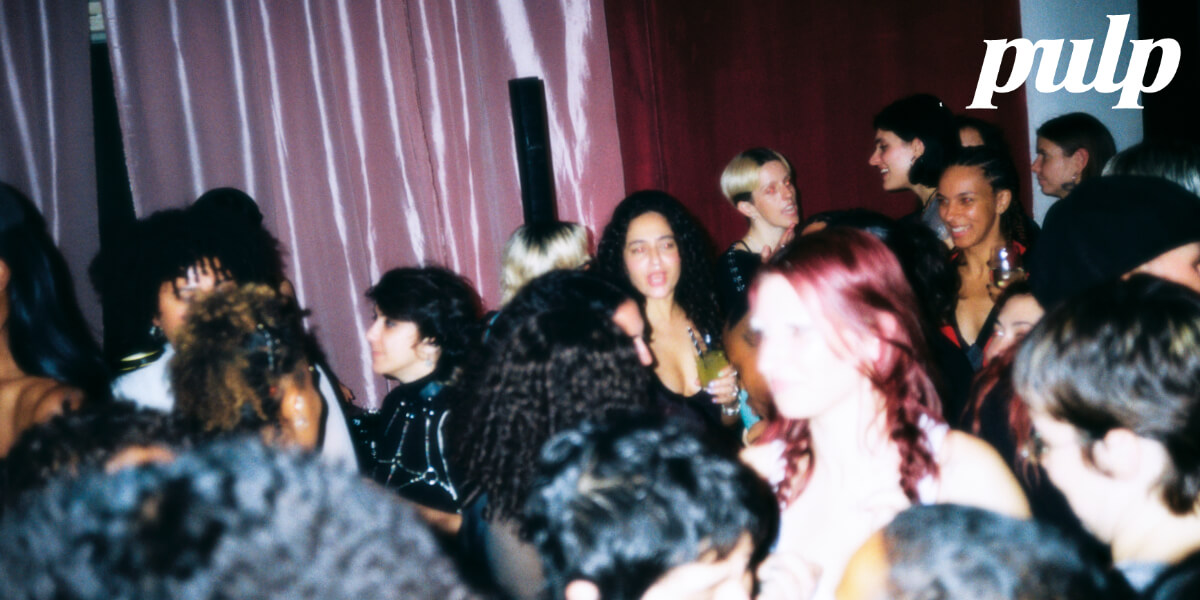
Have you ever asked yourself why there is no Grindr for queer women and trans people? It only takes a quick Reddit search to see that it’s a question frequently discussed for many years. The answers vary from “there’d be too many fake accounts of straight men pretending to be lesbians” to “women wouldn’t use it.” But still, the desire for an app that allows spontaneous connections of different sorts seems to remain. All it needs is someone to actually do something about it. And that someone is Naomi Darko, the 29-year-old Parisian behind Pulp, the new social app for queer women, trans, and non-binary people. Like a lot of us, I’ve grown tired of the apps; Hinge has turned into a graveyard of situationships and unreplied messages, and let’s be honest, who’s still using Tinder? But suddenly, I heard people talk about something new, an app similar to Grindr but with a fresh concept. During Dyke March this summer, a friend handed out flyers to everybody who caught her eye. They had the word “pulp” on a dark background with an orange pulse next to it. “See you on the grid!”
A few months later, I’m sitting down with Pulp’s founder at BIWOC* Rising, an intersectional co-working space at the heart of Kreuzberg, Berlin. “I’ve been working on the app day and night since April,” Naomi confesses. When she first came to the German capital in 2024 because of her previous job, it felt like an awakening. In Paris, “queer” life mainly revolves around gay men. “There would be a party specifically for queer women and trans people maybe once every two months, so it was like, okay, I’m going to be queer in two months. In the meantime, I wouldn’t know where else to look,” Naomi recounts. The only way to meet other people like herself seemed to be through dating, but when she moved to Berlin, she discovered that there are infrastructures for many other activities to do together. “I actually really hate dating apps,” Naomi admits. “I’m especially against swiping because it’s so removed from how we interact in real life.” It was clear to her that queer women and trans people needed an app to find each other, but one where connection could unfold more naturally and fluidly.
“People are really grateful and tell me they’ve been waiting for something like this for years.”
Naomi Darko
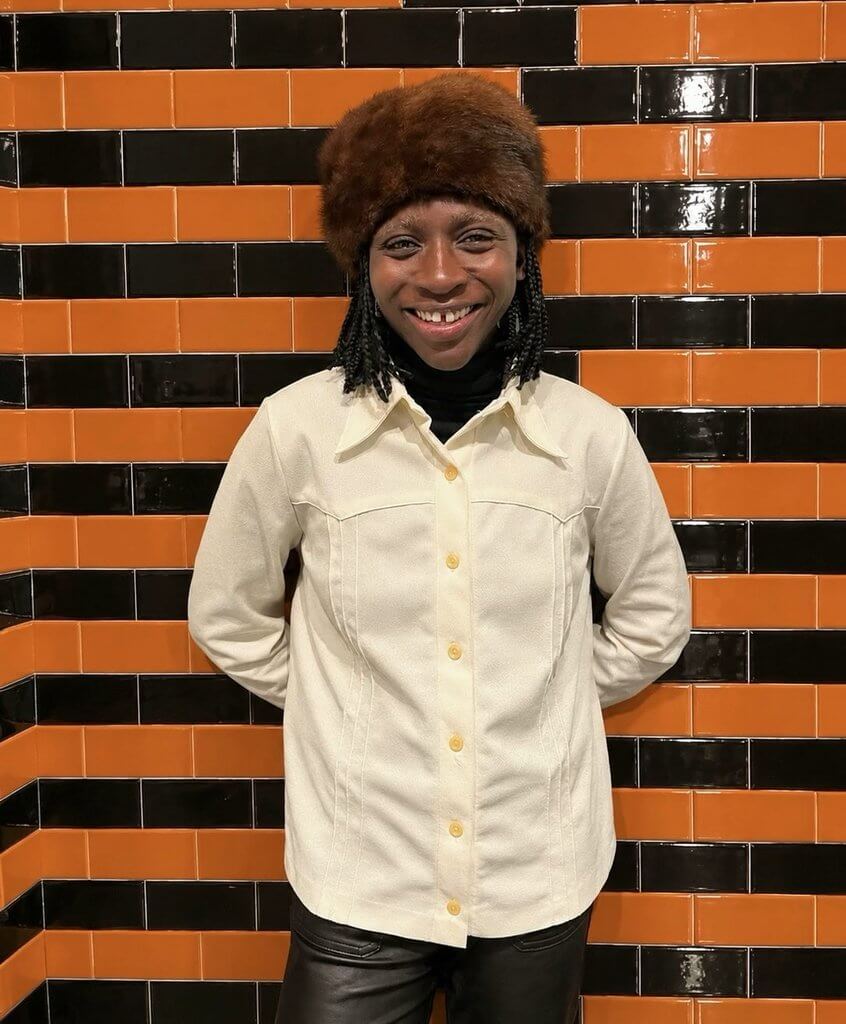
To really understand people’s experiences and needs, Naomi spent two months conducting research through focus groups, one-on-one interviews, and a survey with queer people from Berlin, London, Amsterdam, and Paris about their thoughts on relationships, sexuality, dating, and friendship. That’s when it became clear that even though there are queer dating and social apps out there, people don’t like to use them because their portrayals of queerness are very cliché. “We deserve something that’s as cool as we are,” Naomi states. “That’s why we spent as much time thinking about the branding as on the product itself. Dating and social apps only work if their branding manages to attract a lot of people.” First step: come up with a name. Coincidentally, the year Naomi was born, Pulp opened. Pulp used to be a Parisian nightclub founded by Michelle Cassaro and Sophie Lesné with the tagline “a girls’ club where guys like to go too.” Initially for lesbians, it became really popular and opened up to a more mixed audience. “Unfortunately, it closed when I was ten years old, so I’m trying to bring back this Pulp era where queerness is simply a part of everyday life,” Naomi tells me. For the brand’s logo, she collaborated with one of her best friends who’s a tattoo artist, while another friend with experience in UX/UI design gave her feedback on the first version of the app. “Berlin is a really creative city, so I’ve gotten a lot of inspiration from the people around me.”
Naomi dreams of building the first tech company that mainly employs queer FLINTA*, but for now, it’s only her and co-founder Ross who are responsible for the development of the app. Initially, Naomi taught herself how to create a prototype and spent hours and hours on different dating and social apps to better understand what brings people together and what makes them feel lonelier. Before opening the app for broader beta testing in Berlin, Naomi decided to bring developers on board to make sure to protect people’s critical data. Safety and security are really important aspects for her. “When I started going to parties in Berlin, I was mesmerized by how free people are,” Naomi remembers. “That’s only possible because there are people at the door filtering who can enter.” So she applied the same principle to Pulp, which is currently only accessible via waitlist or invitation from a member. While it does slow down the growth of the app to validate each user’s account, Naomi hopes that creating a safer space will lead people to act more kindly and responsibly towards each other because they see themselves as part of a community.
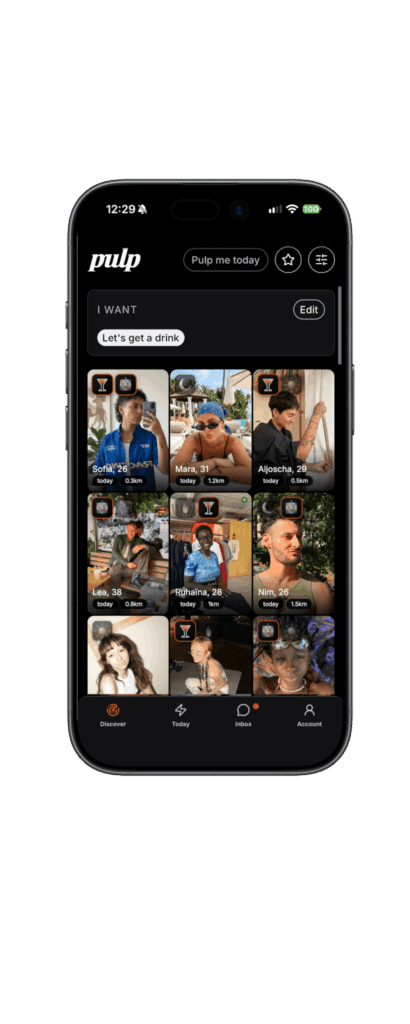
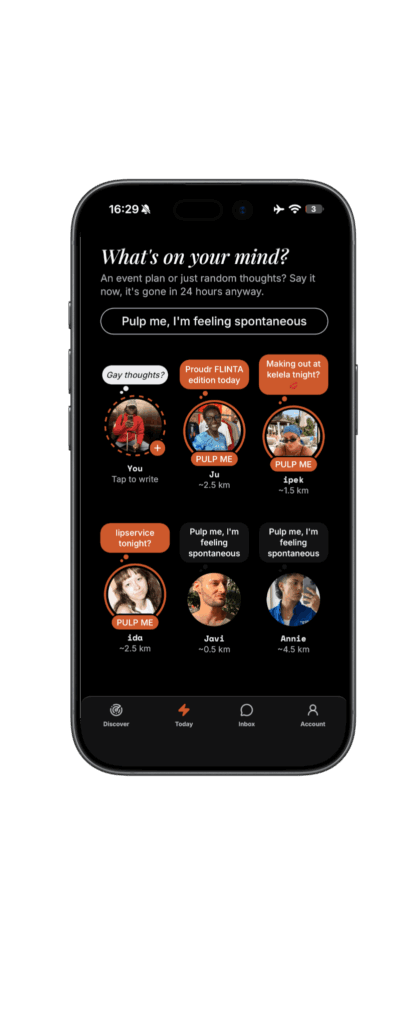
Another one of Pulp’s core concepts is spontaneity. “Dating apps take the spontaneity out of romance,” Naomi claims, and I agree without hesitation. Sometimes it would take people on Hinge so long to match me back that I had already forgotten I liked them in the first place. When I think back to my very first online date, I remember instantly replying to the other person’s messages, carefully choosing an activity and being really, really nervous (we had pies, went thrifting, and took a bottle of wine to the park—a classic). This genuine excitement and interest in getting to know someone new have slowly faded away during years of swiping. “We have to reclaim the joy of doing unexpected things, of having tiny adventures,” Naomi says. With Pulp, you can meet someone who lives across the street and have the time of your life on a random Tuesday. No waiting around, no planning for weeks. It sounds like something we’re not just missing in our dating lives. When was the last time you did something spontaneous? The last time you told your Google Calendar to respectfully f*ck off? To me, spontaneity, curiosity, and creativity go hand in hand. We complain about taste-slop, repetitiveness, and the decline of critical thinking, but when do we ever break out of our routines and algorithms to let our minds breathe and actually experience something?
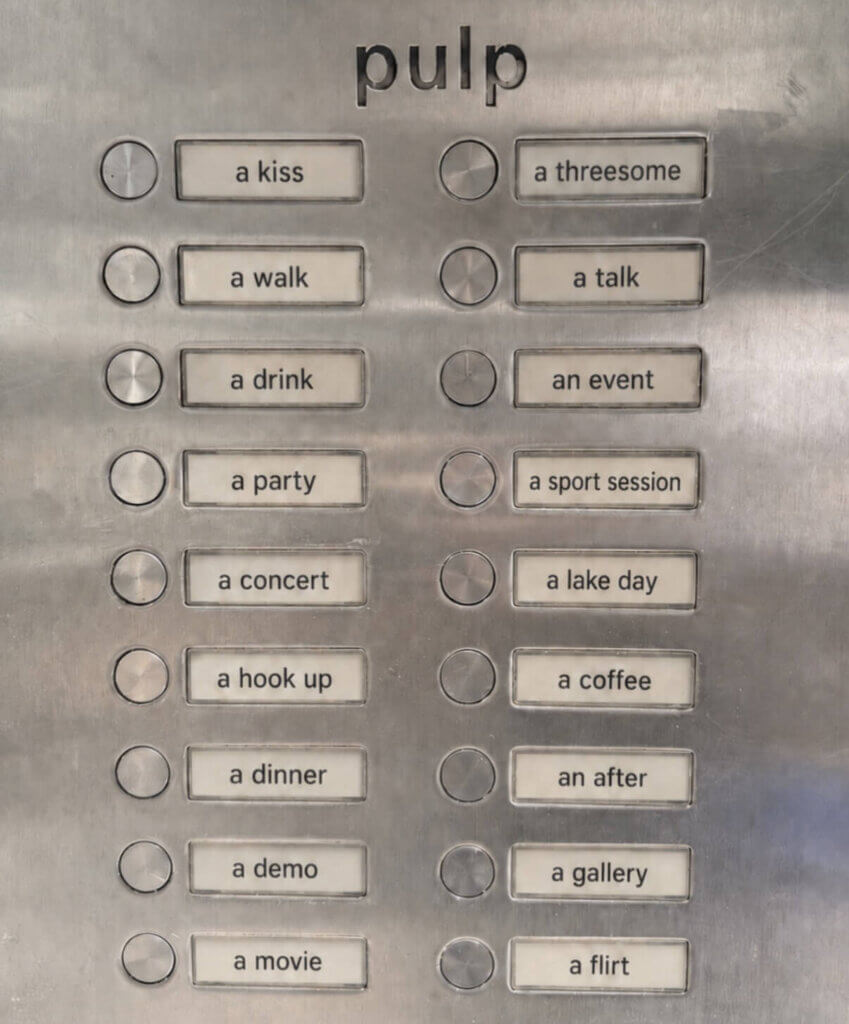
That’s why Pulp is not meant to simply be another app on your phone. “Since its name derives from an event, I definitely want to go back to that at some point,” Naomi confirms. Her idea is to build a community that’s able to gather everyone. “We tend to frequent the same spaces and see the same people, but there are actually thousands of us in this city. After our launch party, people told me that they met people they’ve never seen before.” Part of including everyone is offering activities outside of nightlife, which is where queer life usually seems to be concentrated. In July, Pulp collaborated with sex therapist and intimacy coach Oli Lipski for a flirting workshop. Two hours to dive into the question of how to actually walk up to someone you want to talk to. A bit of flirt theory and, of course, practice. I think it’s events like these that people will gravitate to more and more. In a radio report by NPR about the declining use of dating apps, social scientist Kathryn Coduto says, “When you look at the world, especially since COVID, a lot of things went online, and I think people have missed connecting in real life. There’s been an uptick in interest in speed dating events, but also just people joining clubs where they might have mutual interests.”
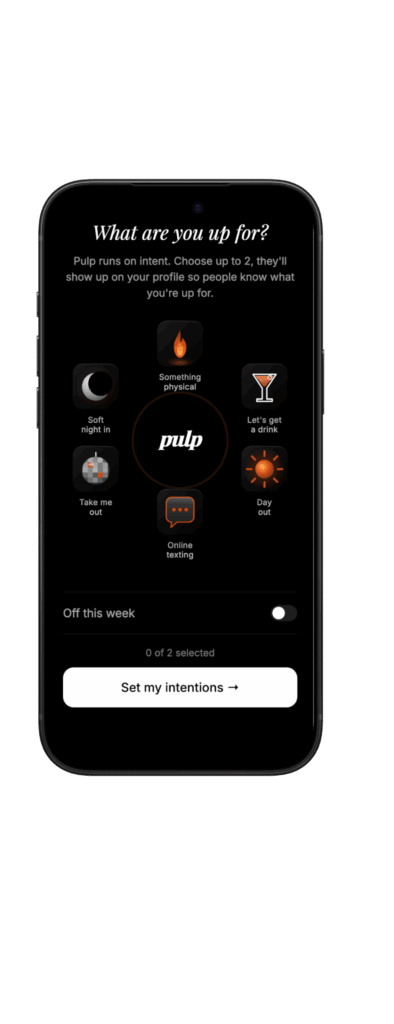
Pulp not only lets you connect over your interests but also choose up to two intentions, which can range from online texting or a soft night in to getting a drink and something physical. “It’s important to remember that intimacy isn’t just sex. I wanted to create a space where we can look for the type of intimacy we want in that moment,” Naomi explains. So whether you’re looking for friendship, romance, or simply someone to share the night with, Pulp is where it’s at. While the app is currently only available in Berlin, Paris and London are the next cities Naomi plans to add to the grid. Until then, let this be your incentive to hold eye contact, ask for that number, and put yourself out there because eventually, what do you have to lose?