





The fashion industry wants nothing more than for you to believe it has a conscience. It wants to be seen nobly opposing convention—though it seems rather more invested in the posing than the principle.
There are perhaps few spectacles more peculiar than watching an industry built on exclusivity make a business of social solidarity, raiding the aesthetics of countercultures du jour to transform dissent into something desirable. Fashion has always known how to dress a rebellion, but establishing the conviction behind it is an altogether more demanding cultural undertaking. For an industry constructed around the preservation of hierarchy, claiming the mantle of resistance without walking the talk is its own kind of stolen valor. The real price of progress, then, raises an uncomfortable question: can it afford to loosen the seams of a system from which it continues to profit?
At this past Paris Fashion Week, the minds behind the house of Matières Fécales, Hannah Rose Dalton and Steven Raj Bhaskaran, made that contradiction difficult to ignore. Their Spring/Summer 2027 collection, titled THE NINETY NINE PERCENT, was staged at Place de la République, a square associated with protest and political assembly. All 99 models were people of color; the showcase addressed immigration, working-class communities, and marginalized identities.
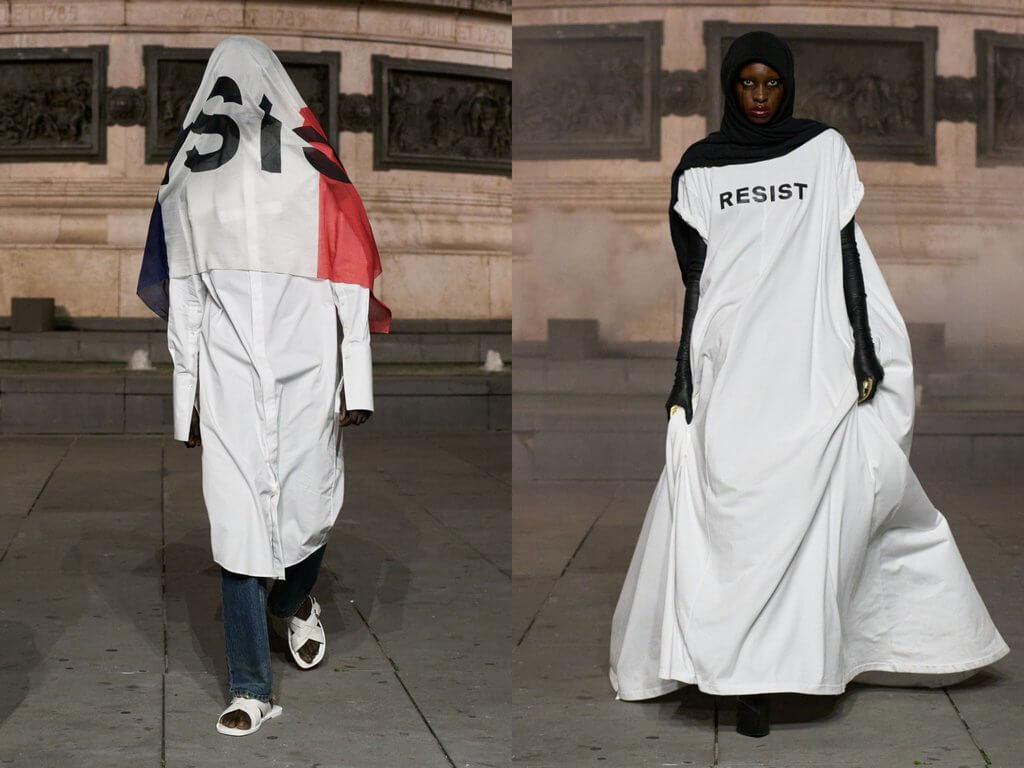
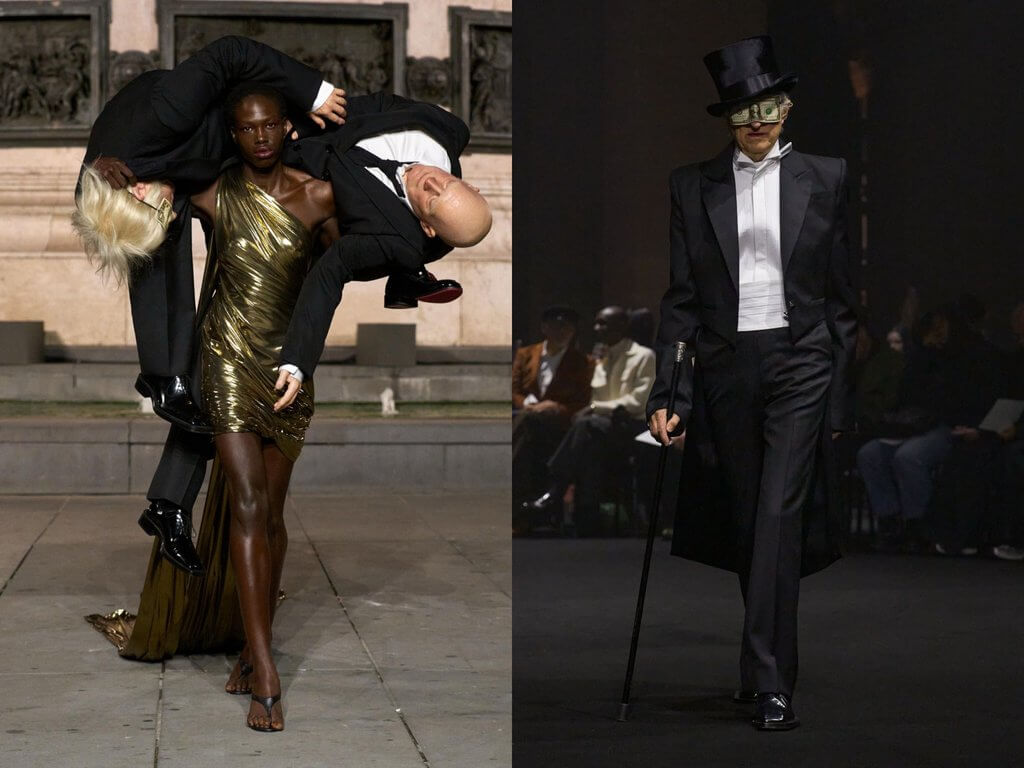
“RESIST” splashed across multiple garments, giving visual expression to its central message. The collection’s class politics were made all the more tangible by Black models carrying oversized, lifelike sculptures of older, silver-spooned white men, whose eyes were covered with dollar-bill masks.
This on-the-nose jab at capitalism recalled THE ONE PERCENT, the duo’s March collection and something of a thematic predecessor to this latest instalment. Where the earlier show satirized the excesses of the wealthy elite, its sequel turned the tables, placing their likenesses quite literally on the backs of those on the opposite end of the class divide. The statement was unmistakable: a fashion industry preoccupied with courting the affluent was being asked to reconsider whom it served.
Yet the events leading up to the latest show offered an irony of its own. The atmosphere was almost carnivalesque, with an assembly of alt-culture outsiders, misfits, and fashion’s various fringe figures lending the occasion a palpable sense of belonging. Access to the show, however, was tightly controlled, with security barriers separating invited guests from spectators gathered around the square. Some members of the public were eventually admitted, but much of the audience remained barricaded. Meanwhile, billionaire-multi-hyphen-extraordinaire Rihanna occupied a place of honor in the front row. Her arrival, about 60 minutes after the scheduled start, reportedly delayed proceedings and left around 500 guests waiting. For all its rhetoric of resistance, the show remained governed by familiar hierarchies: unlike the prioritized upper echelons, the very people whose experiences informed its message were largely relegated to observing it from a distance.

But perhaps what makes Rihanna an atypical member of the one percent is worth unpacking. That ambitious young girl from the Caribbean went on to become one of the most successful recording artists of her generation, with an influence extending well beyond music. From receiving the CFDA Fashion Icon Award at just 26 to expanding the possibilities of beauty representation through Fenty Beauty’s inclusive shade range, she has repeatedly challenged industries that had long underserved people like her. Named a National Hero of Barbados in 2021, her reach is perhaps best captured by GQ’s Samuel Hine, who dubbed her a “Category 5 cultural hurricane.” Her presence at the show, then, carries a significance beyond her billionaire status. Her own experiences speak to migration, racial barriers, and the struggle to establish oneself in industries molded by narrow definitions of who deserves to participate and prosper.
Yet she has also risen to the very top of the hierarchy the collection seeks to question. Her ascent is a tough reminder that breaking into an unequal system is not the same as dismantling it. Sure, her position differs from that of tech moguls whose fortunes depend on controlling the platforms and infrastructure that increasingly shape our lives. The origins and consequences of wealth are not identical, and that distinction matters. Still, an inspiring rags-to-riches origin story does not automatically absolve anyone, least of all (echoing her 2007 third studio album) the titular Good Girl Gone Bad.
But is it subversive to stage a critique of wealth before the wealthy themselves? Perhaps Rihanna helps Dalton and Bhaskaran’s thesis travel farther than an unfamiliar face could. Perhaps her presence also makes the critique easier to consume than to confront. This particular choreography of resistance is, after all, a dance of defiance in which the establishment still calls the tune.
It would nevertheless be too easy to call the show an empty gesture. Bhaskaran’s mother, sister, and baby niece walked the runway, bringing the collection’s manifesto into the realm of personal history. His account of his family’s immigrant background and the sacrifices they made—which he opened up to Bella Freud about on her Fashion Neurosis podcast—gives the work a foundation beyond revolutionary styling. That commitment stretched beyond the runway, too: the designers pledged to donate a portion of the collection’s proceeds to La Maison d’Allanah, a French non-profit providing housing and support for LGBTQIA+ refugees. The experiences informing the clothes are not theatrical, even if the clothes themselves are. But sincerity and consequence are different things. A gesture can be deeply felt and still be absorbed by the system it challenges.
A series of street interviews conducted by Guilty News offered a more divided picture. Some attendees recognized that fashion has never existed entirely apart from politics, pointing to Matières Fécales as an example of how the industry can engage with issues beyond its own interests. Others were considerably less convinced. Asked to choose between fashion and politics, some dismissed the latter outright; one declared that “politics is for losers.”
A handful of soundbites cannot represent an entire industry, but the contrast, captured during the world’s fashion capital’s busiest week, was still telling. For some, fashion is a means of engaging with the world; for others, politics is an unwelcome interruption to the pleasure of looking the other way. To dismiss politics does not make someone above the fray. When performed as a marker of social status, ignorance becomes another luxury accessory. Detachment, too, can be a privilege: it is easier to regard politics as an inconvenience when its consequences are not particularly likely to reach you.
That detachment feels particularly jarring against the unrest continuing in France. Demonstrations over rising living costs and declining public services have escalated into violence and looting in several cities, with luxury boutiques among the businesses targeted. Peaceful protesters, people with legitimate grievances, and those exploiting disorder to ransack shops are not one interchangeable crowd.
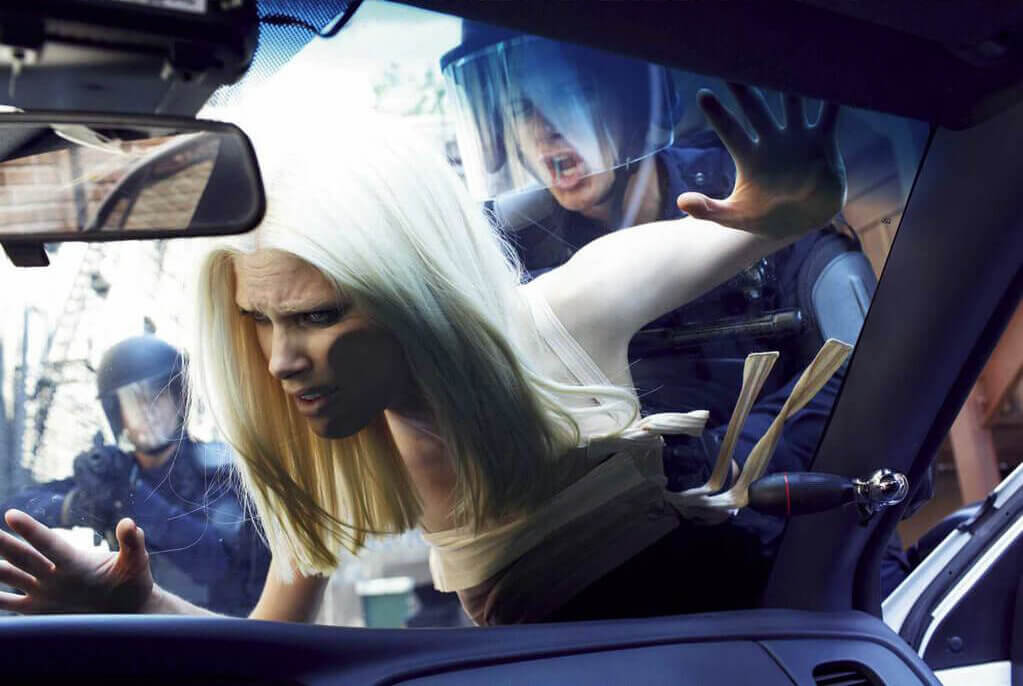
Yet some public reactions appear more scandalized by damaged luxury storefronts than by the conditions fuelling public anger. Concern for workers and livelihoods is legitimate; the question is why the violation of property can provoke such immediate outrage while economic hardship is too often treated as an abstraction, especially considering that these issues reverberate well beyond the twenty arrondissements.
Online memes joking about travelling to Paris to collect free designer handbags offer another response, sometimes a coping mechanism for an alarming situation, sometimes a way of reducing a confrontation over inequality to a shopping joke. One side mourns the boutiques; another imagines raiding them. Both risk making the handbags more visible than the circumstances that brought people into the streets to begin with.
Perhaps no image captured the absurdity of this relationship quite as vividly as the photograph circulating during the unrest: a street engulfed in flames beneath a 20-meter-high Prada billboard outside L’église Sainte-Marie-Madeleine. There is something almost too perfectly composed about it. A luxury advertisement looms above a city confronting the very economic and social tensions that make such displays of wealth politically charged.
The campaign’s face, actress Hunter Schafer, adds another layer to the scene. Having played Tigris Snow, the fashion designer whose work becomes entangled with the Capitol’s spectacle in The Hunger Games: The Ballad of Songbirds & Snakes, Schafer now finds her own image suspended above a city in revolt. The overlap between fashion’s manufactured glamour and the film’s vision of power feels almost uncomfortably literal.
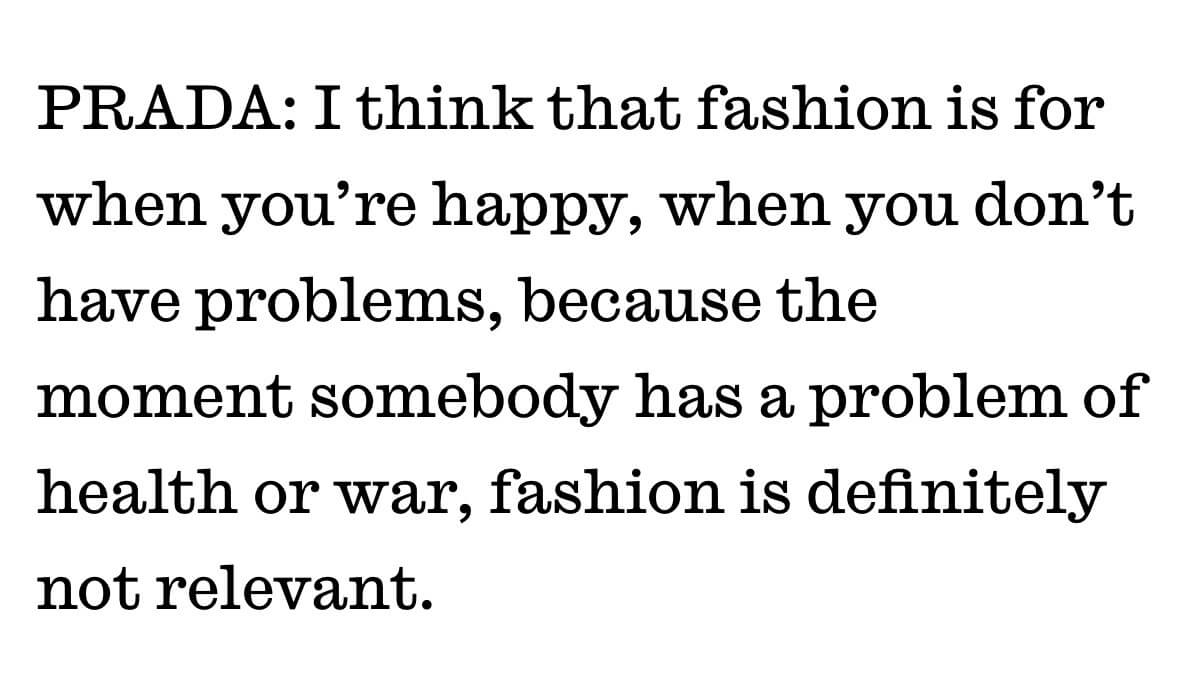
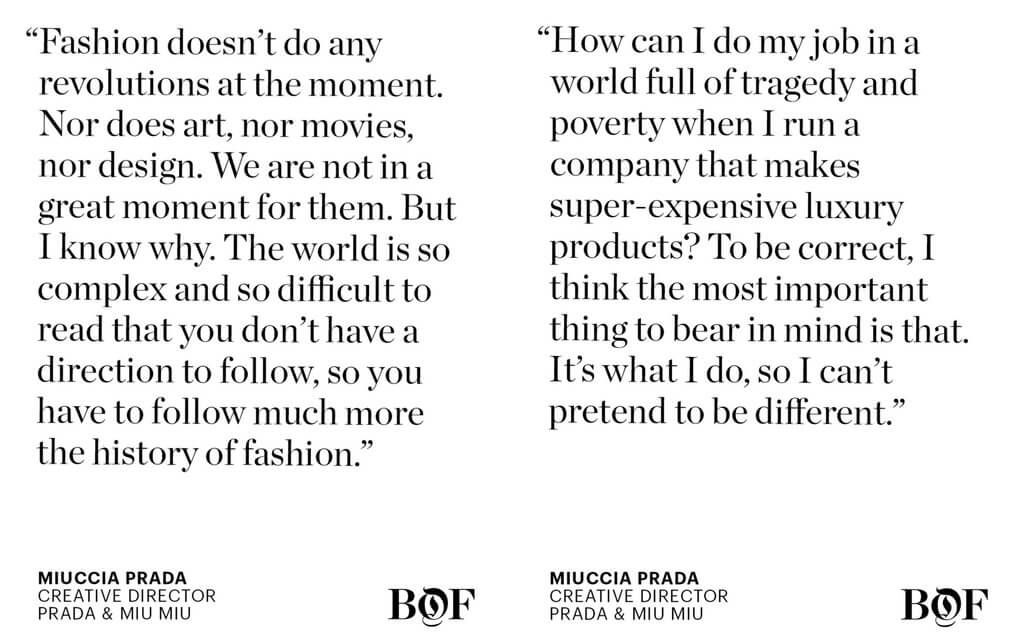
Miuccia Prada herself has expressed reservations about fashion’s relevance when the world is preoccupied with war and serious human suffering. Looking at that photograph, the sentiment becomes difficult to dismiss. What can a campaign possibly communicate against the backdrop of a burning street? Yet fashion’s inability to stop global conflicts or resolve economic hardship does not absolve it of its politics. Its choices about labor, bodies, histories, and whose stories deserve to be told are political long before a slogan ever reaches the runway.
The French Revolution has long supplied fashion and popular culture with an enduring vocabulary of aristocratic excess and rebellion. That imagery feels particularly resonant as Paris finds itself once again confronting questions of privilege and inequality, while Sofia Coppola’s Cannes-panned-turned-cult-classic Marie Antoinette marks its twentieth anniversary alongside the release of Making Marie Antoinette, a documentary assembled from behind-the-scenes footage captured by Coppola’s late mother, Eleanor.
Coppola’s 2006 flick reimagined Versailles through an anachronistic soundtrack and sumptuous costumes, presenting the young queen as both a beneficiary of privilege and a child bride confined by the role she was expected to perform. The Converse sneakers beneath her eighteenth-century dresses became an unlikely signature, collapsing historical distance into something distinctly modern. A product of a cinema dynasty and bourgeois by birth, Coppola was hardly approaching aristocratic excess from the outside. Yet her film was less an apologia for monarchy than a psychological study of a young girl caught between the privileges she inherited and the institution that defined her life.
Two decades later, that aesthetic continues to find new audiences. Olivia Rodrigo’s “drop dead” music video, directed by fashion visual artist Petra Collins and filmed at Versailles, revisits the Rococo dreamscape Coppola helped popularise, while Rodrigo’s recent Halloween portrayal of Marie Antoinette makes the connection more explicit. A queen once remembered as a symbol of a fallen monarchy has become an endlessly recyclable fashion fantasy. The political history remains, but its imagery has proved considerably easier to inherit.
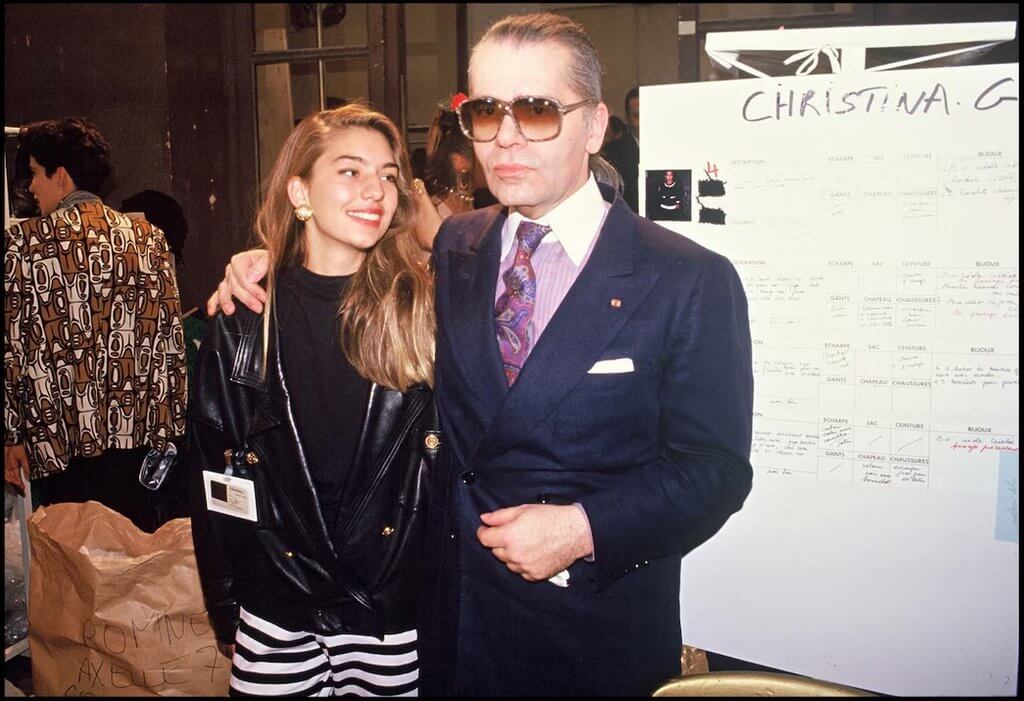
Coppola’s own relationship with fashion offers a way into the industry’s part in that afterlife. She interned at Chanel under Karl Lagerfeld at fifteen, just a year older than Marie Antoinette was when she was married off, and would go on to become a long-standing collaborator and ambassador for the house. Her creative relationship with Dior, meanwhile, saw her direct several of its Miss Dior campaigns. Across both houses, she has left her mark as a filmmaker with a distinctive understanding of femininity, bringing her own visual sensibility to their representations of women.
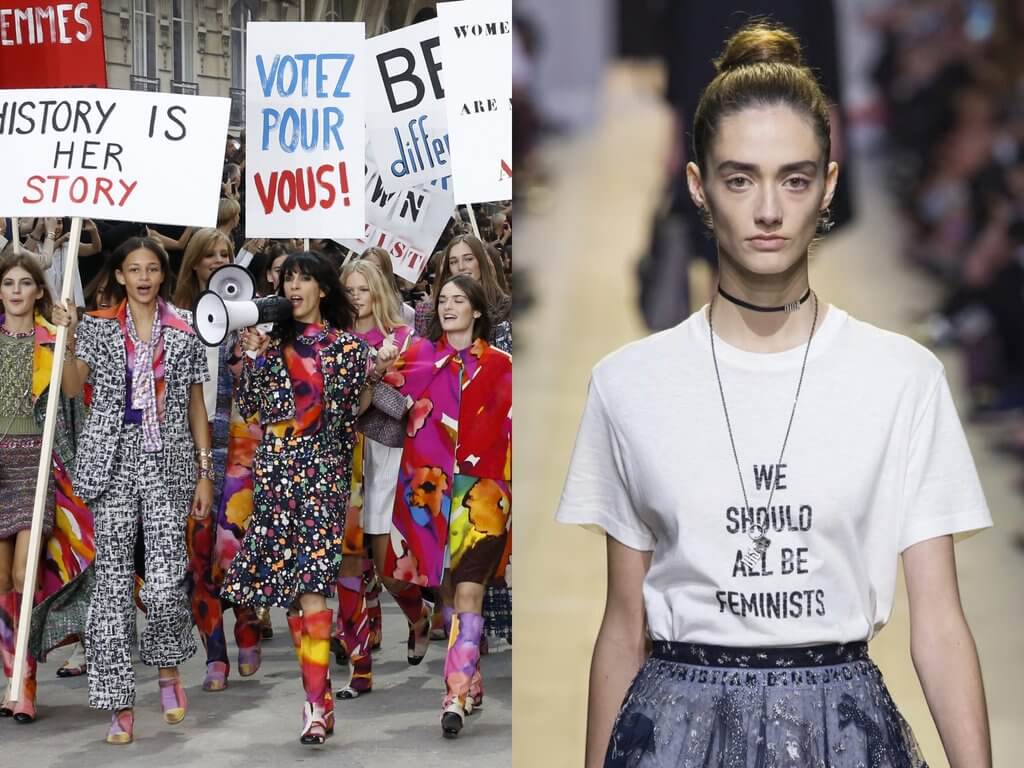
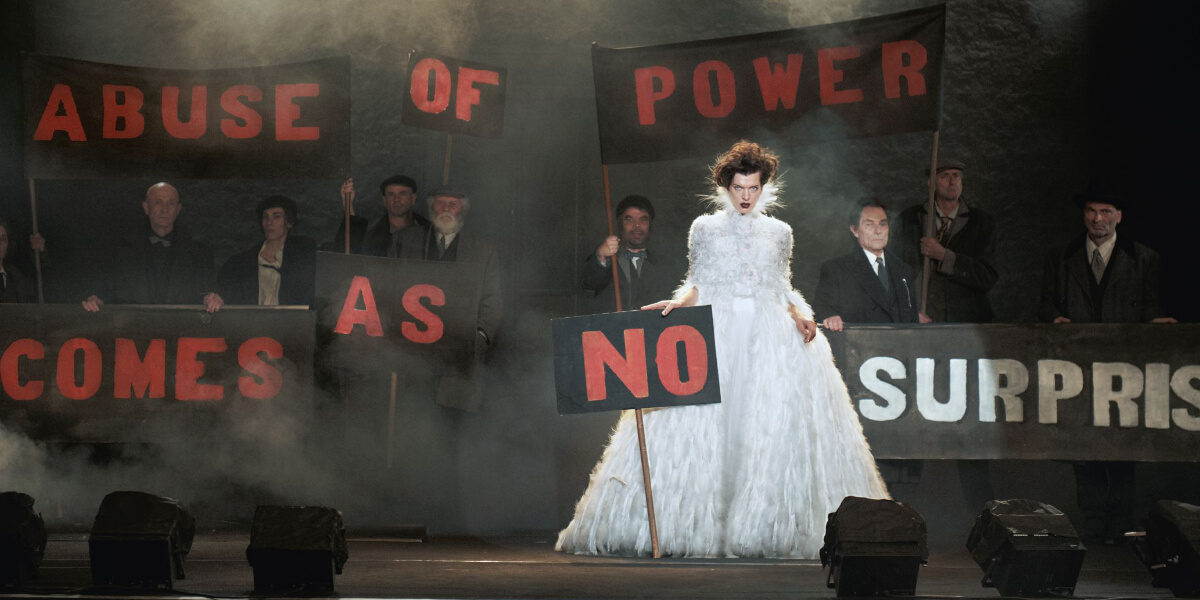
That interplay between fashion and female identity would find a more overt expression on the runway in the years that followed. In 2014, Lagerfeld staged a mock Parisian demonstration at the Grand Palais, with models carrying placards declaring “History is Her Story”. Two years later, Maria Grazia Chiuri made her debut as Dior’s first female artistic director with a T-shirt emblazoned with “We Should All Be Feminists”, borrowing its message from Nigerian essayist Chimamanda Ngozi Adichie. Evidently, the language of liberation had become part of luxury’s sales pitch. Chanel turned protest into pageantry; Dior made its language covetable. Whether either gesture was entirely sincere remains an open question, but both demonstrated fashion’s knack for turning political conviction into visual currency, preserving the appeal of rebellion while keeping its demands safely at arm’s length.
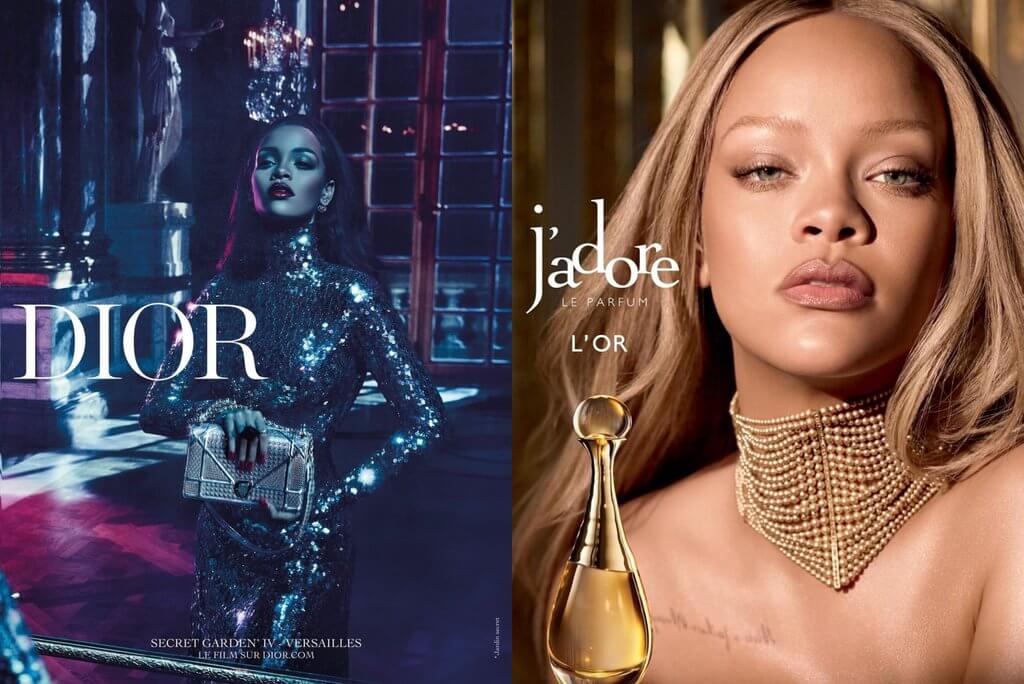
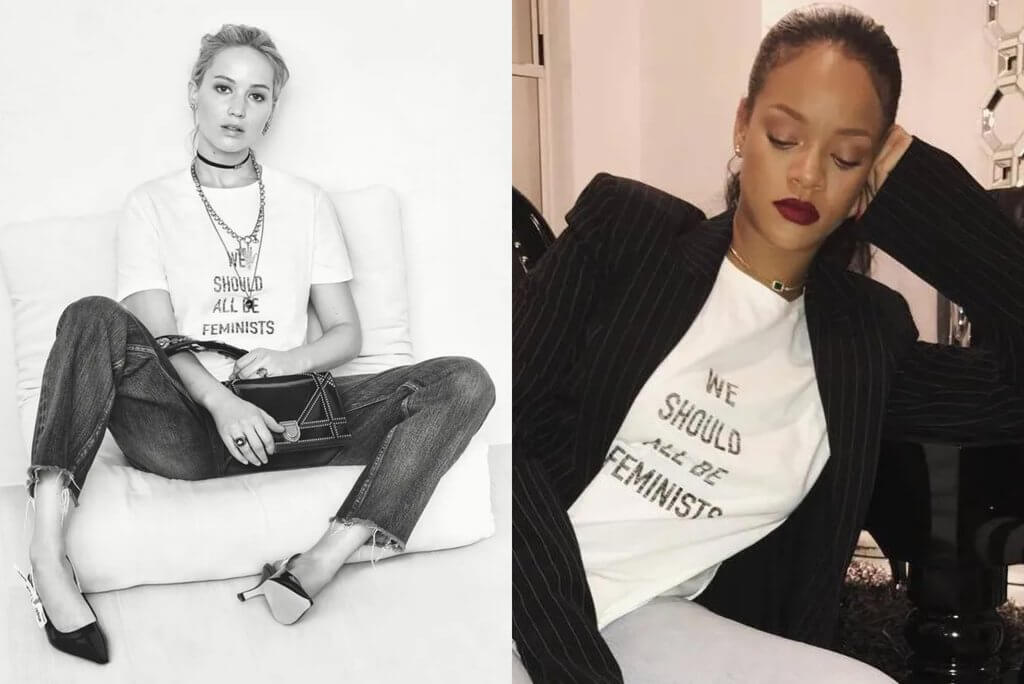
Rihanna’s own debut at Dior brings that friction into sharper focus. In 2015, she became the first Black woman to front a campaign for the house, later wearing Chiuri’s feminist T-shirt and embodying a shift in who could make it past fashion’s velvet rope. Yet that progress was also being sold back to consumers by an institution whose appeal still depends on exclusivity. Versailles, the setting of Coppola’s Marie Antoinette, made for an especially loaded backdrop for both her Secret Garden IV campaign and her more recent J’adore fragrance film.
Among the other Dior faces to sport Chiuri’s political statement, Jennifer Lawrence offers perhaps the most curious crossover. The Oscar-winner also became an emblem of resistance as Katniss Everdeen in The Hunger Games. Her upcoming return to the role in Sunrise on the Reaping brings that legacy back into circulation. But Lawrence’s politics are not confined to the screen: through her production company, Excellent Cadaver, she has supported politically engaged documentaries addressing women’s rights, while also using her public platform to speak out on Gaza.
That made the timing of the film’s promotional tour particularly unfortunate. The exhibition of costumes from the franchise at the Musée Rodin unfolded during Fashion Week as demonstrations continued across the city. Attendees appeared in Capitol-inspired finery while French students were appropriating the franchise’s imagery and slogans in the streets. Paris mirrored Panem. A story about resistance was being dressed up for promotion just as its language was finding a real-world audience.
Weeks before Parisian streets became a stage for the tensions simmering beneath its luxury industry, Lawrence offered an accidental glimpse of how closely fashion and politics can sit together. At the 2026 LVMH Prize ceremony, she dropped the F-word—though not the one anyone expected, not even herself, judging by the bewildered state she was in. “Fasci—FASCISM?!” landed to laughter behind and beyond her podium. “…Fashion [allows us to communicate without speaking.]” she corrected. The slip was so startlingly out of place that it caught the room off guard. In retrospect, however, the Freudian undertones are harder to laugh off. Against the backdrop of the Paris demonstrations that followed, Lawrence’s verbal faux pas began to sound less like an isolated gaffe than an unwitting premonition of the collisions between fashion, power and protest that would soon become impossible to ignore.
The question of who gets to shape culture extends beyond the runway. In an October 2026 episode of Fair Game, Vanity Fair’s editorial director Mark Guiducci and playwright Jeremy O. Harris discussed technocrats’ growing influence over cultural life. Harris questioned whether media risks becoming advertising when powerful figures are given platforms without their influence being interrogated. The conversation was particularly pointed given that the publication would soon put OpenAI CEO Sam Altman on the cover of its October issue.
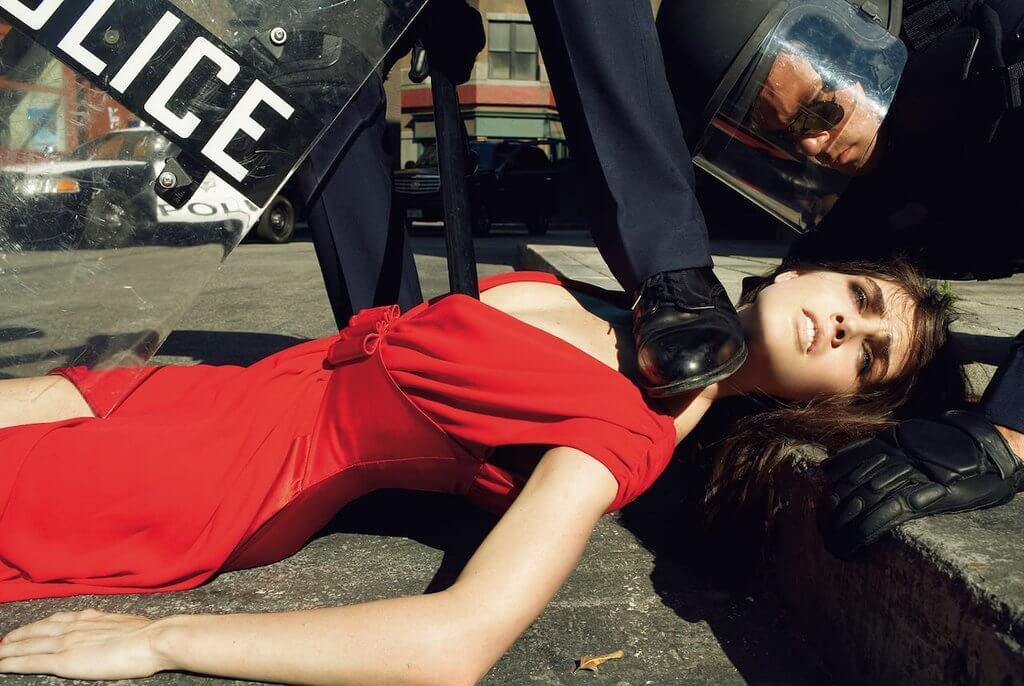
And while Miuccia Prada has spoken of fashion’s—or at least, her own—responsibility to remain socially aware, Mark Zuckerberg had already been welcomed into her Fall 2026 show’s front row. As technology billionaires become increasingly familiar faces in fashion and media, their growing cultural presence raises questions about how readily institutions are normalising the concentration of power. Cultural institutions have long depended on patronage, but their role extends beyond accepting donations: they can confer legitimacy, turning financial power into cultural authority.
Even the fashion industry’s fictional world seems to have arrived at a similar conclusion: sovereignty is considerably easier to defend when someone wealthy is willing to pay for it. This year’s cinematic hit The Devil Wears Prada 2 offers its own version of this dilemma, as the in-universe Vogue-equivalent Runway struggles to preserve its editorial independence before ultimately being rescued by a philanthropist. The resolution is telling: an institution compromised by commercial interests is saved not by escaping those interests, but by finding a more benevolent billionaire (an oxymoron!) to finance it. The 2026 Met Gala brought that relationship back into fashion’s own territory, with Amazon founder Jeff Bezos serving as an honorary chair amid criticism of his financial involvement. But the uneasy marriage of political messaging and elite spectacle predates this year’s controversy. At the 2021 gala, US Congresswoman Alexandria Ocasio-Cortez wore her now-famous “TAX THE RICH” dress, bringing a message of economic redistribution into a room defined by exclusivity. In retrospect, the look almost feels like a prototype for Matières Fécales: a political message made into the centrepiece of an exclusive fashion event, its provocation inseparable from the spectacle carrying it.
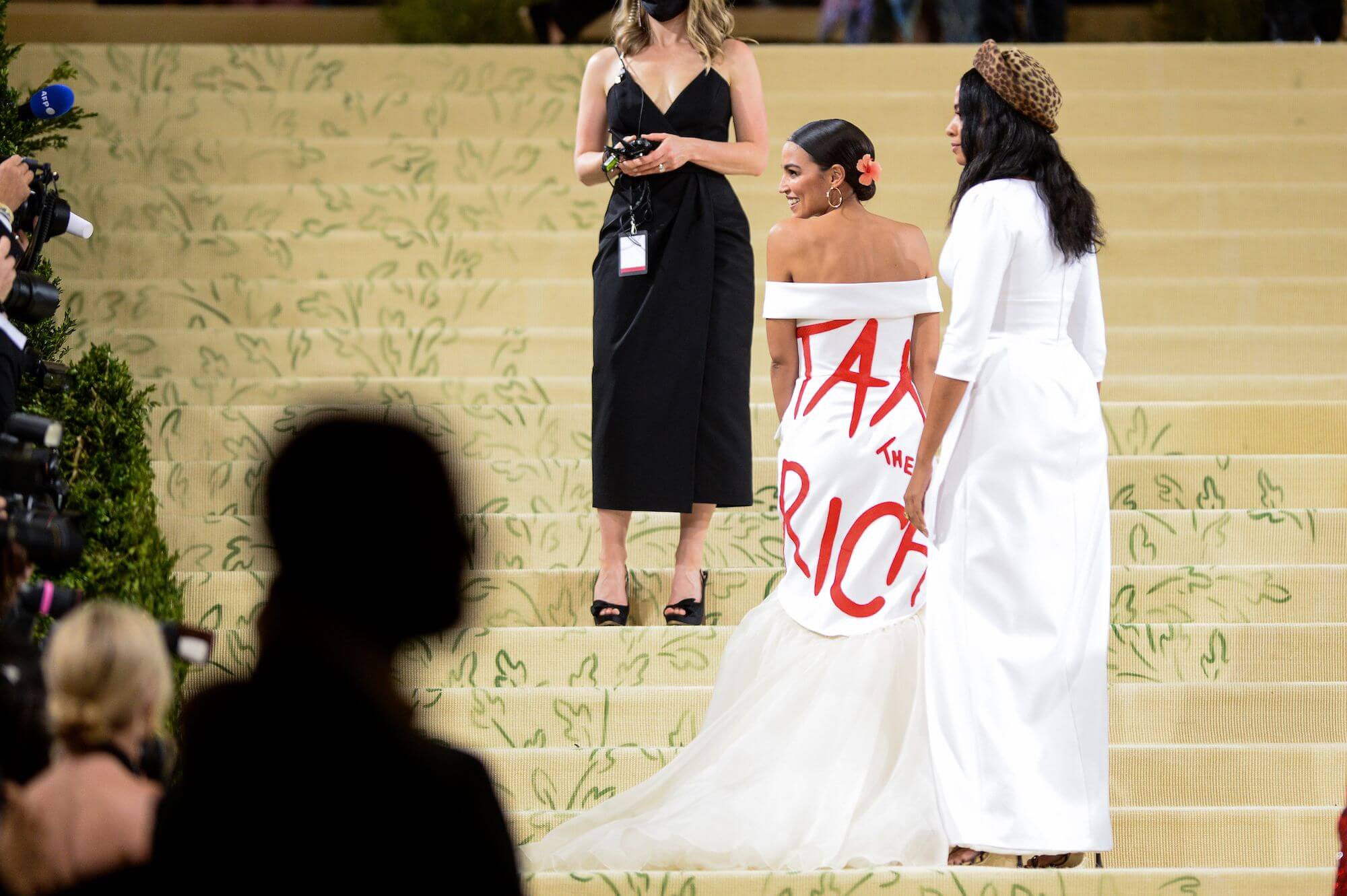
That is not necessarily a criticism of either gesture. There is something to be said for using the platforms available, particularly when the alternative is silence. The medium is the message, according to Ocasio-Cortez. Perhaps the runway is simply fashion’s version of a street protest, staged from within the very establishment it seeks to challenge. The clothes become placards, the models become demonstrators. Then it cross-pollinates with other kindred voices. Perhaps performance is fashion’s greatest political talent. But who controls the stage, and who benefits from the show?
Sincerity should be the beginning of the inquiry, not the end. A political collection can be meaningful, a celebrity can amplify its message, and a spectacle can open doors. But being seen is not the same as being heard, and being heard is not the same as bringing about change. Especially when the noise is as white as its custodians. Perhaps the revolution will always be accessorised. But once the cameras have gone, the clothes have been sold, and the spectacle has moved on, what remains?