





At the risk of this reading like a cliché city-girl-goes-country report (because I am one), I have to share my first impressions. Please bear with me. On the way here, baskets of fresh apples and eggs, two donkeys, and waving neighbors line the roadside at regular intervals. The air is crisp and smells of woodsmoke and earth. It is a picture-book version of rural idyll and a hard place to imagine tomorrow’s fashion innovation taking shape. Karoline and Jonathan Stöckle probably didn’t see it coming either the first time they walked the cobbled path up to the old farmhouse in Gerswalde.
For over 50 years, the old farm served as a training school for metalworking and locksmith trades. Set on 12,000 square meters of grounds and garden, it met a couple with an idea: to build their own haven for artist residencies, open up access to art and craft, and weave a network. Today, Karoline and Jonathan have made that idea real. Werkhaus Stöckle has been up and running since June. In between lay months of concept development, renovation, furnishing, and collecting, and a few doubts, too. “In the end, it took a good dose of courage, FOMO, and naivety to go for it,” Karoline says now.
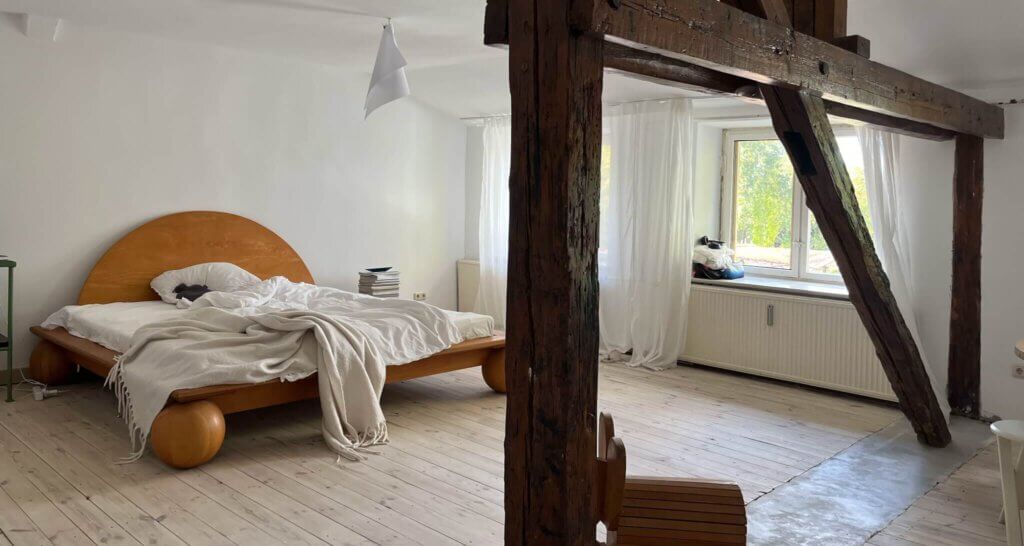
Together, they transformed the farm, renovating it and furnishing it with vintage finds as well as self-built furniture and handmade objects from their grandparents. With a workshop for glass, ceramics, and metal, studios, and a large working space, they created a place for exchange and collaboration—one that artists and creatives have already used for various residencies throughout this first summer.
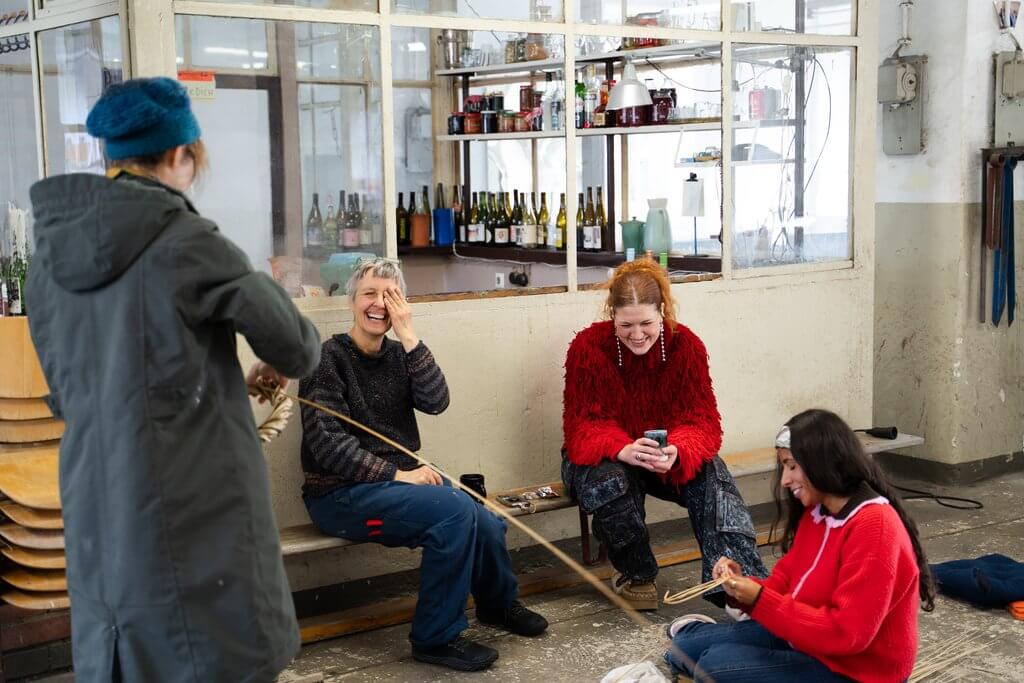
Among them are eight fashion designers who are spending a total of three weeks here as part of FASHION X CRAFT, a program by Fashion Council Germany. Now in its fifth edition, the initiative is run in collaboration with The King’s Foundation and funded by the Federal Government Commissioner for Culture and the Media. It aims to introduce emerging fashion talent to sustainable and traditional craft techniques, supporting them in the development of their own collections. Over several months, the participants are guided through the different stages of collection development, culminating in a final presentation at Berlin Fashion Week Autumn/Winter 2027 and an international exhibition in the UK.
For the first time, the residency is taking place in Germany rather than at The King’s Foundation in England. This year, its tutors came to Gerswalde to offer traditional craft courses alongside local artists and experts. The eight fellows of this year’s edition—the Crafties—come from the UK (Rachel Lucretia McComb, Isabelle Pennington-Edmead, Genaro Alberto Rivas Ravelo, and Holly Shih) and Germany (Anne Kathrin Bodach, Alina Nazari, Lukas Roßkamp, and Vivien Vetterkind). They are at different stages of their careers, yet one thing unites them: a love of craft.
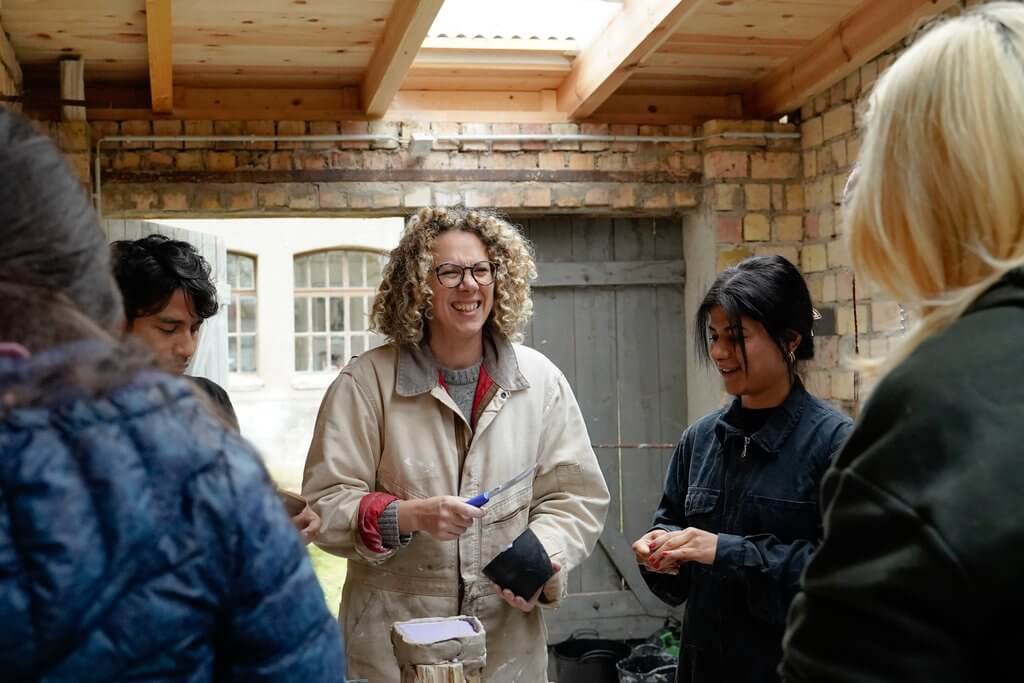
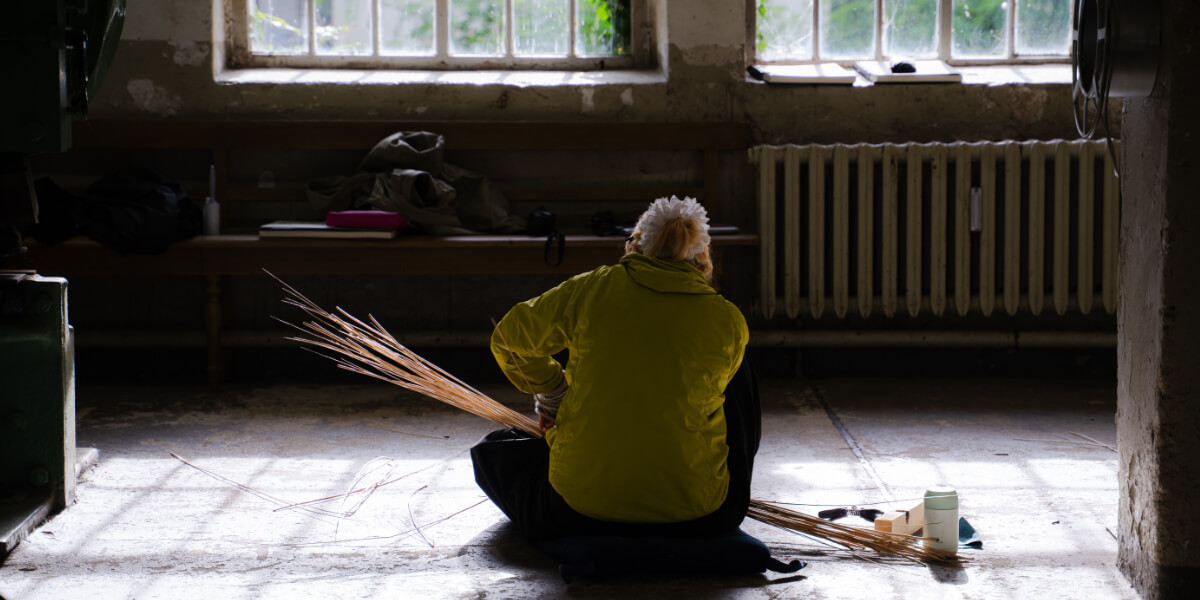
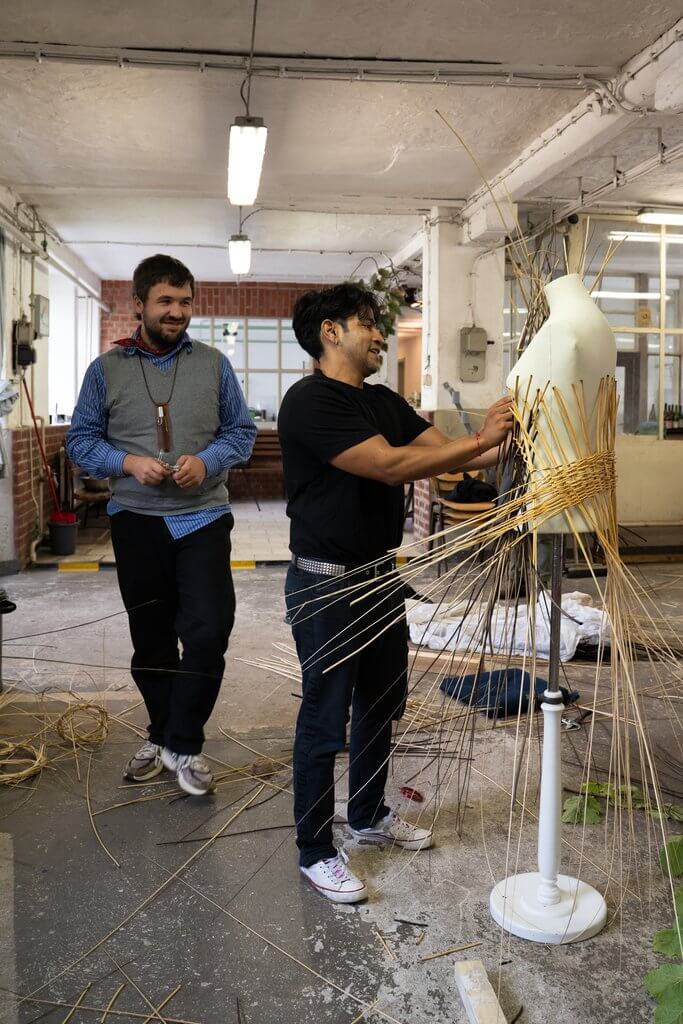
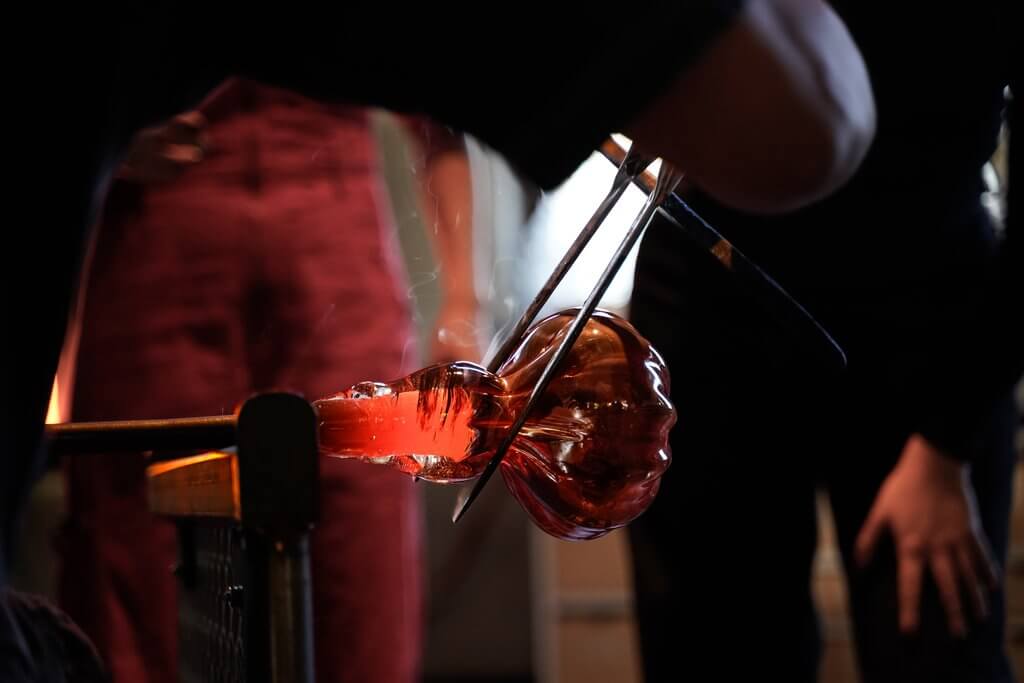
Over the three weeks of their residency, they are introduced to traditional and sustainable craft techniques—including painting, pottery, willow weaving, plasterwork, and glasswork—through a series of workshops at Werkhaus Stöckle. These are intended to later serve as inspiration for their own collections.
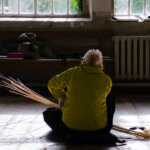
Anyone who initially wonders what glassblowing or pottery has to do with fashion design quickly realizes that this is about more than experimenting with new materials. It is about a philosophy that follows the material itself. “The material is a partner, not a means to an end,” says Lukas Roßkamp, a fashion designer, object-based artist, and one of the participants. In willow weaving, he is particularly drawn to the tension created by the material’s own will, from which he has developed a new approach for a backpack design.
Alina Nazari’s design process engages with her Afghan heritage and the traditional embroidery and handcraft her grandmother taught her. For her new collection, she is developing designs that interweave the recurring motif of home, childhood memories, and materials such as willow and knit.
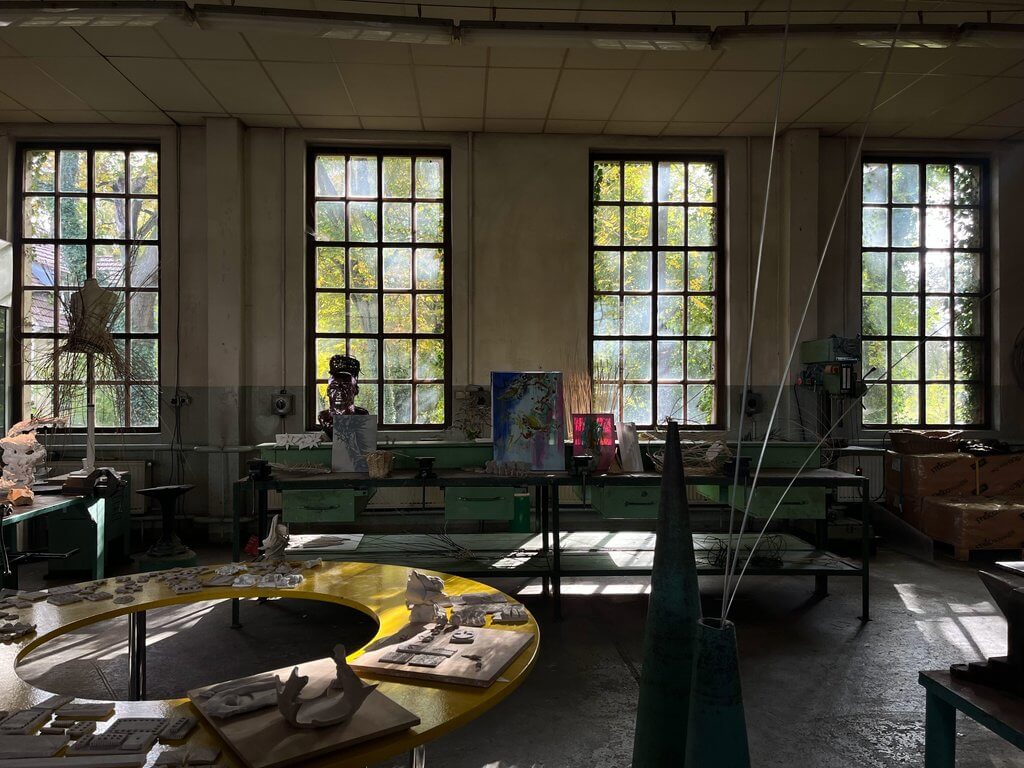
Over three weeks, tradition and future are woven together in ever-new ways: traditional craft techniques give rise to new design approaches. History plays an equally significant role in the village itself—and in Werkhaus Stöckle.
The grounds, which also hold an actual castle dating to 1256 and Schloss Gerswalde, have changed hands many times over the centuries. For hundreds of years they belonged to the noble von Arnim family; in the late 1920s, they passed to the Anthroposophical Society, which used the Schloss as a healing and pedagogical institute. In GDR times, it became a Jugendwerkhof, a youth detention facility for “difficult children,” and with that, a dark chapter. After reunification, the Große Waisenhaus Foundation of Potsdam took over the training school for metal trades until it had to close for lack of applicants. The last course of 2023 was down to two apprentices. Today, towering, ceiling-high machines (you can almost hear them groan just looking at them), welding booths, and an enormous old forge recall the metal workshop that once occupied the house at the heart of the building.
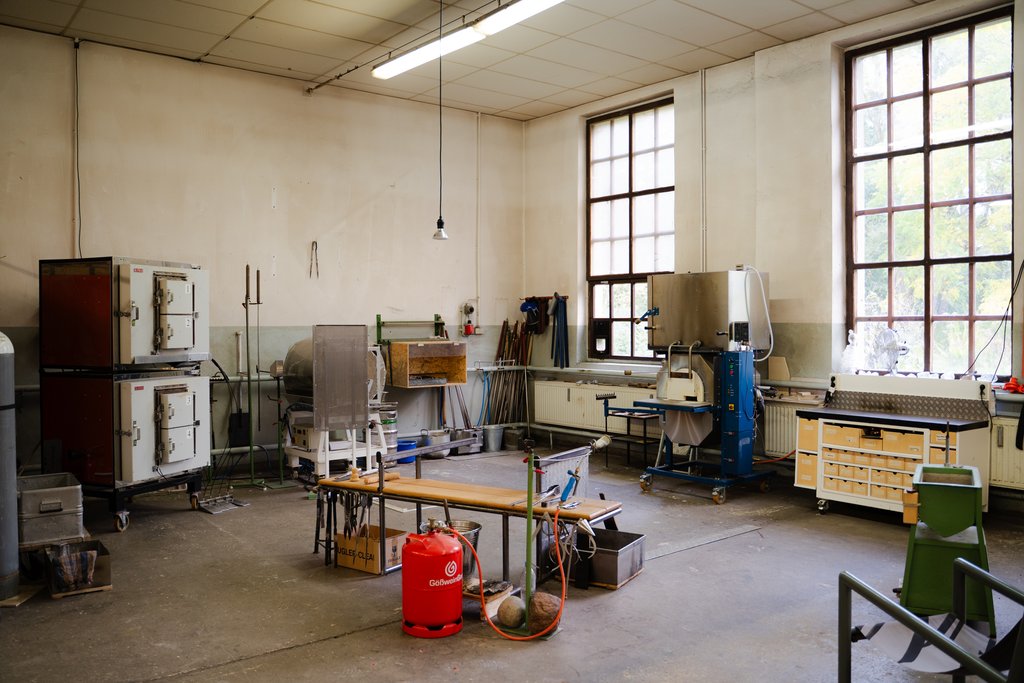
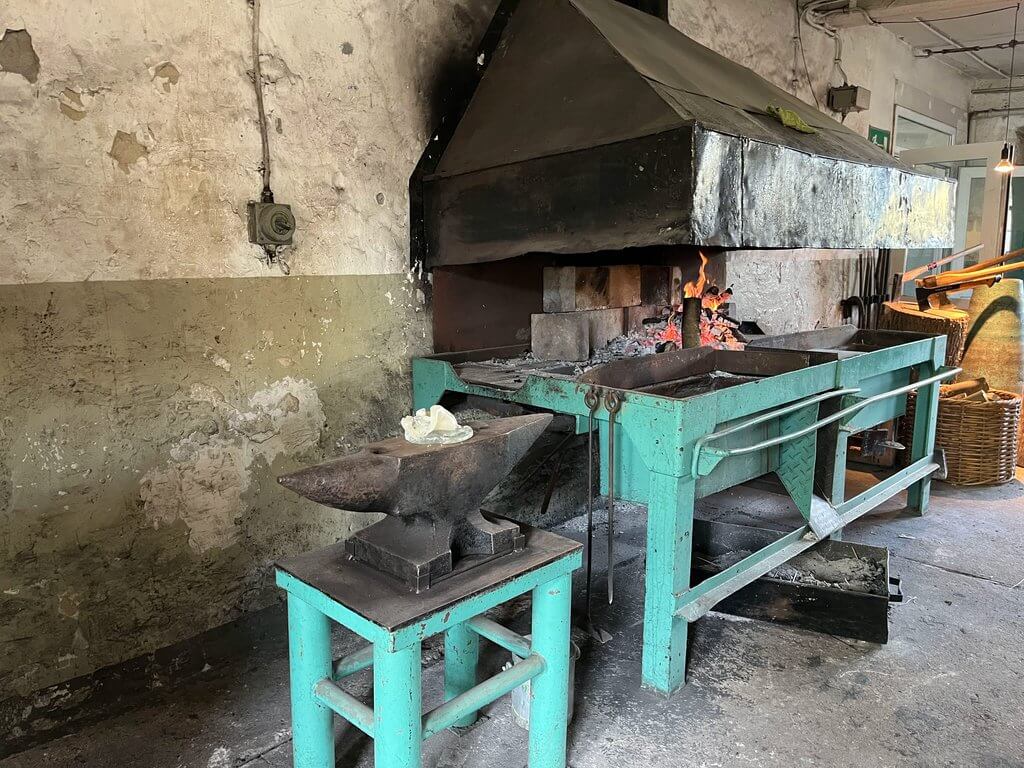
For Karoline and Jonathan, it was important to engage consciously with this past, to uncover and preserve it. In doing so, they’ve been met with interest and open arms by the local community—the building holds historical significance for everyone here. Here, in the “Hamptons of Berlin,” as some call it, where worlds collide—history and future, Berlin artists and dropouts, “city people,” and locals—the Stöckles have created a place that attempts to bridge exactly that and has found its footing.
Voices of the cheerful designers in their twenties and thirties echo through the Werkhaus, where they have displayed the creations made during their residency workshops: cocoon-shaped vases, a mini purse in green-pink glass, a hand-blown glass corset, and paintings modelled on a shadow.
For Rachel Lucretia McComb, Irish folklore becomes the finely engraved motif of handmade ceramic buttons and pendants, a way of engaging with her Irish heritage. The designer, who focuses on luxury production and textile art, traveled from the north coast of Ireland after taking part in the Chanel, Le 19M, and King’s Foundation Métiers d’Arts Atelier Fellowship in Scotland.
Now she sits with the other Crafties in the large kitchen. They are having lunch together and discussing whether they have all answered “inspiring” a little too often when asked how their residency has been. Soon they will return—to Belfast, Manchester, London, Hanover, or Berlin—and meet again for the next stage of their collection development. How it all turns out, we will see at the next Berlin Fashion Week in early 2027.