





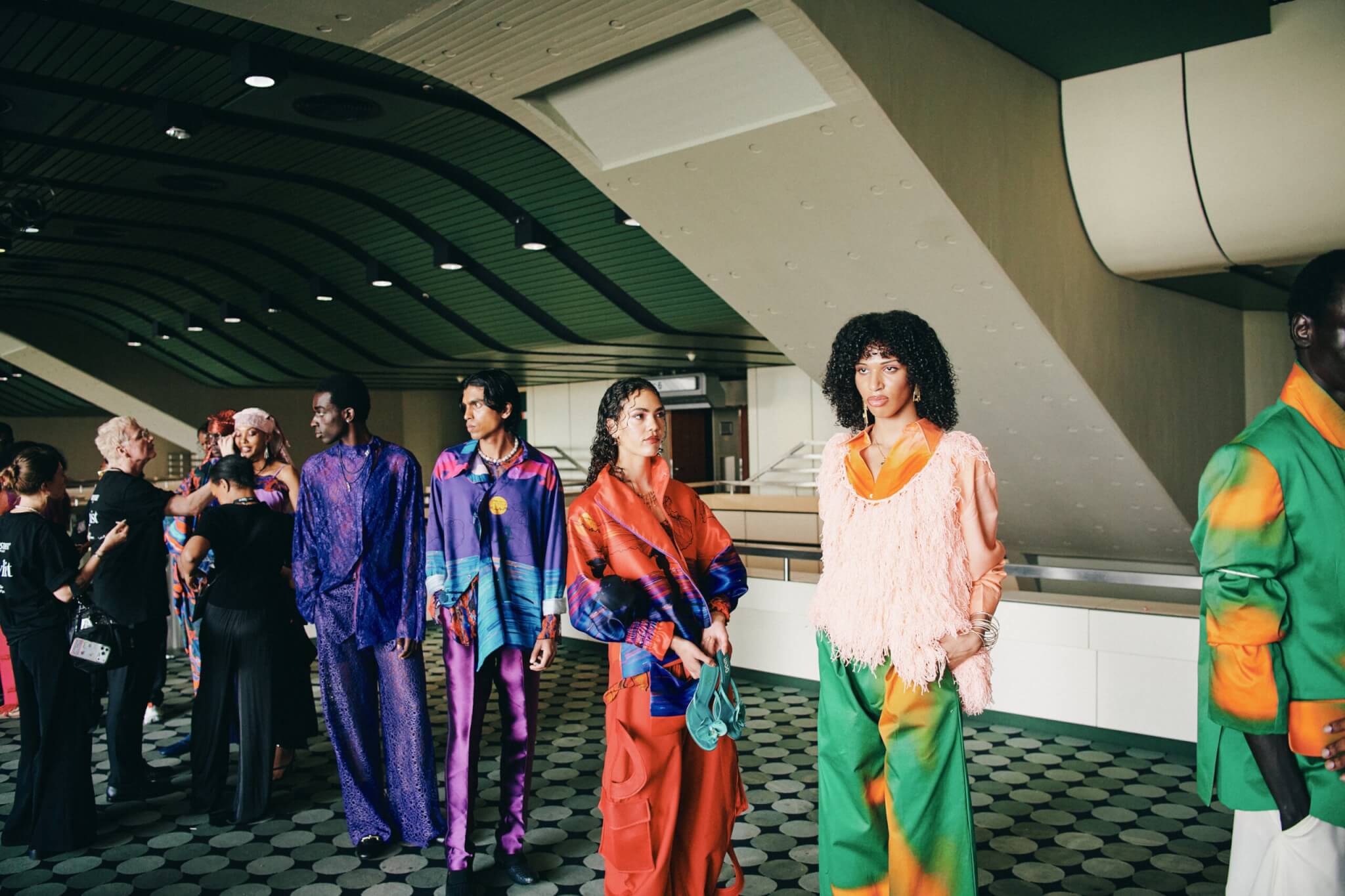
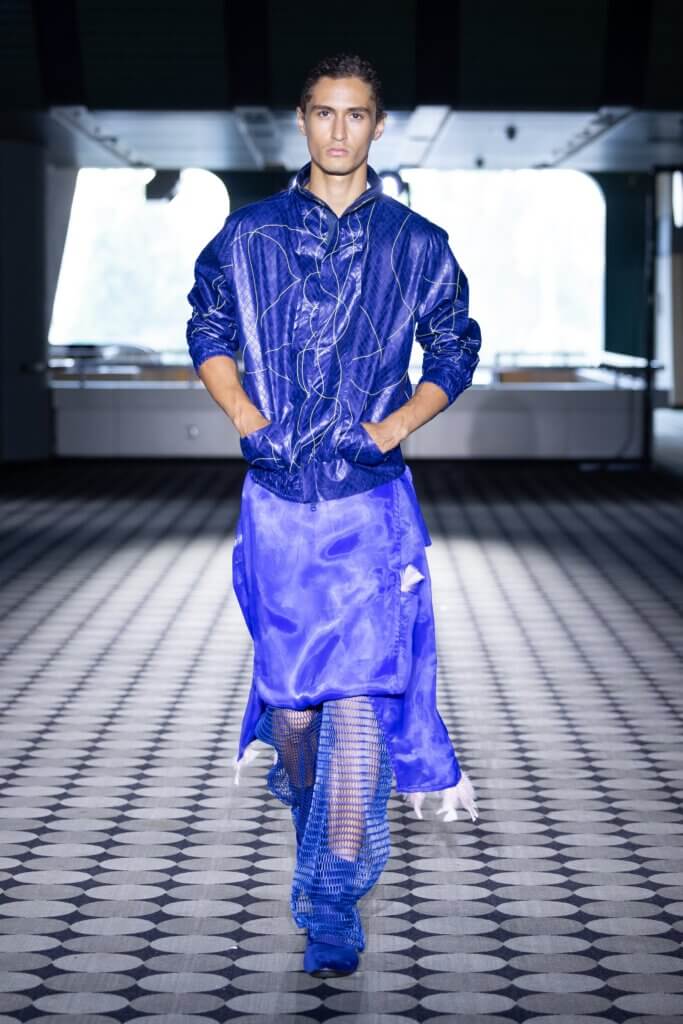
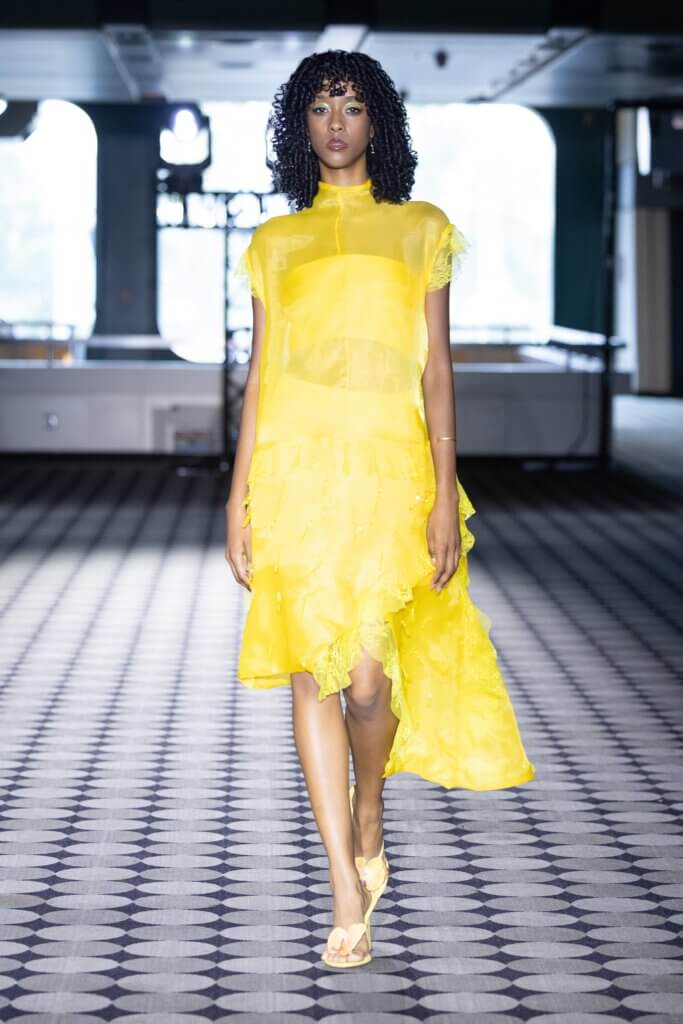
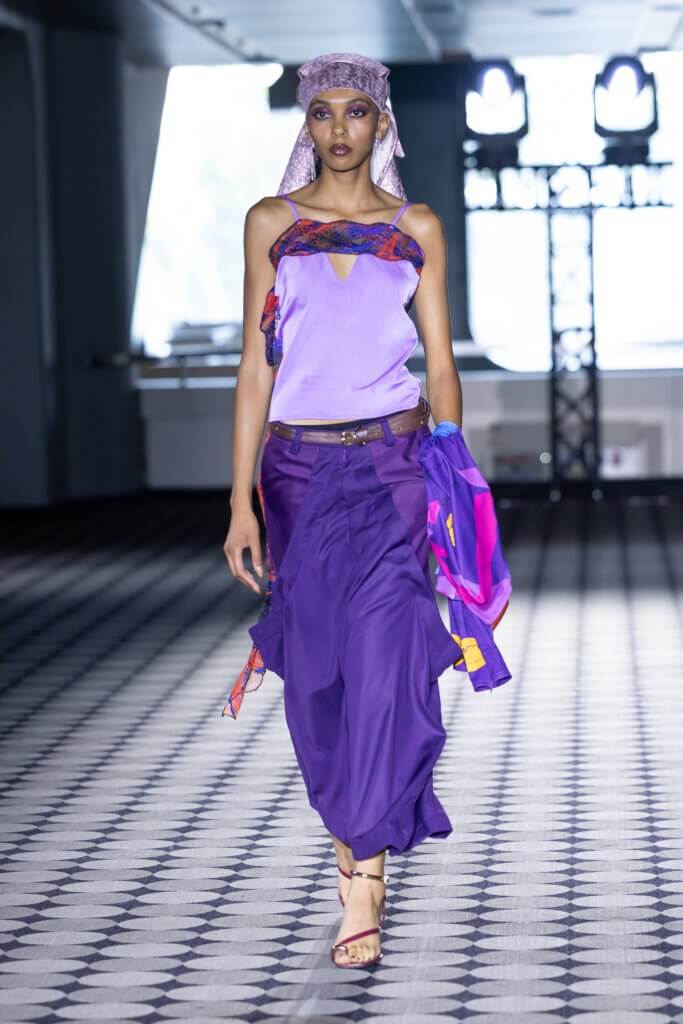
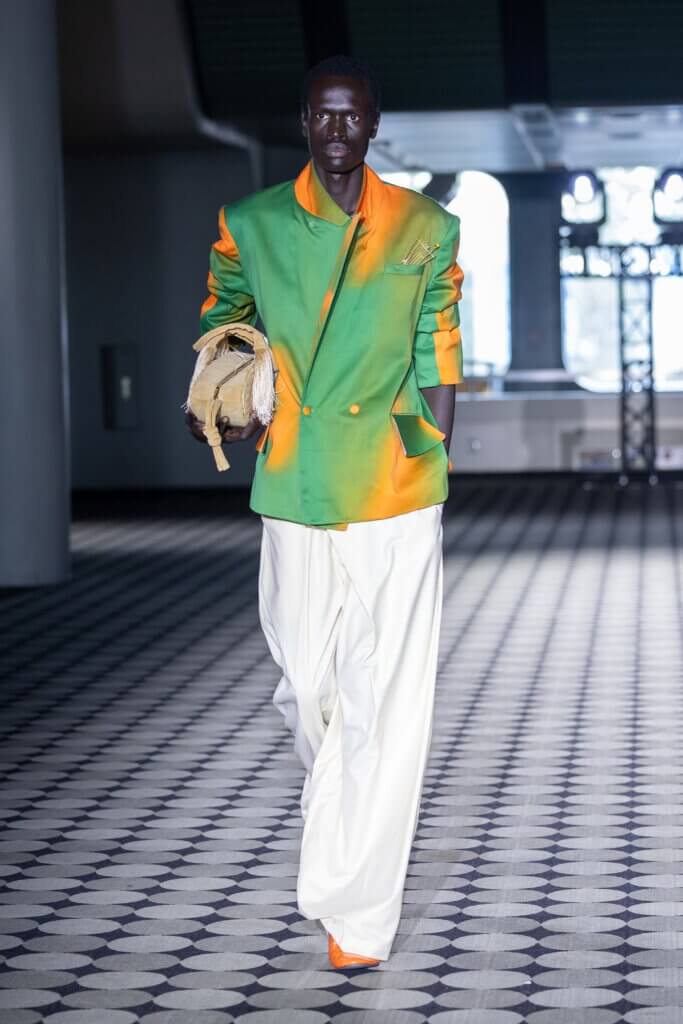
As I’m walking up the steps of the ICC I feel like I’m traveling into the past and the future at the same time. The former conference center and landmark of post-war German architecture serves as the backdrop for Adebayo Okelawal’s brand Orange Culture and its SS27 collection Water Will Carry Us. Among the Yorùbá in southwest Nigeria, water symbolizes regeneration and degeneration, reflecting its dual power. Inspired by Makoko, Lagos’s historic waterfront community built on stilts above the water, Water Will Carry Us reflects the realities of displacement, adaptation, and survival. Especially now, while Nigeria is entering another critical flood season that comes with overflowing rivers, blocked drainage systems, and interrupted electricity supply, the collection shines a light on the complexity of water. It carries memory, migration, labor, and transformation. It holds uncertainty, but at the same time, it holds life.
The show begins with the sound of clashing waves, which builds into a crescendo of choral music over time. With the models floating across the runway in red, blue, yellow, purple, and eventually brown and black, it feels like we’re witnessing a sunset. Not just any sunset, but one of those glorious, seemingly never-ending ones atop the ocean. Shimmering, sheer fabrics, layered on top of each other, followed by more grounded tones and structures, balance softness with structure and vulnerability with strength. Bursts of color speak to the humanity of survival, reminding us that beauty often exists most vividly where life is most precarious. It’s a collection that carries you through different emotions, not all of them easy, but when you reach the end, you’re left with the softness that comes after pouring your heart out. Just what Okelawal did with inviting us on this journey. When I meet him backstage after the show, he greets me with a big smile and a warm embrace, and I can tell immediately why Orange Culture feels so much more alive than some other brands on the Berlin Fashion Week calendar.
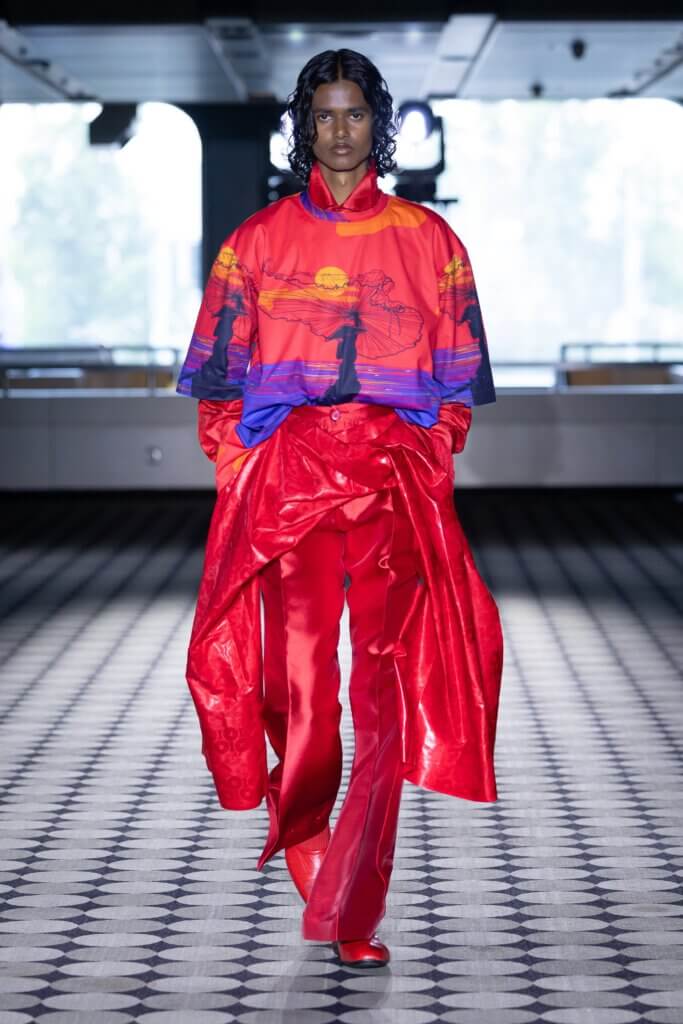
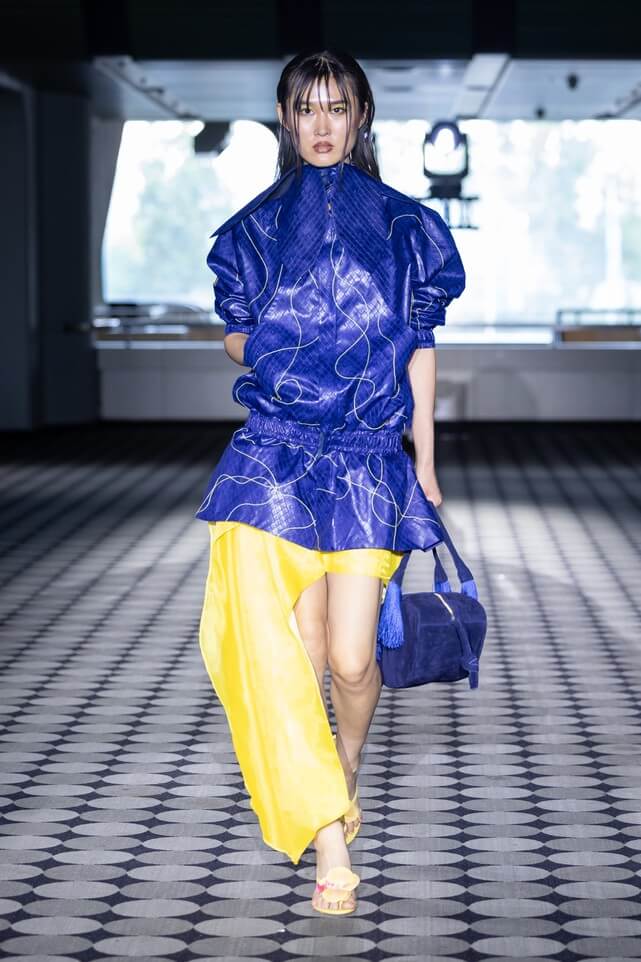
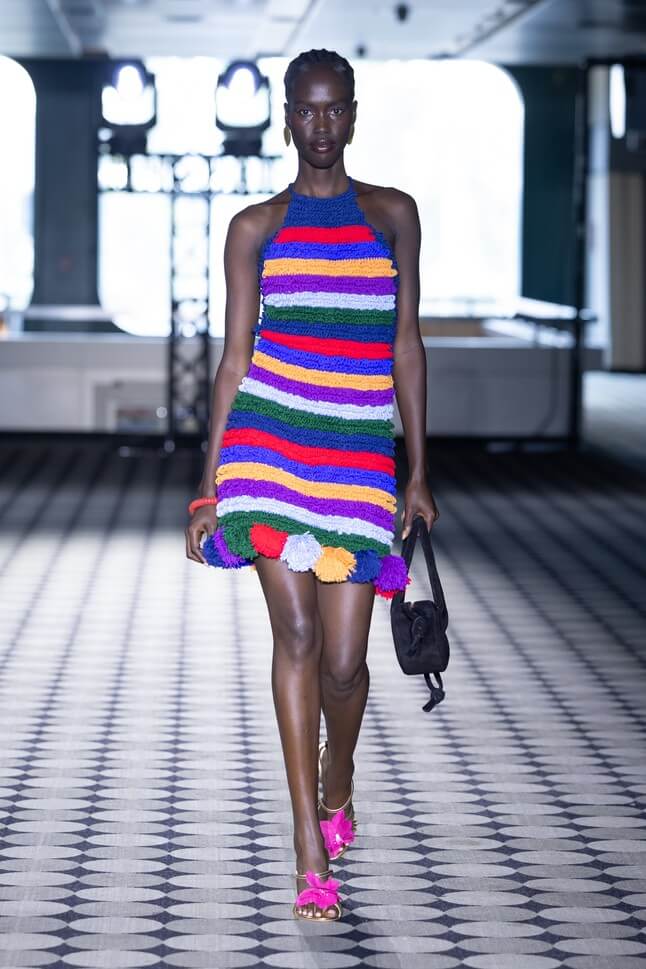
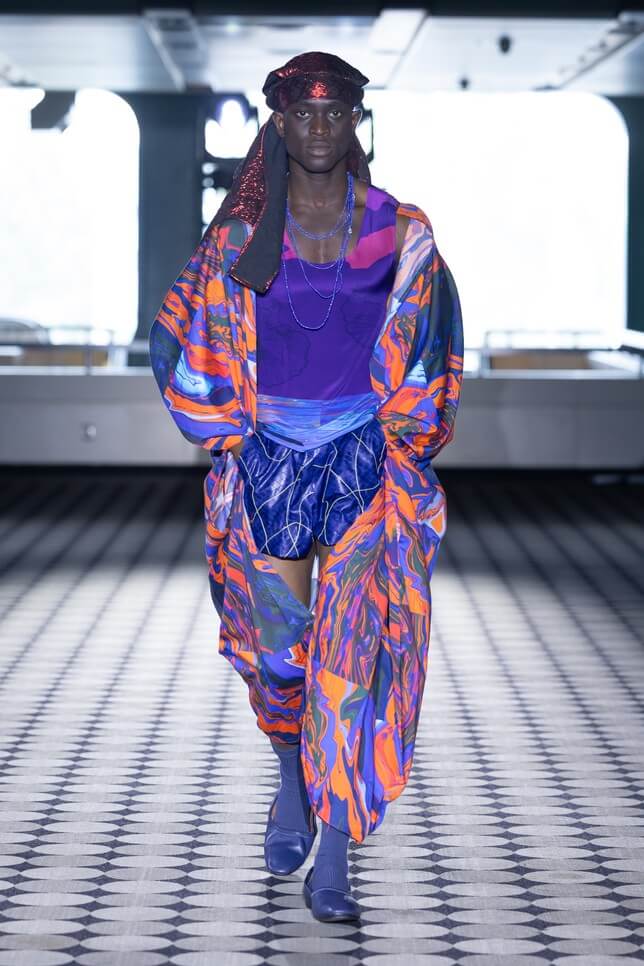
So how are you feeling right after the show?
Relief, joy, gratitude. I’m thankful.
What do you hope people take away from it?
This collection is a story I’ve been wanting to tell for a while because there are a lot of things going on in Nigeria. We have to remember that we have the opportunity to use art to tell important stories, and that’s what I love to do with my collections.
As someone whose brand is known for its intersection of craftsmanship and activism, what are your thoughts on the anti-LGBTQ bill that was recently passed by the Ghanaian parliament? What implications do you believe this has for queer people and the creative industry in West Africa?
The government is constantly using tools of distraction. There’s no light, no electricity, no water. People are suffering; people are dying. So the government frames queer people as the scapegoats to distract people from its own failures and corruption. But we should all be able to live our lives truthfully and joyfully. It’s none of their business what we do at home, how and whom we love, or how we express ourselves. Our government doesn’t want to take any responsibility for its actions, so they manipulate people into projecting their anger onto queer people, and that is incredibly sad.
But the good thing about the queer community anywhere in the world, but especially in Africa, is its resilience. No matter what happens, they have been here since the beginning of time, and they will continue to be. In the end, it’s their loss. They’re losing talents, creators, people who could build such greatness and a beautiful, creative industry within the country. But these people are leaving the country because they can’t be themselves here.
When you’ve lived in a country like this for so long, you know the government tactics. So you don’t stop using your voice to fight for what’s right and create spaces for people to feel safe, loved, and where they feel like they belong. And I think that’s what I’m doing with my brand; I’m opening my arms as wide as possible to make sure everybody feels accepted, cared for, and can live truly and freely.
For the past weeks, Nigeria and Ghana have been suffering from heavy rainfall and flooding. Severe heatwaves have struck Europe and South Asia, and the weather is becoming more and more unpredictable. How does your brand adapt to the reality of climate change? What is your take on the sustainability discourse within the fashion industry?
There are so many clear signs that we are messing up the environment, and we clearly haven’t been taking it seriously enough. So all of us, but especially us as brands, have to reflect on how we run our business. For example, we only do made-to-order. We don’t contribute to wasteful production and distribution. Everything is made in Nigeria, and we try to make sure to work with local artisans and technicians. Coming from Nigeria, we’ve been taught how to be sustainable since we were children. Even before the buzzword was created. We were taught to go to tailors, sew, and repair our outfits, and our craftsmanship has been sustainable for years. Sustainability is nothing new to Africans; it’s just that now there’s a word for it. But now we know that it’s something that can contribute to a healthier environment, to an earth that can breathe longer and live longer. So we’re more careful about the decisions that we make as we produce and also how we tell our stories.
This is your third time at Berlin Fashion Week. What learnings have you gained from the last seasons, and how did they shape today’s show?
After doing two seasons, one thing I realized, and that I really appreciate, is Berlin’s willingness to take in new stories and to truly listen to them. That allows me the creative freedom to try different things and explore new stories. I really push my own experiences from Nigeria. Because oftentimes with a brand as colorful as mine, when I enter new spaces, I’m always afraid of how people will respond. And even though Berlin is known for loving black, people are excited to see something fresh. It’s helped me share the things that I’m feeling and that I’m passionate about more freely and confidently.
You launched your brand all the way back in 2010. What does it take to sustain a brand for such a long time, and how do you continue to stay relevant?
Resilience is definitely key. The fashion industry is a tough one, but when you have a level of passion and resilience, I think you’re able to somehow push through. But it’s also about making smart decisions. As much as we work in a crazy industry, we also run a business. And you don’t always get it right, but the intention is what matters. I’m a self-taught designer with a background in business, so I’m constantly learning on the job. I’ve had to learn, unlearn, and correct, and that’s what has kept me going because I’m willing to make mistakes and keep rebuilding. Every year, you look at your journey, count your blessings, and then push yourself a little further, even if it’s just an inch forward.
Will you be back for next season?
Well, I hope to be back. [laughs] We’ll be back next season, yes.
Runway Image Credits: Andreas Hofrichter
Header Image Credits: Ben Mönks